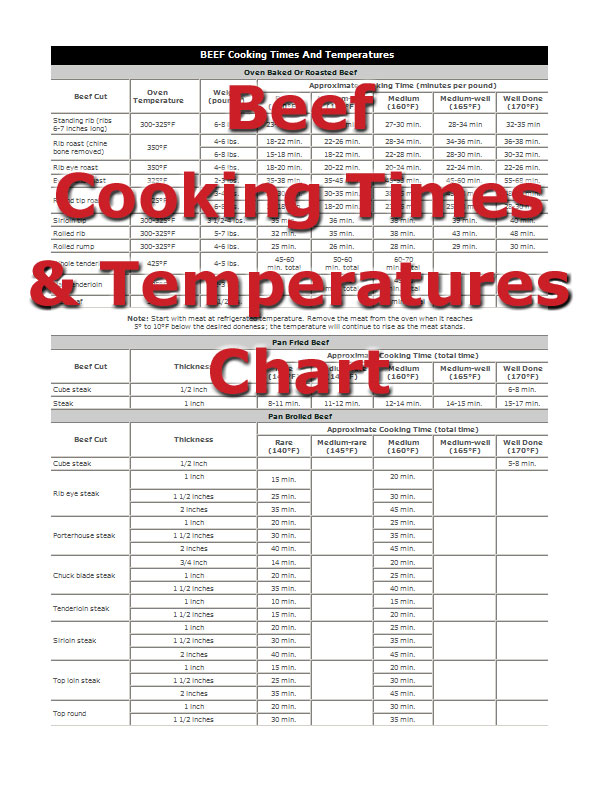
The proper beef roast cook times and the correct beef cooking oven temperatures are extremely important. The optimum flavor and tenderness of various beef roasts can be consistently achieved when care is taken to follow the recommended time and temperature guidelines for cooking beef roasts.
Rotisserie Grilling Beef | Doneness
For general guidelines on rotisserie grilling, see Rotisserie Grilling Basics.
Rotisserie Grilling Beef
There are two methods of cooking beef using a rotisserie: direct heat cooking and indirect heat cooking.
The high heat of grilling sears the surface of beef, creating tender meat with a flavorful crust. The required cooking temperature and the method of grilling (direct, indirect, or a combination) depends on the cut of beef and the quality of the meat.
The proper beef cooking times and the correct beef cooking temperatures are extremely important. The optimum flavor and tenderness of various cuts of beef can be consistently achieved when care is taken to follow the recommended time and temperature guidelines for cooking beef.
General Guidelines | Charcoal Grill | Gas Grill | Doneness
Rotisserie cooking requires three key components: The spit assembly, a means to turn the spit, and a heat source for cooking.
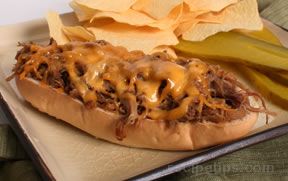
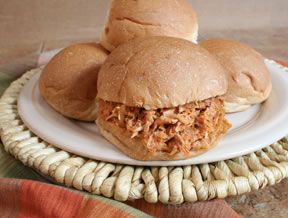
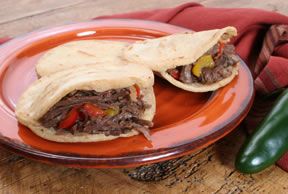
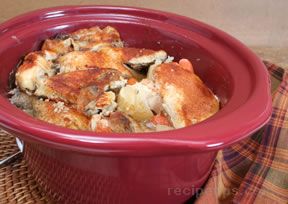
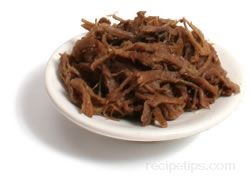
Also commonly known as pulled beef, this method of preparation typically involves longer cooking of beef cuts to create individual strands of tender meat for various food dishes.
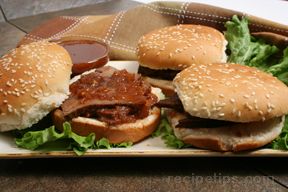
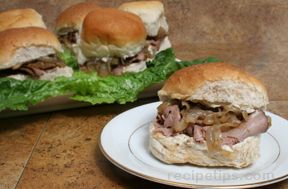
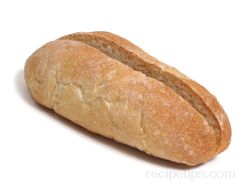
A type of hot sandwich consisting of thin slices of tender roast beef layered on a French baguette and served with the flavorful beef sauce known as au jus (pronounced oh zhoo'), which is French for “with juice” (au jus typically accompanies prime rib).
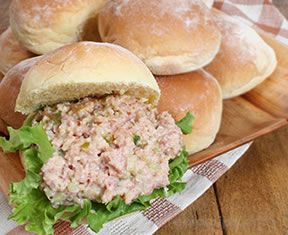
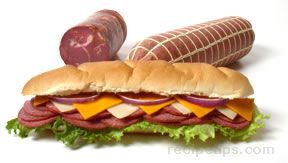
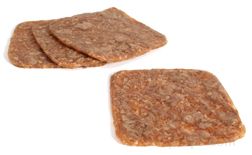
A sandwich meat that is made with cooked beef shavings encased in gelatin and formed into a rectangular-shaped loaf approximately 12 inches in length that is typically 4 inches wide by 4 inches in depth.