|
Making homemade pasta takes time and effort but it is an inexpensive way of providing you with a fresh, delicious tasting, delicate textured pasta. There are tools available to assist in the pasta making process that will make it easier and save time. The basic ingredients involved are flour, eggs, salt, and water. Other ingredients, such as milk and oil are also used in some recipes. Flavoring agents are also used to provide a variety of flavored pastas. The following information provides the steps in the pasta making process.
|
Mixing the Pasta Dough
The amount of ingredients will vary according to the quantity of pasta you are making, the size of the eggs, and whether milk, water or oil are added to the recipe. A basic recipe for one pound of pasta calls for 2 ¼ cups of unbleached all-purpose flour, 3 large eggs and a pinch of salt. The actual amount of flour may vary depending on the actual size of the eggs. Use very fresh eggs and take them out of the refrigerator approximately one hour before using.
|
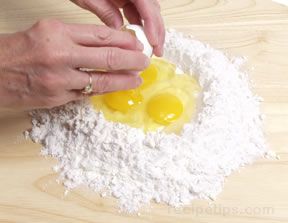
- Pour 2 ¼ cups of flour in the middle of a clean smooth work area. Make a well in the center of the flour. Crack the three eggs into the well and add a pinch of salt.
|
|
|
- Beat the eggs with a fork and gradually start to mix the flour in with the eggs by drawing the flour from the inside walls of the well.
|
|
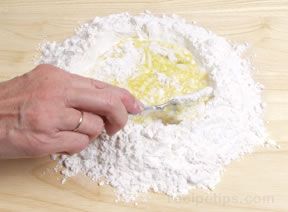
|
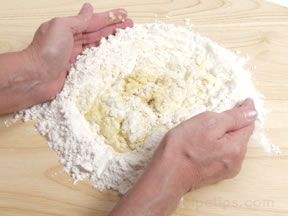
- Once the dough becomes thicker and sticks to the fork, start working the dough with your hands. Continue to draw flour in from the sides of the well until all of the flour has been incorporated in the dough.
|
|
|
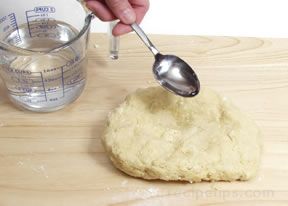
- If the dough is too moist and sticky, sprinkle with approximately one more tablespoon of flour. If the dough is to dry, sprinkle it with 1 tablespoon of water. Work the flour or water into to the dough and determine if additional flour or water is needed.
|
|
|
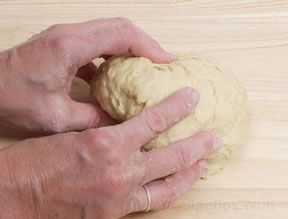
- The ball of dough should be moist and pliable, and will probably still be a little lumpy.
|
|
 |
|
Alternative - Food Processor: Rather than mixing the dough by hand, a food processor can be used for mixing.
|
|
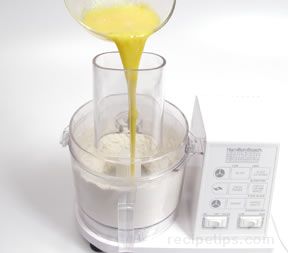
- Be sure the processor is fitted with a plastic dough blade or the metal chopping blade. Add the flour and salt to the container and turn the machine on. Gradually pour beaten eggs in through the feeding tube while the machine is running.
|
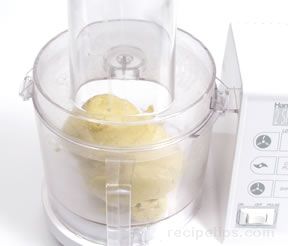 |
- Continue to process until the dough forms a ball and begins to ride up in the center, on top of the blades. If the dough is too dry, it will not form a ball. To moisten the dough, add 1 teaspoon of water. If it is too sticky, add 1 teaspoon of flour. Add more water or flour if necessary for dough to be the correct texture.
|
|
Alternative - Electric Mixer: An electric mixer with a dough hook can be used to mix the pasta dough also.
- Combine all ingredients in the mixing bowl.
- Mix ingredients using with the electric mixer at a medium speed. Mix until dough pulls away from the sides of the bowl.
- If the dough is too dry, it will not form a ball. To moisten the dough, add 1 teaspoon of water. If it is too sticky, add 1 teaspoon of flour. Add more water or flour if necessary for dough to be the correct texture.
Kneading and Rolling the Pasta Dough
The pasta dough should be kneaded until the dough becomes smooth and elastic. Be sure the work surface is cleaned off before kneading the dough. Use pastry scraper to remove any pieces of dough stuck to the surface of the work area.
Kneading:
|
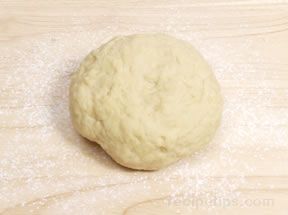
- Lightly flour clean work surface and place dough on floured area.
|
|
|
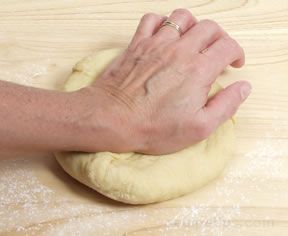
- Knead the dough by pressing on it with the heel of your hands, pushing it away from you.
|
|
|
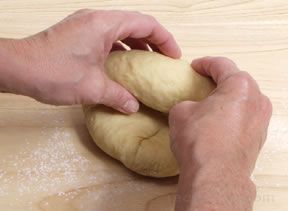
- Fold the dough back over towards you and repeat the kneading process. Continue to knead the dough in this manner. Turn the dough a little each time you knead it. If the dough is sticky, sprinkle it with flour as you are kneading.
|
|
|
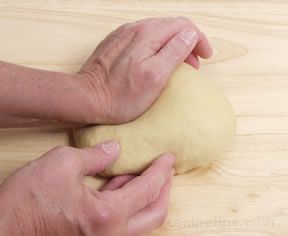
- Knead until dough is smooth and elastic. This process may take anywhere from 5 to 20 minutes.
|
|
|
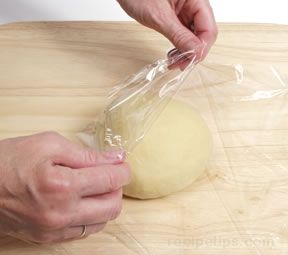
- Gather kneaded dough and form a ball. Cover the ball of dough with plastic or foil and set aside to rest at room temperature for at least 1 hour.
|
|
 |
| Note: If the dough was mixed in a processor, it will not need as much kneading as it would if it was mixed by hand. |
|
Rolling:
|
|
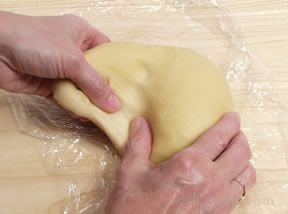
- After the pasta has rested, pull off a piece of dough, approximately 1/3 of a 3-egg dough recipe, and set the remaining dough aside covered with plastic.
|
|
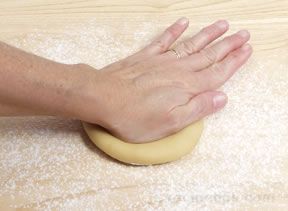
- Lightly flour the working surface, form the piece of dough into a ball and place on floured area. Using the palm of your hand, flatten into approximately a six inch circle.
|
|
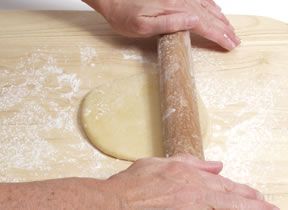
- With a lightly floured rolling pin, begin to roll the dough starting from the center and rolling away from you, stretching the dough as you roll. Slightly rotate your rolling position with each roll, always starting at the center and rolling away from you.
|
|
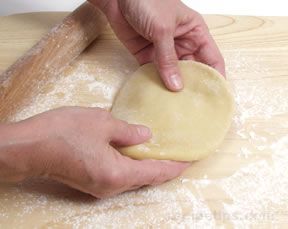
- After 2 or 3 rolls, rotate the dough about a quarter of a turn. Dust dough, work surface and rolling pin with flour if dough starts to get sticky.
|
|
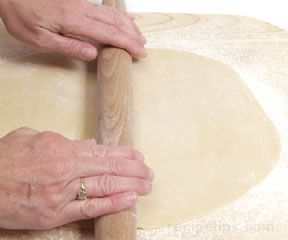
- Continue to roll until dough is an even thickness of 1/8 inch or less. Roll out thinner if making thin noodles.
|
|
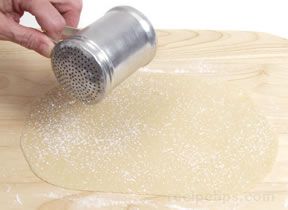
- Lightly dust the rolled out dough and let it dry for approximately 15 minutes before cutting.
|
| If making stuffed pasta, use the dough immediately. Allowing the dough to dry for a period of time may result in the dough not sticking properly when sealed. |
|
Alternative - Kneading and Rolling by Machine
Kneading:
Adjust the rollers on the rolling machine so that they are on the widest setting. Pull off a piece of dough that is approximately 1/3 of a 3-egg dough recipe, and set the remaining dough aside and cover with plastic.
|
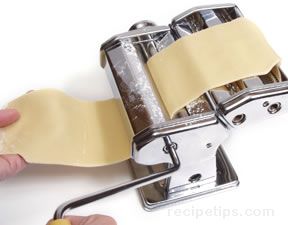
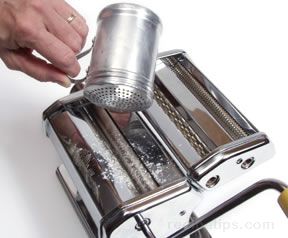
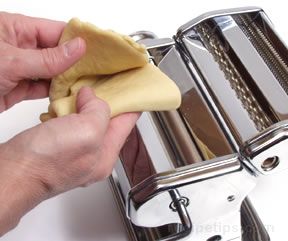
- Flatten the piece of dough and feed it through the machine at the widest setting. Hold the rolled out end as it comes out of the machine. Fold the dough in thirds, similar to a letter, and feed it through again. If dough is sticky, dust the dough and the machine rollers with flour before sending through the machine.
|
|
|
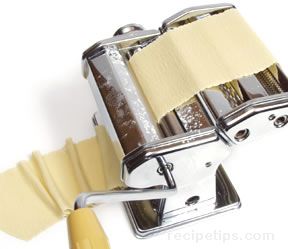
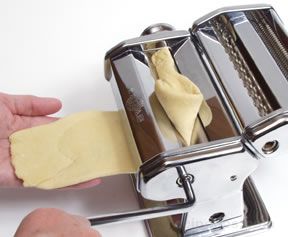
- Send the dough through the rolling machine 5 to 8 times, folding after each pass through. Send through until dough is smooth and elastic.
|
|
|
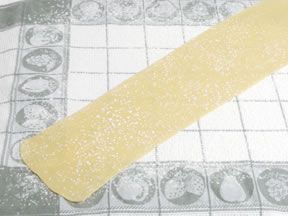
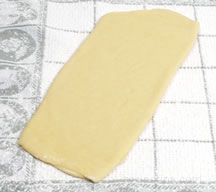
- When the dough is smooth and elastic, lay the sheet of pasta out on a lightly floured surface or a lightly floured dish towel. Lightly cover the strip of dough until it is ready to be rolled into a thinner sheet. Repeat the machine kneading steps on the remaining dough. Allow the strips to rest for 15 to 20 minutes.
|
|
 |
|