|
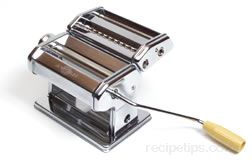
Homemade pasta can be cut into shapes and different width noodles by the use of different types of pasta machines. The pasta shapes and noodles are cut by the use of different dies and cutting rollers on the pasta machines. There are hand-cranked machines and electric machines available for cutting shapes and noodles. Some information on how the different types of machines are used to cut and shape pasta is shown below.
|
Cutting with a Hand-Cranked Roller Machine
Noodles:
|
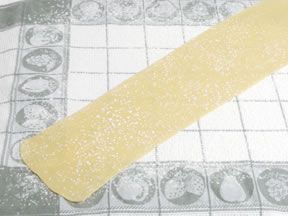
- The machine rolled pasta strips can also be cut into different width noodles through the machine. Be sure the rolled strips have dried for 15 to 30 minutes before sending them through the pasta machine. This will help prevent them from sticking together. Do not let them get overly dry or they will crack as they go through the rollers. Lightly dust the strips with flour before sending them through the pasta machine. This will help the machine produce a clean cut when cutting the noodles.
|
|
|
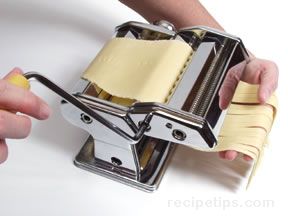
- Be sure the proper cutting attachment has been applied to the machine for the width of pasta you want cut and then begin to feed the strip of pasta into the machine. Turn the handle with one hand and catch the pasta with the other hand as it is coming out of the machine. This will prevent the noodles from falling into one big pile.
|
|
|
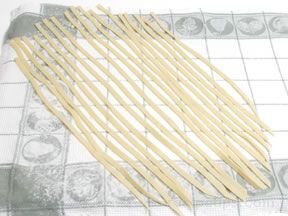
- Spread the noodles out on a lightly floured surface, a floured dish towel or hang them over the back of a chair on a floured towel. If a drying rack is available, hang the noodles on the rack to dry. Allow them to dry for at least 15 minutes before cooking. The drying period will allow the noodles to firm up slightly and help prevent them from sticking to each other.
|
|
|
Tagliatelle, fettuccine, Linquine, tagliolini, and pappardelle can all be cut with a hand-cranked pasta machine by the use of different width cutting attachments. After noodles are sent through and cut to the desire width, they can be cut to the length required.
|
|
Cutting with a Hand-Cranked Extrusion Machine
Pasta Shapes:
- The extrusion machine is used to make pasta shapes by forcing the dough through dies. The pasta is mixed by hand or with a processor and then feed into to machine without being rolled first. The pasta cannot be too moist or the pasta will stick together as it extrudes from the machine. If it is too moist it should be sprinkled with flour and then sent back through the machine.
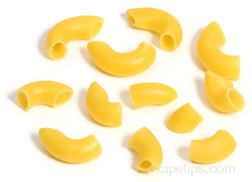
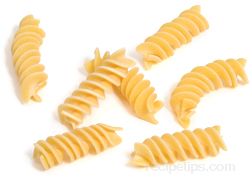
- The extrusion machine can produce shapes such as macaroni, rigatoni, bucatini, and fusilli. The shapes that can be made will depend on the dies available for that machine. As the pasta shapes are extruded from the machine, they must be cut off at the desired length.
- Place extruded pasta on a floured surface and dust lightly with flour. Allow pasta to dry for at least 15 minutes before cooking. The drying period will allow the pasta to firm up slightly and help prevent them from sticking to each other.
| Note: The hand-cranked rolling machine can only produce flat noodles. The hand-cranked extrusion machine can only produce tube pasta and some shapes, depending on the dies available for that machine. To create tubes and shapes, and also be able to create noodles, you would have to have both machines. | |
The Electric Extrusion Machine
Recent changes in the electric extrusion machine have produced a machine that allows pasta to be made quick and easy. Earlier models did not make the dough the proper consistency, resulting in dough that was hard to extrude. With the electric extrusion machine there is no need to mix, knead, or roll the dough. The ingredients are added to the machine, it mixes the dough and extrudes the pasta in a shape created by the attached die. Some of the common shapes created by the electric extrusion machine are macaroni, rigatoni, ribbed penne, ziti, lasagne, cappellini, bucato, spaghetti, and vermicelli.
|
Making Pasta with an Electric Extrusion Machine:
- Choose the correct die for the pasta shape you want to make and attach it to the machine.
- Add the ingredients as called for in the recipe you are using. Note that each machine varies in the amount of liquid required. The electric machine will run a little drier dough than the hand-cranked machines and the dough has a loose consistency. Do not add the full amount of liquid called for in the recipe. Add 90 to 95 percent of the amount called for and then allow the dough to mix. Check its consistency and add more liquid if necessary. The amount of liquid may vary each time you make pasta due to differences in humidity, heat and the type of flour being used. After experimenting with the machine, you will get a feel for the correct amount of liquid to use most of the time, but even then certain conditions can cause that to vary.
- Turn the machine on and the pasta should begin to extrude in the shape of the die you have selected.
- Have a bowl or a floured dish towel ready to catch the pasta as you cut it off at the desired length and then place the pasta shapes on a floured surface. For long lengths, catch them in your hand, cut to desired length and place on a floured surface.
- Dust pasta lightly with flour and allow pasta to dry for at least 15 minutes before cooking. The drying period will allow the pasta to firm slightly and help prevent them from sticking to each other.
Tips on Extruding Dough Properly:
- Spray the die with olive oil or nonstick cooking spray before attaching it to the machine. The coating will help the pasta extrude more smoothly.
- If the dough is too sticky when it is extruded or it is sticking to the mixing unit, the dough is too moist. Add a small amount of flour, remix the dough and try extruding again.
- If the dough has rough edges when it is extruded or it won't extrude from the machine, the dough is too dry. Add a small amount of liquid, remix the dough and try extruding again.
- When extruding fine pasta, such as spaghetti or vermicelli, allow the dough to be a little moister than for other pastas. This will allow the delicate pasta to extrude easier.
|
Advantages and Disadvantages of Hand-Cranked and Electric Machines
|
Hand-Cranked Machines
Advantages:
- Hand-cranked machines are easier to clean because the dough is drier and is feed into the machine as a solid mass compared to the electric machine whose dough has a loose consistency. The hand-cranked extrusion machine is slightly harder to clean than the cutting machine because the dies require a little additional work to clean.
- Although the dough needs to be the proper consistency, it is more forgiving than the dough for the electric machine and the consistency of the hand-cranked dough is generally easier to correct.
- A hand-cranked machine is less noisy than an electric machine.
- The cost of a hand-cranked machine is considerably less than an electric machine. A fairly good hand-cranked machine can range from $40 to $60, which is about 1/3 the cost of a lower end electric extrusion machine.
Disadvantages:
- Hand-cranked roller machines only make flat pasta noodles and extrusion machines only make shaped pasta. To do both you have to purchase both types of machines.
- Hand-cranked machines take more time than the electric machines. It requires mixing the dough separately, kneading and allowing it to rest. If making flat pasta noodles, the dough first has to be rolled to the proper thickness. With the electric extrusion machine, the dough is mixed in the machine and then extruded, skipping the mixing, kneading, resting and rolling steps.
Electric Extrusion Machines
Advantages:
- Electric extrusion machines can make noodles and shapes, using one machine. A die is changed on the machine when a different shaped noodle or pasta is desired. Each machine comes with a set of dies.
- You can make pasta in a short amount of time. Once you are experienced on the proper amount of liquid and flour to use in your machine, you can make a batch of pasta in less than 20 minutes.
- The electric extrusion machine requires less working space. You only need room for the machine and a floured surface to lay the finished pasta. The hand-cranked machine requires room to mix the dough, to knead and roll the dough, an area to lay the rolled pasta sheets before cutting, an area for the machine and a place to lay the finished pasta out on a floured surface.
Disadvantages:
- The electric extrusion machine is harder to clean because the loose consistency of the dough allows it to get into more parts of the machine. It can take a considerable amount of time to get all the dough out of the tight spots of the machine and its parts. The extra time in cleaning can end up consuming the time saved in using the electric machine over the hand-cranked machine.
- It is harder to get the right consistency of dough to provide proper extrusion of the pasta. The consistency of the dough can vary more for the hand-cranked machine and still result in acceptable pasta.
- The electric extrusion machine is much noisier than the hand-cranked machine. Different machines will vary in the degree of noise they make.
- Electric extrusion machines are much more expensive than the hand-cranked machines. The cheaper models are almost three times more expensive and the higher end models can be $400 or more. Unless you make a lot of pasta, the time savings may not justify the cost of an electric machine.
|
|