


| Kneading is especially important when preparing yeast breads because it helps to distribute the activated yeast and it enables the protein in the flour to develop into gluten, which promotes the properties of stretching and expansion in the dough. This results in the light and springy crumb apparent in many yeast breads. Dough that is not adequately kneaded results in bread that is too heavy and dense. | |
|
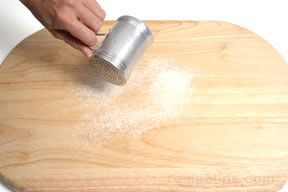
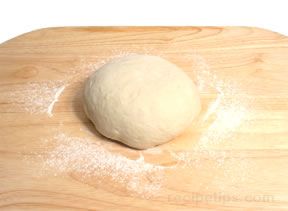
A large, smooth work surface is necessary for kneading bread dough. The work surface can be a wood board, a marble slab, or even a smooth countertop or table. Make sure that the work surface is clean before kneading the dough. If possible, it is best to reserve a work surface specifically for bread making, especially if you make bread on a regular basis. Before placing the dough on the work surface, lightly dust the surface, as well as your hands, with flour to prevent the dough from sticking. |
|
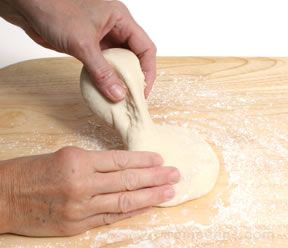
| Begin the kneading process by folding the dough in half. | 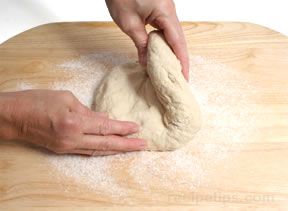 |
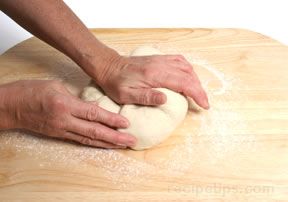
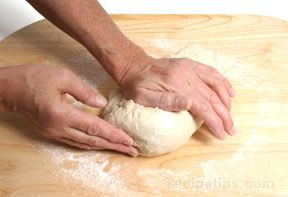
| Using the heel of your hand, press firmly on the dough while pushing the dough away from you. Excessive force is not necessary because the dough will gradually become easier to work the longer it is kneaded, which warms and stretches the gluten. |
|
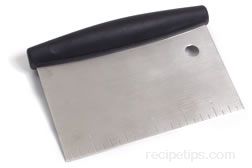
| Fold the dough back towards you and repeat the kneading process. Turn the dough a little each time as you continue to knead it. If the dough is sticky, sprinkle it with a small quantity of flour during the kneading process. A pastry scraper can be used to remove any pieces of dough that may stick to the work surface while kneading. |
|
| Continue kneading until the dough is smooth and elastic. Many types of bread dough require about 10 minutes of hand kneading while others may require as much as 20 minutes depending on the recipe, the type of flour used, and the temperature and humidity level during the preparation period. |
|

Loading
Kneading Dough: Hand Kneading
Loading
There currently aren't any reviews or comments for this article. Be the first!





Popular Recipe Pages
Popular Recipes
Advertisement

Advertisement