RecipeTips.Com Home recipes-collections | pork recipes
Join Now | Sign In | RSS Feeds RSS Feeds | Share
Pork Recipes: Recipes-Collections: RecipeTips.com
Recipes Cooking Tips & Advice Glossary Community Videos
$150 Grocery Giveaway
hints
e-Newsletter
RecipeTips.com Newsletter Sign Up

Pork Recipes

Our collection of pork recipes offers you a huge selection of pork chop recipes, grilled pork recipes, pork loin and ham recipes.

Whether you are grilling or roasting, pork is a great choice of protein that is easy to prepare and tastes great. Choose a pork recipe today.
Pork Chops with Apricot Onion Topping Recipe
Slide 1 of 6Next

Pork Chop Recipes

View our collection of pork chop recipes.
view Pork Chop Recipes
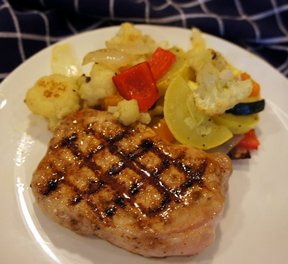
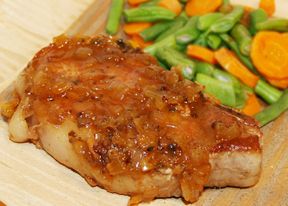
Pork Chops with Apricot Onion Topping Recipe

Pork Chops with Apricot Onion Topping Recipe

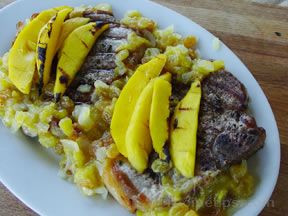
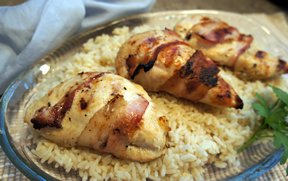
The sweet flavor of the apricots complements the savory flavor of the onions to make the perfect topping for this grilled pork chop recipe. Check our site for information on how to select the best pork chops for your pork chop recipes.
Grilled Teriyaki Pork Chops Recipe

Grilled Teriyaki Pork Chops Recipe

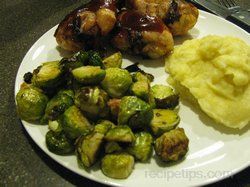
The tangy flavorings of this sauce are an excellent complement to the grilled flavor of thick, juicy pork chops.
View our collection of pork chop recipes.
More Pork Chop Recipes
Crown Roast of Pork Recipe

Crown Roast of Pork Recipe

An easily prepared handsome pork roast for a festive occasion.
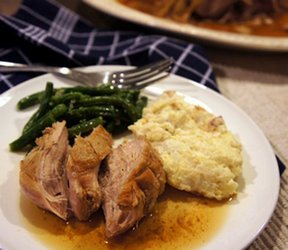
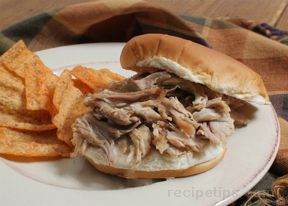
Slow Cooked Pulled Pork Recipe

Slow Cooked Pulled Pork Recipe

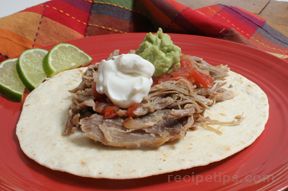
Classic pulled pork makes great sandwiches that are perfect for feeding a large group.
View our collection of pork roast recipes.
More Pork Roast Recipes
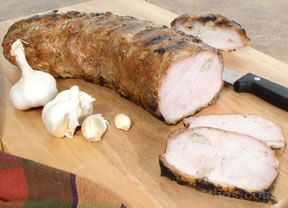
Creole Pork Loin Recipe

Creole Pork Loin Recipe

Rich in garlic flavor, this loin of pork provides a mild southern flavor for an enjoyable grilled meal.
Grilled Center Cut Loin Fillet Recipe

Grilled Center Cut Loin Fillet Recipe

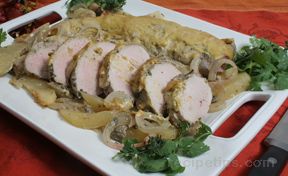
A loin of pork provides a mild flavor for an enjoyable grilled meal.
View our collection of pork loin recipes.
More Pork Loin Recipes
Baked Ham with Apple Mustard Glaze Recipe

Baked Ham with Apple Mustard Glaze Recipe

The combination of sweet apple jelly and spicy mustard accents the flavor of this roasted ham with a unique savory-sweet taste. A spiral ham creates its own slices when carving the ham.
Honey Baked Ham with Cloves Recipe

Honey Baked Ham with Cloves Recipe

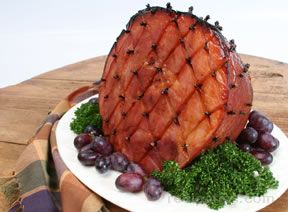
A decorative ham with great honey flavor that is perfect for your Christmas or Easter dinner. This honey baked ham recipe is one of many superb ham recipes you will find on our site. Also see many helpful ham cooking tips.
Our free ham recipes are perfect for an Easter ham dinner or any day of the year. The recipes for ham will help you with ham cooking times and temperatures.

Browse our information on how to bake and carve a ham located at the bottom of the page along with how to videos on cooking and carving a ham. We have everything you need to make your ham recipes perfect everytime.
More Ham Recipes
Ham Glossary Term

Ham Glossary Term

A cut of pork that is taken from the meat on the middle part of the shank bone extending to the hip bone on the hind leg of the hog. There are two basic types of ham: fresh ham (uncooked) or cured ham (cooked). Cured hams can be brine-cured or dry-cured and then boiled or lightly smoked. If ham is cured, smoked, and then allowed to age for a longer period of time (1 year or more) to develop more flavor, it is most often classified as a "gourmet" ham. Cuts of ham are available with (bone-in) or without bones (boneless), as specialty hams, and as cooked, partially cooked, or uncooked hams.

Water or natural juices are often added to hams to keep them moist and tender. When hams are categorized according to the protein and water content, there are basically four categories or levels that are used for identification. The highest level of 20.5% or above identifies a ham with no water added. The next level is a protein content of not less than 18.5%, which identifies a ham with natural juices. A protein level at least of 17% signifies a ham with some water added. The lowest protein level represents a ham product in which any quantity of water may have been added, decreasing the protein level and the flavor of the ham and making it somewhat rubbery. The label should identify the quantity of water added.

Store ham in the refrigerator and use it within 4 days to retain the best flavor and quality. Ham can be frozen to preserve it for longer periods of time, but the flavor is decreased when thawed. To freeze ham, place it in an airtight package and use it within 2 months.

Pork Glossary Term

Pork Glossary Term

A term customarily applied to the meat of a pig that is under a year old. The pig carcass is generally split into two sides of pork; each consisting of four primal cuts known as the shoulder, loin, leg/ham, and side/belly. Each primal cut consists of subprimal cuts that are divided into several specific market ready cuts, such as roasts, chops, steaks, and ham.

Even though pork is generally white in color when cooked, it is still considered "red meat" because it contains higher levels of a protein called myoglobin than actual white meat of chicken or fish. The quantity of myoglobin contained in meat is the factor that determines color. Like beef, lamb, and veal, pork is also classified as "livestock" and all livestock is categorized as "red meat."

Pork can be labeled, "natural", if it complies with the USDA standards for natural processing, handling and labeling. The standards stipulate that the product cannot contain artificial ingredients, artificial coloring, or chemical preservatives, and it cannot undergo extensive processing.

Pork labeled, "organic", must be produced and processed according to the specifications established in the USDA's Organic Standards. The standards prohibit synthetic input in all processes of pork production and meat processing and handling. Producers and processors must receive certification from a government-approved inspector.

The state or federal government inspects all retail cuts of pork. This inspection is mandatory and is performed by the Food Safety and Inspection Service of the USDA. The FSIS-USDA inspector checks the meat at all stages of processing including the slaughtering process, butchering, application of food additives, and labeling. All meat products, ranging from the whole carcass to the edible byproducts, must have the inspection legend seal stamped on the product or displayed on its label, which ensures that the product is wholesome, disease-free, and that it has been processed under sanitary conditions.

Pork is much leaner today than it was years ago. It contains 35% to 50% less fat so it usually is not a problem finding lean cuts in most food stores. When selecting pork cuts, the color of most cuts should be pink with a white to grayish tint and have a fine-grained texture. Meat from the loin is generally lighter in color than the meat from the shoulder or leg. The meat should be firm to the touch, look moist but not slimy wet, and it should not emit any foul odors. The fat on the outer edges should be creamy white and be blemish free. If the fat has a yellowish tint, it is an indicator that the meat is old and is nearing spoilage. The package containing the meat should be cool to the touch and free of any holes or tears.

Leaner pork also affects the techniques used for cooking pork. Because there is less fat to moisten and to add flavor to the meat, care should be taken to not overcook pork. There are various cooking methods that can be used to produce juicy and flavorful pork. Some methods work better than others on different cuts of meat. Dry heat cooking methods, such as roasting, broiling, grilling, and pan-frying, are most often used on cuts that are naturally tender, such as bacon, chops, steaks, loin roasts, and tenderloins. Moist heat cooking methods, such as braising, stewing, and steaming are most often used on cuts that are less tender, such as ribs, shoulder cubes and boneless Boston butt roasts.

It was once thought that pork must be cooked to an internal temperature of 185°F to ensure that trichinella spiralis parasite, which is sometimes present in pork, would be killed. It is now known that trichinella spiralis is eliminated at 137°F, however, it is still recommended that pork be cooked to an internal temperature of 155°F to 160°F to ensure safety. Cooking the pork to a temperature of 185°F produces tough, dry meat. An accurate meat thermometer is the best tool for ensuring that meat has cooked to the proper internal temperature.

Pork should be stored in conditions that do not allow the meat to be exposed to temperatures ranging between 40°F and 140°F, which is the danger zone for bacterial growth. The bacteria that causes food borne illness multiply rapidly in this temperature range, so it is important to keep cold foods cold and hot foods hot. Raw pork can be stored in a refrigerator several days, depending on the type of cut. If it is not to be used within the recommended time, it should be frozen to prevent it from perishing. Leftover cooked pork should be wrapped tightly and refrigerated as soon as possible. Do not leave any pork at room temperature for more than two hours. If cooked pork is not going to be used within four days of cooking, it should be frozen.

Raw pork should be stored in the refrigerator at 40°F or lower and should be used within three to five days of the "sell by" date on the package or it should be frozen. Freezing should be avoided if possible because it will cause the pork to be less tender and juicy but, if it will not be used within the three to five day refrigerator storage time, it should be frozen to prevent it from perishing. Freezing meat has little affect on its nutritional value. When freezing, the pork should be placed in the freezer compartment while it is as fresh as possible in order to maintain the best quality. To maintain maximum quality, bacon and sausage should be used within one to two months, ground pork within three months, and roasts, chops, and steaks within six months.

Pork is a nutrient dense food, meaning that its nutrient level is high in proportion to its calorie content. Pork contains a high level of some of the essential B vitamins, such as B12, B6, thiamin, niacin, and riboflavin. It is also rich in other nutrients, such as phosphorous, zinc, potassium, iron, and magnesium. One 3-ounce portion of pork provides approximately half of the daily requirement of protein.

Pork Roast Glossary Term

Pork Roast Glossary Term

A reference that can apply to several different cuts of pork used for roasting, referred to as: the loin roast, shoulder roast, butt roast, blade loin roast, pork tenderloin, sirloin roast, crown roast or rolled ham roast. The loin, the shoulder and the butt are all excellent pieces to roast, however they may be larger than necessary so a smaller section may be roasted instead. The shoulder and butt contain more fat than other roasts. When the meat reaches an internal temperature of 145 degrees F, it should be only slightly rosy in the center and ready to eat. For preparing a roast that is well done, internal temperatures should reach 155 degrees F.
Pork Loin Glossary Term

Pork Loin Glossary Term

The loin is located on both sides of the backbone starting at the shoulder and continuing back to the hind leg. It is the largest, most tender and leanest cut from the pig. Some of the cuts from this primal cut demand the most in price because of their quality. It is important to be careful not to overcook some of these cuts because they will dry out easily due to their leanness. The cuts from the loin are available both with bone-in and boneless. Some of the cuts available from the pork loin are roasts, chops, back ribs, rack of pork, tenderloin, steaks, Canadian-style bacon, and button ribs. Cubes and strips are also available for kabobs, stir-frying or stewing. In addition, the pork loin is available as a dry-cured product, similar to a sausage, that is commonly produced in European countries such as Spain. The dried variety, referred to as Lomo de Cerdo, is dry cured with garlic, paprika, sugar, pepper, and other spices to enhance the flavor of this meat. Thinly sliced, dried pork loin is served as a luncheon meat, an appetizer with cheese, or eaten as a side dish flavored with a topping of olive oil.

The pork loin primal cut can be purchased whole and then cooked whole or it can be cut down into sub-primal and retail cuts. Purchasing the whole primal cut will be more economical, but if you are not knowledgeable on how to cut the primal cut into smaller cuts, it may result in too much waste and incorrect cuts. If a whole primal cut is desired, you will generally need to order it in advance. They are available fresh, cured, smoked, bone-in, boneless, and fully cooked.

Cuts of Pork Article

Cuts of Pork Article

Pork is the meat from the carcass of a pig. The carcass is generally split into two sides of pork, each consisting of four primal cuts. Each primal consists of subprimal ...
Pork - Miscellaneous Article

Pork - Miscellaneous Article

Miscellaneous Products Pork Cutlets (Scallops) Cutlets are thin boneless pieces of meat that weigh 4 ounces or less and are taken from tender cuts, such as the ...
Pork Handling Safety & Storage Article

Pork Handling Safety & Storage Article

Contamination Prevention | Cooking Safety | Proper Storage When working with pork it is essential that the meat is handled and stored properly to ensure safety. You cannot ...
Pork Tips and Techniques Article

Pork Tips and Techniques Article

Shopping Tips | Thawing Tips | Refrigerating Tips | Freezing TipsHandling and Safety Tips | Marinating Tips | Stuffing Tips | Trimming & Slicing TipsChecking Doneness ...
Pork Shopping Guide Article

Pork Shopping Guide Article

Tips on Selecting Cuts | Terms | Description of Cuts | Inspection and GradingRead the Label | Look and Feel | Quantity to Buy | Purchasing in Quantity When shopping for ...

Pork Recipes Collection - Related Content

Collections
Pork Recipes Collection

Pork Recipes Collection

View our collection of pork recipes.
Ham Recipes Collection

Ham Recipes Collection

View our collection of ham recipes.
Recipes view more
Pork Chow Mein Recipe

Pork Chow Mein Recipe

Quick and easy meal to pull together in a pinch. I usually cook my rice in ...
Pork Log Recipe

Pork Log Recipe

Grilled pork loin covered with mustard and fresh horseradish.
Pork Sticks Recipe

Pork Sticks Recipe

Cubed pork on skewers.
Pork Squared Recipe

Pork Squared Recipe

Pork loin, covered in rub, wrapped in bacon, and slow cooked over the grill
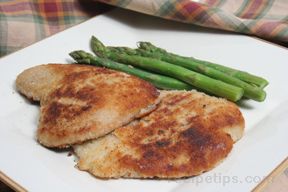
Pork Schnitzel Recipe

Pork Schnitzel Recipe

A delicious pork chop that is cooked and ready to serve in a few minutes....
Cooking Tips & Advice
Pork Recipes Article

Pork Recipes Article

Pork Recipes
Pork Cooking Times Article

Pork Cooking Times Article

PORK Cooking Temperatures and Times Oven cooked at 350°F  Cut Weig...
Recipe Advice Article

Recipe Advice Article

Reading the Recipe | Ingredient Preparation | Scaling Your Recipe Knowi...
Pork Cooking Tips Article

Pork Cooking Tips Article

Tenderness Tips Avoid freezing whenever possible to eliminate moisture...
Pork Doneness Article

Pork Doneness Article

Checking doneness is accomplished in basically the same manner regardle...
Glossary Terms
Pork Loin Glossary Term

Pork Loin Glossary Term

The loin is located on both sides of the backbone starting at the shoulder ...
Pork Rind Glossary Term

Pork Rind Glossary Term

The skin of a pig that is deep-fried in lard to make light, crunchy chips. ...
Recipe Glossary Term

Recipe Glossary Term

A written procedure for the preparation of a food item or items. Recipes ty...
Pork Roast Glossary Term

Pork Roast Glossary Term

A reference that can apply to several different cuts of pork used for roast...
Pork Glossary Term

Pork Glossary Term

A term customarily applied to the meat of a pig that is under a year old. T...
Cooking Videos
Cleaning Strawberries for Strawberry Recipes Video

Cleaning Strawberries for Strawberry Recipes Video

Check out this handy RecipeTips.com video demonstration for cleaning and pr...
Steaming Asparagus for Your Favorite Asparagus Recipes Video

Steaming Asparagus for Your Favorite Asparagus Recipes Video

Enhance the flavor and color of asparagus for all of your favorite asparagu...
Roasting Asparagus for Your Favorite Asparagus Recipes Video

Roasting Asparagus for Your Favorite Asparagus Recipes Video

Use RecipeTips.com's handy video demonstration to learn the easy way to pre...
Boiling Asparagus for Your Favorite Asparagus Recipes Video

Boiling Asparagus for Your Favorite Asparagus Recipes Video

Are you making asparagus soup or even pickled asparagus? Let RecipeTips.com...
Easy Asparagus Preparation for Terrific Asparagus Recipes Video

Easy Asparagus Preparation for Terrific Asparagus Recipes Video

Whether you are preparing asparagus soup, grilled asparagus, or roasted asp...
USDA Nutrition Facts

Pork cured bacon cooked broiled pan-fried or roasted reduced sodium

Pork cured ham boneless low sodium extra lean approximately 5% fat roasted

Pork cured ham low sodium lean and fat cooked

Pork cured ham boneless low sodium extra lean and regular roasted

Pork oriental style dehydrated

Advertise With Us ADVERTISEMENT
Clip and save Coupons available
Daily Feature
Shredded Chicken Recipe
view past daily features
Party Planner

Quick Searches

  appetizer   asparagus   chicken   chili   cookies   fish seafood   lemon   meat loaf   pork chops   shrimp   slow cooker   soup   stew   sugar cookies   turkey
RecipeTips.Com Home recipes-collections | pork recipes
Join Now | Sign In | RSS Feeds RSS Feeds | Share
Reproduction in whole or in part without written permission is strictly prohibited.
© Copyright 2010 Tecstra Systems, All Rights Reserved, RecipeTips.Com