|
One of the main differences in roasting a cooked ham versus an uncooked ham is the internal temperature that the ham must reach. Uncooked ham must be cooked until it reaches an internal temperature of 160°F. Fully cooked ham should be heated to an internal temperature of 140°F. There are various methods that can be used to produce juicy and flavorful ham.Each method for cooking ham may have different techniques that can be used, depending on the ham recipe being used or by personal preference of the person doing the cooking. For more information on preparing and cooking ham, see the complete Ham Guide.
Roasting/Baking
Fully Cooked Ham | Uncooked or Partially Cooked Ham
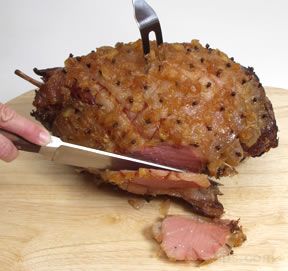
Roasting is a dry heat cooking method which is a popular choice for large tender cuts of meat. Roasting, which is basically the same method of cooking as baking, is often used when cooking hams. The skin is removed from the ham and a layer of fat is generally left on the ham to add flavor and help keep the meat moist while it cooks. The ham should be allowed to stand at room temperature for 2 hours before cooking. There are several methods of roasting or baking that can be used to cook a ham. The methods will also vary according to whether the ham is cooked or uncooked, and according to the type of ham (city ham, country ham, or canned ham) being cooked. Some recipes may also call for basting the meat throughout the cooking time, but basting with the hams own juices will cause the ham to become more salty. Shown below are some basic roasting and baking methods that can be used.
Fully Cooked Ham
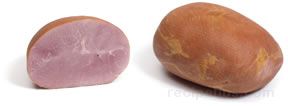
Wet Cured (City) Ham - A fully cooked ham does not need additional cooking. It can be eaten right out of the package but heating it properly will bring out its natural flavor and juiciness. There are many variations as to how to heat a fully cooked ham. Shown below are some common methods that can be used.
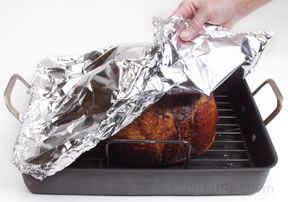
Covered:
|
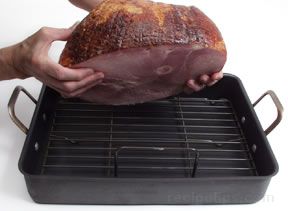
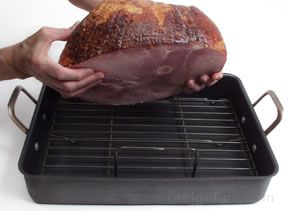
- After trimming the skin and some of the fat, place the ham in a shallow baking pan with fat side up. Half hams should be placed with cut side down.
|
|
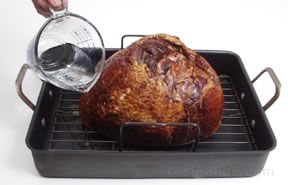
- Add one cup of water to the roasting pan.
|
 |
|
- Bake until internal temperature reaches 135°F. Allow ham to rest for 15 minutes before carving. Internal temperature should rise to 140°F during this time.
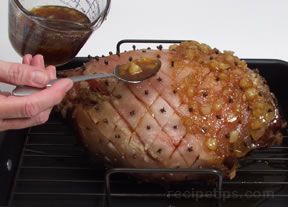
- If using a glaze, the glaze should be applied during the last 30 minutes of cooking. See Glazing for more information.
|
Uncovered:
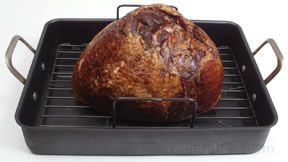
- After trimming the skin and some of the fat, place the ham on a rack in a shallow baking pan with fat side up. Half hams should be placed with cut side down. Add 1/4 inch of water to the bottom of the roasting pan.
|
|
|
|
|
|
|
- Bake until internal temperature reaches 135°F. Allow ham to rest for 15 minutes before carving. Internal temperature should rise to 140°F during this time.
- If using a glaze, the glaze should be applied during the last 30 minutes of cooking.
|
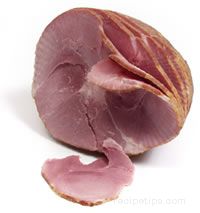
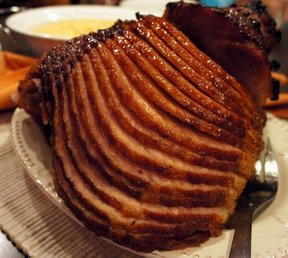
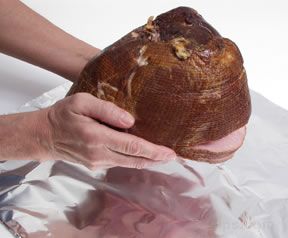
Spiral Sliced Ham - This ham is generally fully cooked and ready to eat. If warming is desired, wrap tightly in foil before baking.
|
- Place the ham, cut side down, on a large piece of foil with the shiny side up.
|
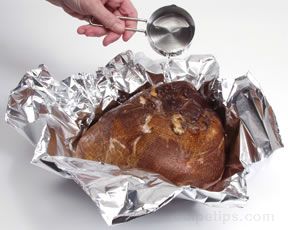 |
- Draw up sides of foil and the add 1/2 cup of water.
|
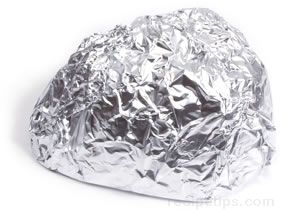 |
- Fold foil tightly around the ham and then place in the oven to bake. Heat as directed or see the Time and Temperature Chart below.
|
Canned Ham - Place the ham on a rack in a shallow baking pan. Do not cover the ham. Place in a preheated oven and bake until the internal temperature reaches 140°F.
Uncooked or Partially Cooked Ham
Dry-Cured (Country) Ham - After soaking and washing the country ham (see Ham Preparation), it is ready to be cooked. There are several methods that can be used to bake a country ham. Some of the common methods are shown below.
Covered:
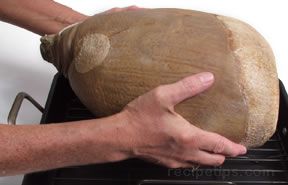
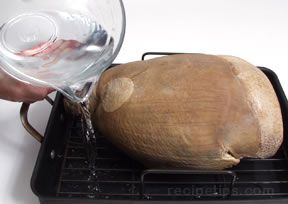
- Place the ham, skin side up, in a large roaster.
|
|
 |
|
|
|
 |
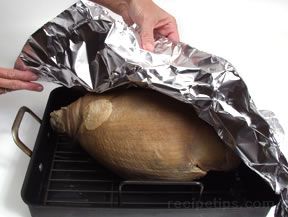
- Place the cover on the roaster or if it does not have a cover, use foil to cover tightly. Place in an oven preheated to 375°F. Turn oven up to 500°F and leave for 10 minutes only.
|
|
|
- After 10 minutes, turn the oven off and allow the ham to set in the oven for three hours. After three hours, turn the oven back on to 500°F again for 15 minutes. Be sure this time does not exceed 25 minutes. Turn the oven off again and allow the ham to set in the oven for 6 to 8 hours.
- Do not open the oven door any time throughout this process of cooking. When done, the internal temperature of the ham should be at least 155°F.
- Allow ham to rest for 15 minutes to allow the juice to be distributed throughout the meat. The internal temperature should rise to 160°F during this time.
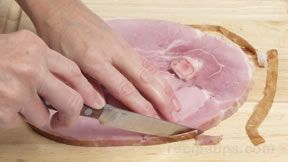
- Remove skin and fat while the ham is still warm and carve as desired. If glazing, leave a 1/4-inch layer of fat on the ham. See Glazing for more information.
|
Oven Cooking Bag:
Cooking with an oven cooking bag is a good method to use for cooking ham. They provide more even cooking and help shorten the cooking time.
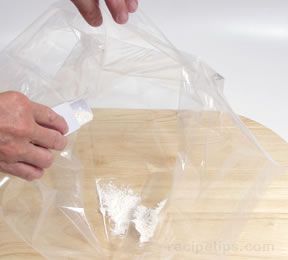 |
- In a large 19" x 23 ½" oven cooking bag, shake 1 tablespoon of flour. The flour will help prevent the bag from bursting while cooking.
|
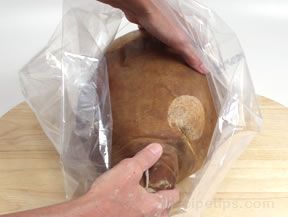 |
- Place the ham, skin side up, in the oven bag.
|
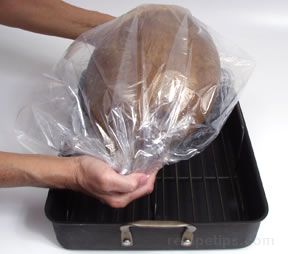 |
- Place the bag and ham in a large roaster that is at least 2 inches deep.
|
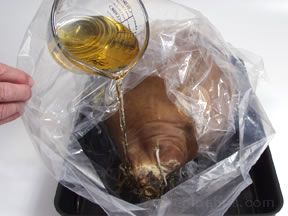 |
- Add 3 to 4 cups of water or other liquid to the bag. The liquid used in the bag could consist of fruit juice or wine, or a carbonated beverage, such as cola.
|
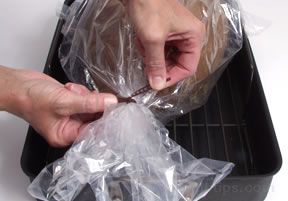 |
- Close the bag securely with a nylon tie.
|
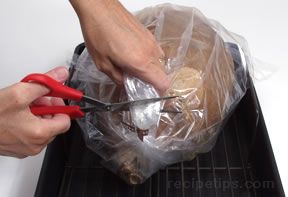 |
- After tying the bag securely, trim tied end of the bag to approximately 1 inch above the tie. This will help prevent the bag from touching the top or sides of the oven.
|
|
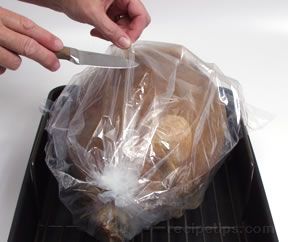
- Make six ½ inch slits on the top of the bag to allow steam to escape from the bag as the ham cooks. This will help prevent the bag from bursting as the steam builds up inside the bag.
|
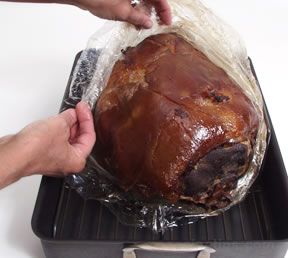
- Place the ham in an oven preheated to 325°F for 20 to 25 minutes per pound or until internal temperature reaches 155°F on a meat thermometer. Be sure the cooking bag is not touching the sides or top of the oven, otherwise the bag might melt.
|
 |
- Remove the ham from the oven and discard the bag and drippings.
|
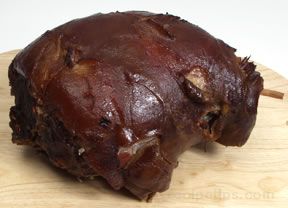 |
- Allow ham to rest for 15 minutes and the internal temperature should rise to 160°F during this time. Remove skin and fat while the ham is still warm and carve as desired. If glazing, leave a 1/4-inch layer of fat on the ham. See Glazing for more information.
|
Uncovered:
- Place the ham on a rack in a roaster with fat side up or half hams should be placed with cut side down.
|
|
|
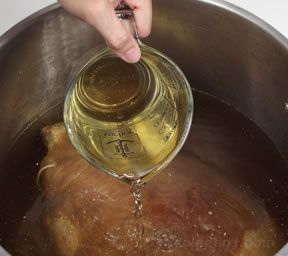
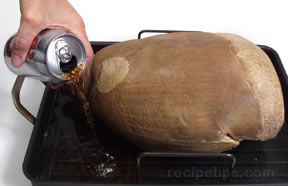
- Add 2 inches of water to the roaster. A mixture of water, brown sugar, and vinegar can be used in place of plain water or a can of carbonated beverage, such as cola could be added to the water.
|
|
|
- Do not cover the ham. Place in a preheated oven and bake (see Time and Temperature Chart below). Bake until internal temperature reaches 155°F. Allow ham to rest for 15 minutes and the internal temperature should rise to 160°F during this time.
- Remove skin and fat while the ham is still warm and carve as desired. If glazing, leave a 1/4-inch layer of fat on the ham.
|
Wet Cured (City) Ham
Uncovered:
- Use the same method as shown above for the uncovered fully cooked wet-cured ham.
- The uncooked or partially cooked wet cured (city) ham will require more cooking time than the fully cooked ham and must reach an internal temperature of 160°F.
- Bake until internal temperature reaches 155°F. Allow ham to rest for 15 minutes before carving. Internal temperature should rise to 160°F during this time.
- If using a glaze, the glaze should be applied during the last 30 minutes of cooking.
|
Roasting / Baking
Time and Temperature Chart
Oven Temperature = 325°F
Note: The times shown below are approximate cooking times per pound. Actual cooking time may vary.
To be sure that the ham is properly cooked, always check the internal temperature reading.
| Type of Ham |
Cooking Time per Pound |
Internal Temperature |
| Remove from Oven |
Finish Temp. After Resting |
| Fully Cooked Hams |
|
|
| Whole - Boneless |
15 to 18 minutes |
135° F |
140°F |
| Whole - Bone-in |
15 to 18 minutes |
135° F |
140°F |
| Half - Boneless |
18 to 24 minutes |
135° F |
140°F |
| Half - Bone-in |
18 to 24 minutes |
135° F |
140°F |
|
|
|
|
| Spiral Cut Ham |
10 to 14 minutes (@275° F) |
135° F |
140°F |
| Canned Ham |
15 to 20 minutes |
135° F |
140°F |
|
|
|
|
| Picnic Ham |
25 to 30 minutes |
135° F |
140°F |
|
|
|
|
| Uncooked or Partially Cooked Hams |
|
|
| Whole - Boneless |
18 to 20 minutes |
155° F |
160° F |
| Whole - Bone-in |
18 to 20 minutes |
155° F |
160° F |
| Half - Boneless |
22 to 25 minutes |
155° F |
160° F |
| Half - Bone-in |
22 to 25 minutes |
155° F |
160° F |
|
|
|
|
Whole/Half Cooked
in an Oven Bag |
20 to 25 minutes |
155° F |
160°F |
|
|
|
|
| Picnic Ham |
30 to 35 minutes |
155°- 165° F |
160° - 170° F |
|
|
|
|
| Fresh Ham |
25 to 30 minutes |
|
|
The length of time a ham will have to cook will depend on the size of the ham and whether it is a fully cooked, partially cooked, or uncooked ham and whether it is bone-in or boneless. The best way to determine if the meat has cooked long enough is to check for doneness. It is important not to overcook the ham to maintain its juiciness. If it is not a fully cooked ham, it also needs to be cooked to the proper doneness to make it safe to eat. Shown below are signs to look for when determining doneness. For more information, see Ham Cooking Guide - Ham Doneness.
- When poked with a meat fork, the meat will show little resistance.
- The meat will begin to separate from the bones and the larger bones will be easy to move.
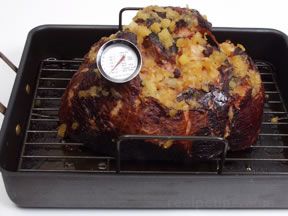
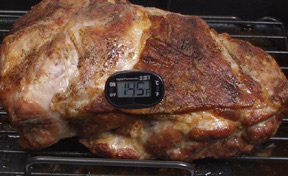
- To ensure doneness, check with a meat thermometer. A thermometer inserted into the thickest part of the cut should produce a temperature of 160°F for an uncooked or partially cooked ham and 140°F for a fully cooked ham.
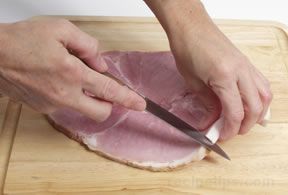
For best results, the meat should be removed from the oven when its internal temperature reads 5° below the final desired temperature and then it should be allowed to rest (a waiting period before carving) for 10 to 15 minutes. During this time the meat will continue to cook and will reach the 160°F for uncooked ham or 140°F for the fully cooked ham. Resting also allows the juices to be distributed through the meat before it is carved. Slice or carve to desired thickness.
Roasting/Baking Tips:
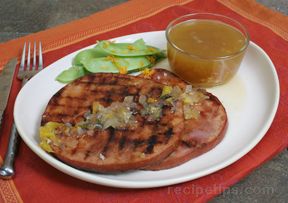
- To add extra flavor, apply a glaze to the ham during the last 30 minutes of the cooking time.
- Roasting at a lower oven temperature (NEVER roast meat below 200°F) will result in meat that is more flavorful and moist. It will take longer to cook but the results will be worth the wait.
- Do not use sharp utensils that may pierce the ham when trying to turn it because piercing allows valuable juices to escape. Use other utensils, such as wooden spoons and spatulas for handling the ham.
- If cooking more than one ham, be sure that there is uniform space around them so that they will cook evenly. The hams should not be touching and there should be enough room around them to allow air and heat to circulate.
- When placing a thermometer in the meat to check for doneness, be sure that the stem is not touching a bone because this can result in a false reading.
|