


|
It is important to be familiar with the different cuts that are available, know what to look for on the food labels, know what to look for when visually checking the ham, and be able to determine how many servings per pound the type of ham you have selected will provide. Whether you are roasting a ham or using another method of cooking, you want to be sure you are purchasing the right type of ham product for what you are cooking. Knowing how much to buy will allow you to purchase enough to end up with leftovers so that you will have enough to prepare your favorite leftover ham recipe. The following information will help you make a purchase suited to your needs. See the Ham Buying Guide, for more detailed information on buying a ham.
| |||||||||||||||||||||||||||||||||||||
| Bone-in Ham |
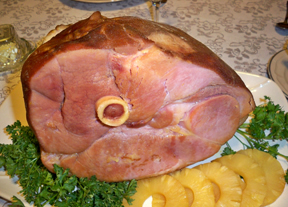
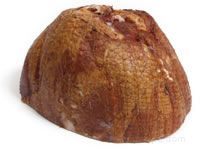
A butt, shank, or whole/half leg that has the hip, thigh and/or shank bone remaining |
Provides 2 to 3 servings per pound |
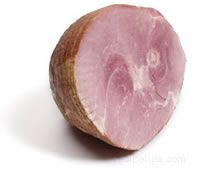
| Boneless Ham | Round, oblong or rectangle-shaped cut with all bones and most fat removed | Provides 4 to 5 servings per pound |
| Semi-boneless Ham | Leg primal cut that has only the leg bone remaining | Provides 3 to 4 servings per pound |
Types of Ham
The terms below will help to explain the types of ham available and the preparation that will be required.
| Fully-Cooked Ham |
Ham that has been heated through to the middle reaching temperatures exceeding 147º F, ready to eat without further cooking. |
| Partially Cooked Ham | Ham that has been heated through to the middle reaching temperatures exceeding 137º F, still requires additional cooking. |
| Uncooked Ham | Ham that requires cooking to prepare meat for eating. |
| Boiled Ham | Ham that has been boned, cured and cooked using a process that includes boiling the ham in water. It does not require cooking. |
Shown in the chart below are different types of hams that are available and appropriate for any type of gathering. When selecting a ham it will generally have a description on the label that includes one or more of the terms from the tables above and below.
|
| |||
|
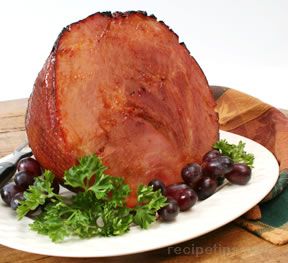
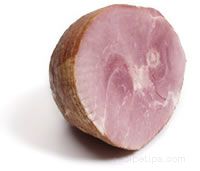
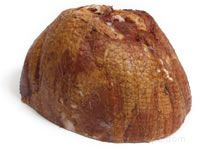
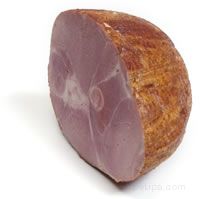
A processed cut which includes both the butt ham and shank ham from the leg. Whole hams can weigh from 10 lbs. to 20 lbs. or more. They are available bone-in and boneless. | |||
|
| |||
| A processed cut taken from the top half of the leg. It contains more fat than the bottom half but has more meat and is easy to carve around the bone. It is generally more expensive than the shank ham. | |||
|
| |||
| A processed cut taken from the bottom half of the leg. It contains less fat, is not as meaty as the butt ham, and is also harder to carve. It has a slightly sweeter flavor. | |||
|
|
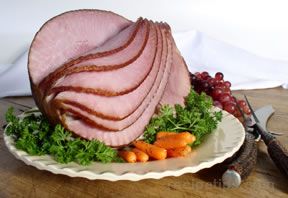
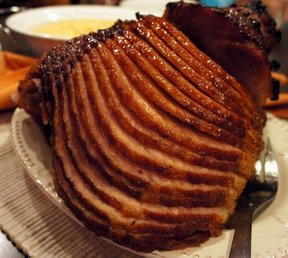
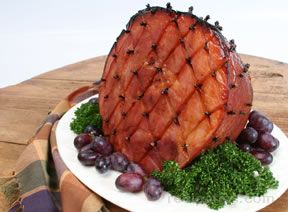
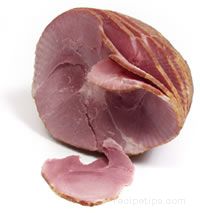
A precooked ham that has been presliced in a spiral cut for your convenience. A spiral cut is a cut that is made with one continuous cut around the ham, starting at one end and moving consistently to the opposite end to create the same thickness of slices throughout. | ||
Food Safety
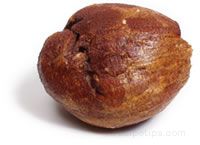
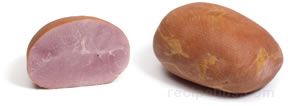
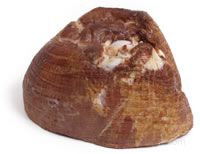
- When selecting a whole ham or shoulder a visual inspection will be difficult because you will not be able to see any of the inside area of the cut. The meat of the cut you are selecting should be pink with a white to grayish tint of coloring and have a fine-grained texture. Meat from the loin is generally lighter in color than the meat from the shoulder or leg. The meat should be firm to the touch, look moist but not slimy wet, and should not emit any fowl odors. The fat on the outer edges should be creamy white and be blemish free. If the fat has a yellowish tint, it is old and probably close to being spoiled. The package containing the cut should be cool to the touch and free of any holes or tears.
- Pork should be purchased just before checking out at the store so it is exposed to unsafe temperatures for as short a time as possible. It should be placed in a plastic bag to prevent any leakage from contaminating any other foods. After purchasing it should be taken home and refrigerated as soon as possible.
- Raw pork should be stored in the refrigerator at 40°F or lower and should be used within three to five days of the "sell by" date on the package or it should be frozen. Freezing should be avoided if possible because it will cause the pork to be less tender and juicy but, if it will not be used within the three to five day refrigerator storage time, it should be frozen to prevent it from perishing. Freezing meat has little effect on its nutritional value.
- Pork should be stored tightly wrapped to prevent the meat from drying out when exposed to air. Whenever possible, leave the raw pork wrapped in its original package to minimize handling of the meat. If it is necessary to rewrap, be sure to wrap tightly in plastic wrap, foil, or leak proof bag, or place meat in an airtight container. The package should be placed on a dish with sides to prevent any meat juices from dripping on other foods and then stored in the coldest section of the refrigerator.
For more information on buying ham, see the Ham Shopping Guide.