|
Tenderness Tips
- Avoid freezing whenever possible to eliminate moisture loss that occurs during thawing. The moisture loss in thawing results in less tender meat.
- Keep pork from drying out in the refrigerator by keeping it tightly wrapped. If the meat dries out it will become tough.
- Cook to the proper temperature but do not overcook or the meat will become dry and tough.
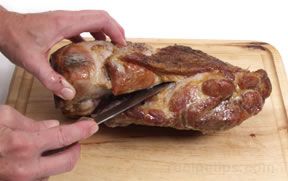
- Let meat rest for 10 to 15 minutes before carving to allow juices to be distributed throughout the flesh.
- Cutting meat across the grain will produce slices with shorter fibers, resulting in more tender pieces.
Light Tips
- When purchasing pork, look for cuts with lower fat content, such as cuts from the loin or leg.
- Before cooking, trim visible fat to reduce fat content almost in half.
- Cook pork using a low fat cooking method, such as roasting, grilling, broiling, steaming, poaching, braising, or stewing.
- Prepare pork with herbs and spices to enhance the flavor rather than using sauces.
- To reduce the amount of fat used when frying, stir-frying, sautéing, or searing pork in a pan, use a nonstick skillet which requires less added fat, or use a nonstick skillet with a fat free nonstick cooking spray.
- If using the drippings from roasted meat to make sauces and soups, cool in the refrigerator to cause the fat to rise to the surface. The fat will solidify, making it easy to remove and discard.
- After cooking ground pork, place in a strainer and rinse under hot water to remove excess fat.
- After stewed meat is finished cooking, let cool and then chill. Once the stew is chilled the fat will rise to the top and can be easily scraped off to be discarded rather than remaining in the stew. Leaving the stew sit overnight in the refrigerator will also enhance its flavor.
Cooking Tips
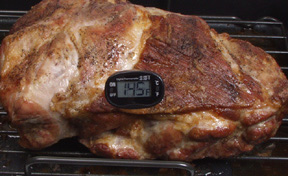
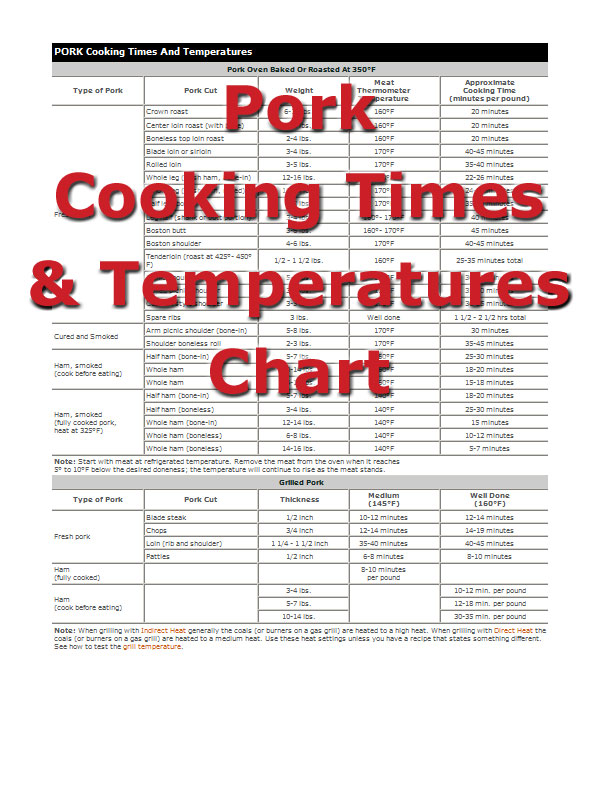
- Do not overcook pork or it will become dry and tough. The threat of trichinosis is eliminated when the pork is heated to 137°F but the USDA recommends cooking pork to 145°F to be safe. Cooking to 145°F will result in clear or slightly pink tinted juices and provides meat that is juicy and tender.
- When frying or sautéing, do not place a cover over the pan. This will lock in moisture and cause the meat to braise or steam.
- Lightly coat pork with vegetable oil to keep it from drying out during cooking.
- Before roasting pork, sear all sides to create a flavorful crusty surface on the meat.
- Do not overcrowd pork cuts when cooking. Leaving space between them will allow them to brown and cook more evenly.
- If using a marinade for basting, set some aside before placing raw pork in it to marinate. Never reuse marinade that the meat was marinated in.
- Poach uncooked sausages for a few minutes before frying, broiling or grilling. Sausage casings should not be pierced before poaching. Piercing will cause the juices to be released and sausages will become dry.
- Do not partially cook pork and then store in refrigerator to use later. It must be cooked until done. It can be partially cooked or browned using one method, such as microwaving or searing, and then immediately cooked until done using a different method, such as roasting, frying, grilling or broiling.
|