


|
Beef cuts should be selected according to the planned method of cooking. For example, if beef is to be cooked on a grill, a tougher cut from the round or plate should not be purchased, unless the intention is to tenderize the meat before cooking it. Even if the meat is tenderized, it will still not be as tender as a cut from the loin or rib, which do not require tenderizing. On the hand, there is no point in buying an expensive, tender cut, such as the tenderloin, if the recipe calls for the meat to be braised or stewed. Oven Roasts | Pot Roasts | Steaks | Ribs | Stir-Fry |Stew Meat | Ground Beef |
|
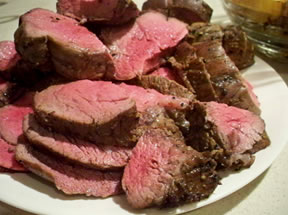
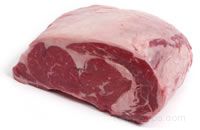
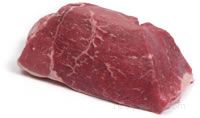
Cuts from the sirloin, such as the tri-tip or the top sirloin butt roast, are used more often than loin or rib cuts because they are less expensive. Some of the cuts from the round, such as the top round or eye round, are slightly tough and are better suited to braising than oven roasting. The bottom round (pictured) may be used as an oven roast if it is of the best quality and if it is roasted in a hot oven (450ºF), which will sear the exterior. A rib roast may be cut into two sections known as the first cut rib roast and the second cut rib roast. The first cut is also called a small end rib roast and includes ribs 9 through 12, which is nearer the loin primal. It is slightly more tender than the second cut, also known as the large end rib roast, which includes ribs 6 through 9 and is nearer the chuck cut. A rib roast may include the bones and is known as a standing rib roast or it may be boned, rolled, and tied and is known as a rolled rib roast. The tenderloin is the most expensive cut of beef. Although the weight and length of the tenderloin may vary, the diameter of the trimmed tenderloin is always the same. A tenderloin that is not trimmed may weigh as much as 9 pounds. It may weigh as much as 5 pounds when it is trimmed. The trimmed tenderloin makes an excellent roast or it can be cut into smaller pieces and sold as filet steaks. |
|
Most of the round cuts, which are often mistakenly purchased as oven roasts, are better suited to pot-roasting. Some of the best pot roasts from the round include the standing rump, the eye round, and the top round. The brisket cut is also used for pot roast because it is very tough. The moist heat of braising helps to tenderize the meat. |
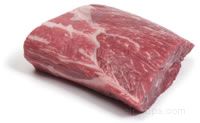 A pot roast is basically a cut of beef that is cooked in liquid in a pot on top of the stove. Beef cuts from the chuck and round are most often used for pot roast. The chuck section has more fat than the round, which makes chuck roasts more flavorful than round roasts. Among the chuck cuts to look for when preparing pot roast are the 7-bone, boneless shoulder, arm, top blade (pictured), cross rib, and the boneless eye.
|
Less expensive and a little less tender are the top boneless sirloin, tri-tip, and pin bone. They are also best when grilled or broiled, but they can become a bit tough if overcooked. Steaks that are flavorful, but tough and require some tenderizing, especially if they are to be grilled or broiled, include the chuck top blade, chuck eye, chuck arm, top round, flank, skirt and hanger steak. |
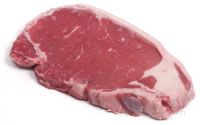
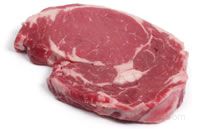 Some of the most tender steaks are obtained from the loin and the rib sections of the beef carcass. They are also the most expensive. Among these are the filet mignon, T-bone, Porterhouse, rib-eye (pictured), and top loin strip, which are most often prepared with grilling or broiling.
|
Back ribs (pictured) are the portion remaining after a rib roast is boned. The full back ribs are long and do not have a lot of meat, but they are tender and tasty when grilled. |
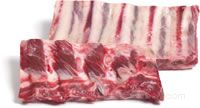 A short rib refers to a small piece that has been trimmed from the main portion of a rib when the rib cage is trimmed into smaller cuts. Short ribs are cut from the chuck and plate primals and back ribs are from the rib primal. Short ribs cut parallel to the bone are known as English style short ribs. They may include a bit of the bone or may be sold boneless. Short ribs that are cut across the rib bones are known as flanken.
|
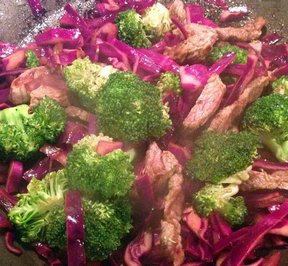
The best beef cuts to use for stir-fry are various sirloin cuts or more expensive top loin and rib-eye. It is more practical to use tougher, less expensive cuts, such as chuck arm, bottom round, flank, or brisket, which can be marinated first to tenderize. Cutting the meat across the grain into small strips also makes a tougher cut seem a bit more tender. |
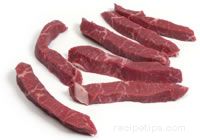 When choosing beef for stir-frying, select cuts that are tender and benefit from the quick, high heat cooking process of stir-frying. The beef should be cut into small strips and should have very little fat. The strips will ensure that the meat will cook thoroughly, even when it is only cooked for a short time.
|
You can also purchase the beef cut of your choice and cut it into pieces at home. It may be less expensive to trim and cut the beef yourself and as a result, you will know exactly what you're getting. Much of the beef used for stewing is obtained from the round cut, but almost any tough cut can be used because the stewing process helps to tenderize the meat. The best beef for stewing, in terms of tenderness and flavor, comes from the chuck. It has plenty of fat and connective tissue that melts during the stewing process, providing flavor and preventing the meat from becoming tough. |
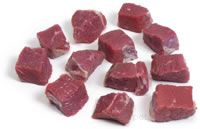 Beef for stewing can be purchased already trimmed, cubed, and packaged in most food stores. It is often labeled "stew meat" without describing the cut from which the meat was obtained. Look for stew meat that has some marbling and connective tissue which will provide more flavor and help to keep the meat as tender as possible.
|
The fat content can of ground beef can be determined by the cut from which the ground beef has been obtained. A product labeled ground chuck will contain at least 20% fat. It may even contain more than 20% fat because it is legal for suppliers to add fat to the product as long as the fat content does not exceed 30%. A product labeled 70% lean ground chuck indicates that extra fat has been added and the product meets the minimum standards for ground beef. Ground sirloin usually contains about 15% fat and ground round contains about 11%. Although some of the better ground beef may be labeled as ground round or ground sirloin, it may be difficult to know which cuts of beef have been used in a majority of the ground beef sold in food stores. In order to know exactly what you are getting, it may be beneficial to purchase the beef cut of your choice and then grind it at home, or you may have the butcher grind it for you. |
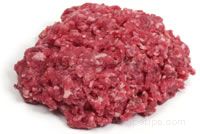 In order to be labeled ground beef, the product must be at least 70% lean. The package may say ground chuck, ground sirloin, or ground round based on the part of the animal from which the meat has been taken. It may just say ground beef, indicating that the meat may have been taken from several areas of the carcass. The leaner the ground beef, the higher the cost.
For more information on these and other products, see Beef Products.
| Note: When shopping for groceries, fresh beef (as well as other perishable products) should be selected last in order to reduce the length of time the meat is without refrigeration. If the meat is without refrigeration for more than an hour because of the travel time from the market, a cooler with ice should be used to transport the meat, and any other perishable food items, for the duration of the travel time. |