RecipeTips.Com Home cooking tips & advice | Knowledge | Tenderizing Beef
Join Now | Sign In | RSS Feeds RSS Feeds
Tenderizing Beef: Easy How-To Cooking Tips & Advice: RecipeTips.com
Recipes Cooking Tips & Advice Glossary Community Videos
hints
e-Newsletter
RecipeTips.com Newsletter Sign Up

Tenderizing Beef

print Print Tenderizing Beef article  |  email Email Tenderizing Beef article  |  rate this article Rate this article  | Bookmarks
Meat > Beef > Beef Preparation Guide > Tenderizing Beef

Pounding | Commercial Powders | Marinating | Rubs | Barding


Tenderizing makes it possible to purchase less costly beef cuts and still enjoy the tenderness that is usually found only in the more expensive cuts. Tenderizing methods allow some of the tougher cuts of beef to be cooked with high heat methods such as grilling and broiling, which are usually reserved for tender cuts. Described below are some of the most commonly used methods for tenderizing beef.

Pounding

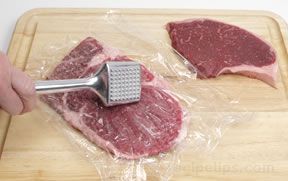
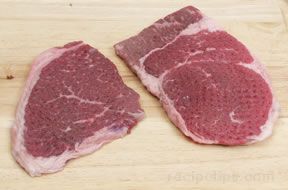
Tougher cuts of beef can be tenderized by pounding thin slices into even thinner slices, using a meat mallet. The pounding action flattens the meat and breaks up some of the fibers and connective tissues, making the beef a bit more tender.

Cooking the tenderized beef rapidly with high heat cooking methods is an important factor in keeping the meat tender. The flattened beef slices may be broiled, grilled, or sautéed, which provide excellent results.

Commercial Powders

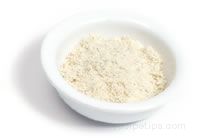
A powdered meat tenderizer can be purchased and sprinkled on tougher cuts of beef. The tenderizing powders contain enzymes that help break down the tougher fibers of the meat. The enzymes are often produced from pineapple and papaya extracts.

Marinating

Another option for tenderizing beef is with the use of a marinade. Soaking various cuts of beef in a marinade is a good method for adding flavor as well as to help tenderize the meat.

A proper marinade should contain an acidic ingredient such as vinegar or wine, oil such as olive oil, and seasonings such as herbs and spices. Citrus fruit juices may be used in place of the vinegar or wine to provide the acidic ingredient that is necessary to soften the tissues of the meat.

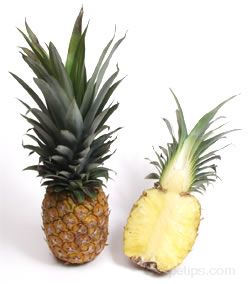
Fresh pineapple juice is an excellent ingredient for a marinade because it contains one of the most powerful natural tenderizers, the enzyme bromelin, which is very efficient in breaking down protein. This enzyme is destroyed if it is heated, so when using pineapple juice for the purpose of tenderizing meat, the juice must be fresh. (Any previously cooked or canned pineapple juice has no effect on tenderization.)

There are several important points to remember when using a marinade:

  • Quantity: The marinade should totally cover the meat in order for it to work effectively.
  • Soaking Time: When using tender cuts of beef, a soaking time of 2 hours or less is all that is required because the marinade is used basically to flavor the meat. Tougher cuts of beef should be soaked in the marinade for several hours or overnight in order to tenderize the meat as well as flavor it.
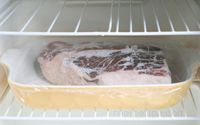
  • Refrigeration: Always marinate beef in the refrigerator.
  • Proper Containers: Since the marinade contains an acidic ingredient, reactive containers such as metal bowls should not be used. It is best to use containers such as glass or plastic bowls or plastic bags that can be sealed.
  • Reuse: The marinade should not be reused for any other purpose because of the bacteria that may be present from having been in contact with the raw meat. The only way the marinade can be reused is to boil it thoroughly to be used as a basting liquid or as part of a sauce for the meat.

Rubs

An additional option for tenderizing beef, as well as adding flavor to it, is with the use of a rub. A dry mix of herbs and spices are applied to the raw beef and are allowed to permeate and flavor the meat over a period of time, usually overnight in the refrigerator. An endless variety of rubs can be prepared for beef depending on the types of flavors that you want to add to the meat.

  • Application: A rub mixture can be rubbed onto the meat, but the moisture from the meat can cause the dry ingredients to stick to your hands. The best results often occur when the ingredients are sprinkled evenly on all sides.
  • Ingredients: Some of the ingredients that may be used for a dry rub include black pepper, cumin, chili powder, crushed red pepper, celery seed, garlic powder or fresh crushed or minced garlic, salt, and brown sugar.
  • Paste Rub: A small amount of liquid may be added to the mixture in order to create a dry paste, which may be preferred in some cases. Some of the liquids that are often used are vinegar, cider vinegar, wine, or fruit juice.
  • Sugar Usage: Use sugar sparingly because it will melt and burn during the cooking process, especially if the beef is grilled or broiled. Too much of the burnt sugar will provide unpleasant results. Only a small amount of sugar is necessary to provide adequate flavor.
  • Results: Both the dry rub and the paste will form a flavorful crust when the beef is cooked. Rubs are most often used with beef ribs that will be grilled or barbecued, but they can be used with almost any cut of beef.

Barding

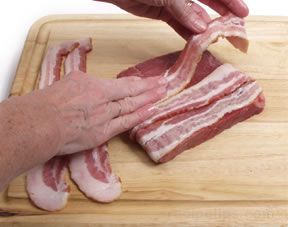
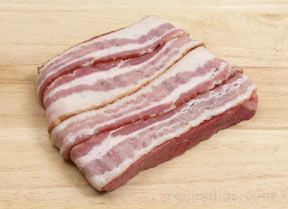
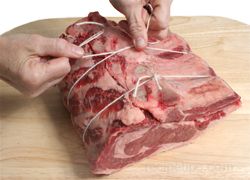
Barding consists of wrapping thin layers of beef fat or bacon around cuts of beef. Some of the fat melts during the roasting process, which adds moisture and flavor to the meat and serves as a natural tenderizer. The remaining fat can be removed after the meat is cooked.

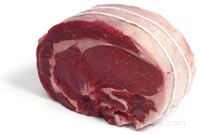
If you plan to roast a lean, tough cut of beef rather than braise it, then barding may be beneficial. Lean cuts of beef, such as cuts from the round, which are among the muscles responsible for locomotion, are usually tough because often used muscles are less tender than seldom used muscles. Muscles that are constantly worked also lack internal fat, known as marbling.

Suspension muscles from the center of the animal, located in the rib and loin area, are very tender because they do not move as much as muscles in the front or rear portions of the animal. As a result, beef cuts from the loin and rib never require barding.

More Beef Preparation Guide >>

Tenderizing Beef article - Related Content

Collections
Soup Recipes

Soup Recipes

View our collection of homemade soup recipes.
Cooking Tips & Advice
Beef Cooking Times

Beef Cooking Times

Beef cooking temperatures are important to monitor in order to insure meat is safely cooked to the proper temperature. When preparing beef, use the chart below as a guide to ...
Beef Rotisserie Cooking

Beef Rotisserie Cooking

General Guidelines | Charcoal Grill | Gas Grill | Doneness Rotisserie cooking requires three key components: The spit assembly, a means to turn the spit, and a heat ...
Beef Recipes

Beef Recipes

Beef Article
Beef Doneness

Beef Doneness

General Guidelines | Degree of Doneness | Meat Thermometers General Guidelines Even though harmful bacteria are usually only on the surface of whole beef cuts, there ...
Beef Cooking Introduction

Beef Cooking Introduction

In order to cook beef properly, the appropriate cooking method should be selected for each type of beef cut. For example, if you plan on using grilling as a cooking method, a ...
Recipes view more
Beef Tacos with Onion Jam and Horseradish Cream

Beef Tacos with Onion Jam and Horseradish Cream

A British variation on a Mexican favorite—the traditional beef and horseradish of England becomes part of a Mexican taco filled with a tasty onion jam that makes the flavor of this beef taco recipe so distinctive.
Beef Jerky

Beef Jerky

Great tasty snack for anytime!
Beef and Biscuit Bake

Beef and Biscuit Bake

A clever way to use simple ingredients to create an easy to prepare, rib-sticking main dish.
Beef Crostini with Red Pepper Mayonnaise

Beef Crostini with Red Pepper Mayonnaise

The flavor of the roasted red pepper and basil pairs well with the beef tenderloin in this wonderful Italian style hors d’ oeuvre.
Beef & Mushroom Stroganoff

Beef & Mushroom Stroganoff

Easy comfort meal for any night of the week.
Glossary Terms
Beef Loaf

Beef Loaf

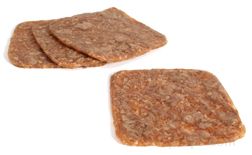
A sandwich meat that is made with cooked beef shavings encased in gelatin and formed into a rectangular-shaped loaf approximately 12 inches in length that is typically 4 inches ...
Beef Noodle Soup

Beef Noodle Soup

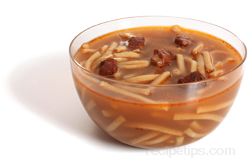
A hearty noodle soup made from a combination of egg noodles, small chunks of beef, beef stock, and seasonings. Beef Noodle Soup provides a beefy flavor enhanced with the addition ...
Beef Barley Soup

Beef Barley Soup

Hearty and quite filling, this savory soup can be be served as a main meal for lunch due to the quantity of ingredients typically added to the soup. Most often Beef Barley Soup ...
Beef Chuck

Beef Chuck

The area of a steer that extends from the neck to the fifth rib of the chest cavity. Included in the Beef Chuck is the meat extending from the shoulder to the arm most often ...
Beef Stew

Beef Stew

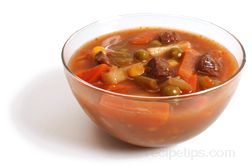
A food dish that combines beef with a variety of other ingredients, such as potatoes, vegetables, herbs, spices, and broth to create a savory dish, rich in flavor and often served ...
USDA Nutrition Facts

Beef bologna reduced sodium

Beef brisket flat half separable lean and fat trimmed to 18 fat choice cooked braised

Beef brisket flat half separable lean and fat trimmed to 18 fat select raw

Beef brisket flat half separable lean and fat trimmed to 18 fat choice raw

Beef flank separable lean only trimmed to 0 fat select raw

Quick Tags
  Beef   Beef Preparation Guide   Meat
Clip and save Coupons available
Advertise With Us ADVERTISEMENT
Daily Feature
Crab Rangoon Stuffed Wonton Recipe
view past daily features
Party Planner
RecipeTips.Com Home cooking tips & advice | Knowledge | Tenderizing Beef
Join Now | Sign In | RSS Feeds RSS Feeds
Reproduction in whole or in part without written permission is strictly prohibited.
© Copyright 2008 Tecstra Systems, All Rights Reserved, RecipeTips.Com