


Cleanliness | Contamination | Doneness | Pasteurization | Proper Storage
Cleanliness
| It is important to follow the fundamental rules of cleanliness and proper hygiene when preparing eggs and egg products. Wash your hands before and after egg preparation. If multiple foods are being prepared at one time, your hands should be washed thoroughly after preparing each different food item to avoid spreading possible bacteria from one food to another (cross contamination) and to yourself. |
|
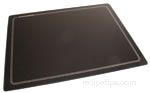
Cutting boards used in the kitchen are best when they are constructed of non-porous materials. Tempered glass cutting boards are among the best cutting surfaces to use because there is virtually no problem with cracks and pores harboring harmful; bacteria, whereas wood and soft plastic surfaces often become scarred and gouged with repeated use. After every use, cutting boards should be washed thoroughly with hot soapy water. A mixture of bleach and water or an antibacterial spray can also be used to kill germs. All other work surfaces (such as countertops) and all utensils used in food preparation should also be thoroughly cleaned. |
Glass Cutting Surface
|
|
Beware of kitchen washcloths and towels that have been used on multiple surfaces, because they can be a good source for spreading germs. Use paper towels or other disposable cloths whenever possible. |
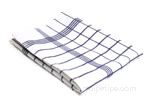 |
Kitchen Towel Kitchen towels used for cleaning multiple surfaces may cause contamination. |
Contamination
Egg ContaminationThe risk of eggs being contaminated with harmful bacteria and causing illness is very low. The chance of becoming ill from consuming eggs is no greater than that any other perishable food; in fact, the risk is often much lower than a wide range of other foods. It is estimated that only 0.005% (1 in 20,000) of eggs may be contaminated with the salmonella bacteria, but even with a risk this low, it is wise to cook eggs to the proper doneness to ensure safety. Proper cooking kills the salmonella bacteria in any eggs that may have it. The eggshell is a good natural barrier for preventing bacteria from entering the egg, but since it is porous, it does not guarantee that an egg will remain germ free. Other barriers within the egg, such as the shell membrane, the four layers of the white, and the yolk membrane (vitelline), help to prevent bacteria from entering the yolk, which is a perfect environment for harmful bacteria to thrive. The eggshell may contain other types of bacteria and dirt, so in the United States, eggs are thoroughly washed before they are sold to the consumer. After sanitizing, eggs are usually given a light spray of mineral oil to coat the shell, replacing the natural protective coating that was lost during the washing. In eggs that are contaminated with salmonella, the bacteria are more likely to be found in the white, but are unable to thrive because of the lack of nutrients. The white is an alkaline substance which also discourages the growth of bacteria. The egg white acts as a natural protection for the yolk, preventing bacteria from entering the yolk and thriving in the nutrient rich environment. The white thins out as the egg ages, which makes it easier for bacteria to reach the yolk. Refrigeration slows bacterial growth, so it is important to store eggs properly. Never use eggs that are cracked, leaking, or stuck to the bottom of the carton. Even when there isn't a visible crack, an egg that is stuck to the carton, even slightly, may indicate that it has leaked; therefore, it should not be used. Cross ContaminationCross contamination is extremely important to guard against. Various types of foods should be kept separate from each other during storage and preparation. Never store ready to eat foods next to raw eggs, raw meats, or raw fish. Germs from perishable food items may contaminate the ready to eat foods. If cutting boards are used in your kitchen, it is a good idea to use one for meats and a different one for fruits and vegetables. Never use the same knives and utensils for preparing multiple food items unless they are washed before using them on a different item; for example, the knife that was used to cut raw beef should not be used to chop a hard-cooked egg unless the knife has been thoroughly washed first. Failure to wash the knife may cause cross contamination. It is also very important to wash your hands often during food preparation to avoid transferring harmful bacteria from one food item to the next. If you were handling raw meat, for example, you would want to wash your hands thoroughly before chopping vegetables in order to reduce the risk of transferring bacteria from the meat to the vegetables. Additional Points to Consider Concerning Contamination |
|
 |
|
|
|
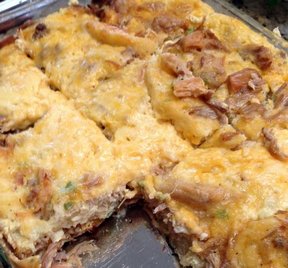
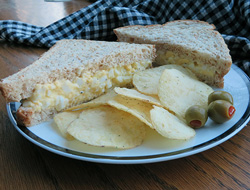
Other Foods that are Known to have been |
|
Orange Juice |
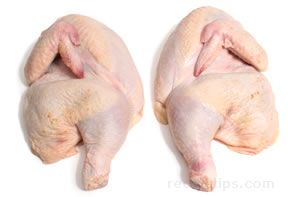
Chicken |
|
Cheese |
Tomatoes |


Doneness
|
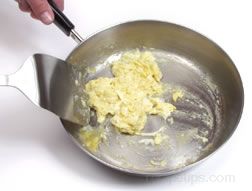
The best way to guard against the spread of bacteria and foodborne illness is to cook eggs thoroughly. Thorough cooking doesn't mean that eggs must be overcooked, which can make eggs tough and rubbery; it simply means the eggs should be cooked to a temperature that is sufficient to kill any harmful bacteria that may be present. Most harmful bacteria cannot survive a temperature of 160°F or greater; in fact, salmonella is destroyed instantly when subjected to a temperature of 160°F. An egg (white and yolk) requires a temperature of up to 158°F before it sets properly. The white alone requires a somewhat lower temperature before it coagulates, usually in the 140° to 150° range. These temperatures are only slightly less than what is required to destroy all of the harmful bacteria that may be present, so heating eggs to 160° F should not cause eggs to be overcooked, unless they are held at that temperature (or higher) for an extended period.
Cooking eggs slowly with heat that is not too high should destroy harmful bacteria, as well as allow for proper doneness. There are exceptions to this, such as when cooking a plain omelet. The eggs are cooked very quickly, but the heat used for cooking an omelet is also much higher, which eliminates any possible bacterial contamination. Baked egg dishes, such as breakfast egg bakes and quiches, can be checked for proper doneness using a kitchen thermometer placed in the center of the dish. The thermometer should register 160°F to ensure proper doneness. Eggs cooked in the microwave may not cook evenly, so it is important to rotate the dish several times during the cooking process (unless the microwave oven is equipped with a carousel unit). Covering the dish during microwave cooking is recommended because steam is trapped inside the dish, which helps to cook the eggs more quickly and evenly and prevents the eggs from drying out. |

Pasteurization
Pasteurized Egg ProductsIn the United States, all egg products that are distributed to the consumer must be pasteurized. These products include whole eggs, whites, and yolks produced in liquid, dried, or frozen forms that may or may not be blended with other ingredients to add volume or flavor. The pasteurization process destroys any harmful bacteria that may be present in the eggs at the time of processing, but it does not guard against future contamination; therefore, it is important to properly handle and store pasteurized egg products to prevent possible contamination. When shopping for egg products, look for the USDA mark of inspection that appears on pasteurized egg products. |
Pasteurized Egg Yolks |
Pasteurized Shell EggsPasteurized shell eggs are heated for a period of time to destroy any harmful bacteria that might be present, but the process does not cook the eggs. The eggs are safer to use than non-pasteurized eggs for recipes that traditionally call for the use of raw or partially cooked eggs; however, the USDA still recommends using the eggs in dishes that are fully cooked. This is especially important when serving the dish to high risk persons, such as people with weakened immune systems, young children, or elderly people. |
Pasteurized Shell Eggs |
| There is no difference in the outcome of cooked or baked egg dishes when using pasteurized shell eggs rather than untreated eggs; however, there is a noticeable difference between the two when beating the egg whites into peaks, specifically, in the time required to form the peaks. Pasteurized egg whites may require three to five times the beating time required for untreated eggs. Instead of using whole pasteurized shell eggs for recipes requiring beaten egg whites, you can use pasteurized egg whites that are in a liquid state or have been dried into a powder. Some pasteurized egg white products are available containing no other ingredients, while others may contain additives that help build the volume when beating the egg whites. The additives also help to stabilize the foam. | |

Proper Storage
|
Eggs should never be stored at room temperature, but there are recipes that require eggs to be at or near room temperature before incorporating the eggs into the other ingredients in the recipe; for example, egg whites that will be used for beating should be at room temperature to ensure the best results. Egg whites that are still cold from the refrigerator will not reach the maximum possible volume when beaten, which may have an adverse effect on the outcome of the recipe. Approximately thirty minutes is required for eggs to reach room temperature after removal from the refrigerator; however, keep in mind that like many other perishable foods, eggs should not be away from refrigeration for more than two hours. This means that the time required to raise the temperature of the eggs to room temperature, as well as the total preparation time of the recipe, should not exceed the two-hour maximum time without refrigeration. This time limit should be considered when you plan the steps required for the preparation of a recipe. If the total preparation time is three hours but the egg whites are not needed until the end of the preparation, you should not pull the eggs from the refrigerator too soon; otherwise, the eggs may be without refrigeration for too great a time period. Always err on the side of proper safety and handling. | |
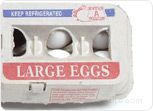
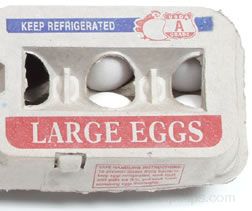
Refrigerator StorageEggs should be stored in the refrigerator in the original carton. Many refrigerators provide storage areas for eggs within special units built into the door, but this is not the ideal place for storing eggs. This is because the refrigerator door is the storage area that experiences the greatest fluctuations in temperature, mostly because opening and closing the door never allows the door to remain at a constant temperature. Eggs should be stored in the coldest part of the refrigerator where the temperature remains constant; in other words, on a lower shelf near the back of the refrigerator. |
 |
|
Eggs keep best when they are stored at temperatures of no higher than 40°F (which is the highest temperature recommended for proper food storage). The ideal temperature range is 33°F to 38°F. When the temperature is above 40°F, harmful bacteria may grow rapidly. Although salmonella are not destroyed in temperatures below 40°F, any of the bacteria that may be present will not multiply when the temperature is below 40°F. Eggs should be stored with the rounded end pointed up in order to keep the air cell on top and to help keep the yolk centered in the egg. Never store eggs next to strong smelling foods. Eggshells are porous, and over time, strong odors may be absorbed into the egg. This is another reason why it is a good idea to store eggs in the original protective carton. | |
Freezer StorageFor long term storage, eggs and egg products may be frozen. If stored properly, eggs will emerge from the freezer in a condition that is no better or worse (in terms of quality) than when the eggs first entered the freezer. The temperature of the freezer compartment must be at 0°F or less, and the eggs should be stored in an area of the freezer where there is the least amount of temperature fluctuation. Eggs and egg products should not be stored in the door compartment of the freezer, especially if the door is opened frequently. Whole eggs can be beaten slightly and placed in a container with a tight seal and stored in the freezer for up to one year. Egg whites also can be stored for up to a year in a tightly sealed container in the freezer. When storing egg yolks in the freezer, a small amount of sugar or salt should be added to prevent the yolks from becoming too thick and gelatinous over time. Add a pinch of salt per yolk if the yolks will be used for savory dishes, or add about a ¼ teaspoon of sugar per yolk if the yolks will be used for sweet dishes. Egg yolks stored in this manner (in a tightly sealed container) will keep in the freezer for one year. Like other perishable foods that have been frozen, eggs should be defrosted in the refrigerator and should never be allowed to thaw at room temperature. Thawing foods on the countertop encourages the growth of harmful bacteria, especially on the outside edges of the food. | |