Read the Label | Inspection and Grading | Look and Feel | Quantity to Buy | Shopping Tips
Read the Label

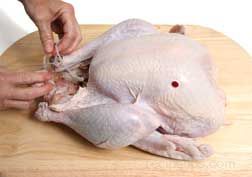
When buying a whole turkey, turkey parts, or any type of turkey product, it is important to read the label to ensure that you selecting a product that fits your requirements. Whole turkeys sold in food stores are inspected by the USDA, so you can be sure that the turkeys are safe and of good quality. Look for the USDA stamp on the label.
The youngest turkeys have the most tender meat. Most commercially produced turkeys are young turkeys, so the meat is usually always tender if the turkey is rated Grade A and if it is cooked properly. The youngest turkeys that are available, usually less than 4 months old and under 8 pounds in weight, are labeled fryer/roasters and have the most tender meat of all.
The designation of the turkey being male (tom) or female (hen) may or may not be found on the label because it has nothing to do with the tenderness or overall quality of the bird. The main difference is that a tom turkey ready for market is larger than a hen.
Turkey processors and food stores use several different dating methods to ensure that the consumer receives a product that is fresh and safe to eat. The dating methods are described in the table below.
| Product Dating Methods |
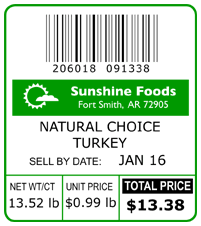
Sell By A whole turkey or turkey product that has the words, "sell by", followed by a date stamped on the package, indicates that the food store may display the product for sale until that date and the consumer should purchase the turkey or turkey product before the date expires. The turkey is still safe to use for another one or two days beyond the sell by date. |
|
Best if Used By or Best if Used Before A product with the words, "best if used by" or "best if used before", followed by a date, indicates that the optimum flavor and quality can be enjoyed if the turkey is prepared before the date expires. The date does not indicate that product is unsafe to eat after the expiration date. |
|
Use By A whole turkey or turkey product with a "use by" date stamped on the package indicates the final date that the product should be used. |
Note:
If you decide to freeze a fresh turkey after purchasing it, the expiration dates are meaningless because the product is no longer perishable while it is frozen. The date stamped on the package can serve as an indication of the time period that the turkey was purchased so that it can be used within the recommended limits for freezing.
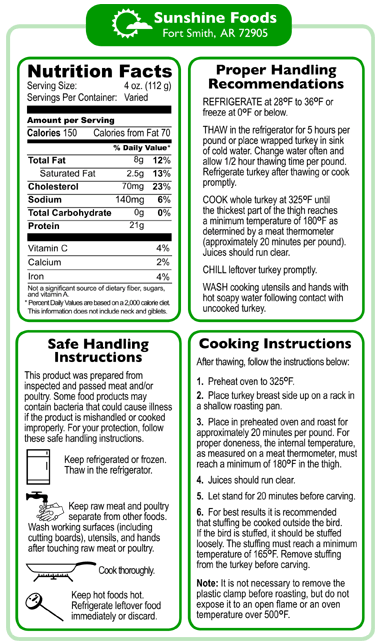
The label on fresh and frozen turkey will also show the nutritional information. The nutritional information will include the recommended serving size, calories, fat and cholesterol content, and a list of the nutrients including vitamins and minerals. As required by the USDA, the label will contain helpful information pertaining to food safety and proper handling. Cooking instructions are also included.
Inspection and Grading

The USDA (United States Department of Agriculture) inspects turkeys for quality. The USDA seal can be found on the package, ensuring that the turkey has passed inspection and is suitable for human consumption. Most turkeys sold in food stores are designated "Grade A", meaning that they are of the highest quality. Grade A turkeys have no surface damage such as broken skin, tears, bruises, or cuts and all pinfeathers have been removed. There are no broken bones and the bird is plump and has a pleasing shape. Turkeys that do not receive a Grade A seal are still safe to eat, but their appearance and overall quality may be less than ideal. The other grades given to turkey, as well as other kinds of poultry are Grade B and Grade C. Poultry is graded according to the following criteria:
- Conformation (proportion of meat to bone)
- Fat coverage
- Fleshing
- Absence of pinfeathers
- Absence of damage, including cuts, bruises, and broken bones
Look and Feel
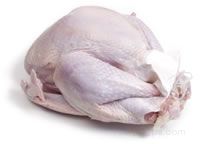
Inspecting and feeling fresh turkey can provide information not found on the label. Look for indications that the whole turkey or turkey pieces have been stored at improper temperatures. Fresh turkey pieces can be squeezed or pressure can be applied to the package to feel for signs of freezing. Look for ice crystals forming on the bottom tray of the packaging or along the wings and edges of the pieces, which indicates that the turkey has been stored in temperatures that are too cold. Partial freezing is not harmful in terms of wholesomeness, but it will not extend the "sell by" date.
It is also important to be aware of whole turkeys or turkey pieces that are stacked too high in open refrigerator cases in a food store. The turkeys at the top of the pile will not be chilled to the proper temperature because they are above the proper storage level of the refrigerator case. This can result in the growth of bacteria especially if the temperature rises above 40°F, which will greatly decrease the time period that the turkey is safe to eat.
A similar problem occurs with frozen turkey that is stacked too high in an open freezer case in a food store. The turkeys on the top may be above the freezing line of the freezer case, which results in the turkeys being stored in temperatures that are inadequate for proper freezing. A frozen turkey should be rock hard and show no sign of freezer damage.
Quantity to Buy
If you are unsure of the quantity of turkey to purchase according to the number of guests you will be serving, it is always a good idea to allow for 1 pound of uncooked turkey per person when purchasing a whole turkey. This is a fairly accurate quantity per person, allowing for smaller appetites as well as extra helpings for larger appetites.
It is also important to keep in mind that a larger bird is a better value. Larger turkeys have more meat in relation to the amount of bone and cartilage. With that in mind, allow for up to 1 pound per serving when purchasing a turkey of less than 12 pounds and allow up to ¾ pound per serving when purchasing a turkey weighing over 12 pounds.
Other points to consider when purchasing turkey products:
- Allow 1¼ to 1½ pounds per person when purchasing a prestuffed turkey.
- Allow ½ pound per person when purchasing a bone-in turkey breast, which usually weighs between 4 and 8 pounds.
Shopping Tips
- When shopping for a whole turkey, it is best to purchase at least one pound per person. This will allow for plenty of extra helpings plus some leftovers. If you don't want to allow for any leftovers, plan on ¾ pound per person.
- Don't purchase a whole turkey if you find that the packaging has been punctured or torn. Make sure the packaging is intact before purchasing a whole turkey. Packaging that is punctured or ripped may indicate that the turkey has been damaged. It also allows drips to occur as the turkey is being transported from the store to the home refrigerator or when the turkey is thawing in the refrigerator.
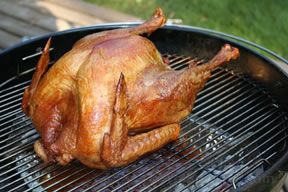
- Food stores may run specials on whole turkeys during some holiday periods, using the low priced turkey as a "loss leader" to attract customers. You can take advantage of cost savings by purchasing two birds and storing one in the freezer for the next holiday event or any other occasion such as a summer gathering. Small turkeys cooked on an outdoor grill in the summer are becoming very popular.
- A fresh turkey is more expensive than a frozen turkey because of special handling requirements. Fresh turkeys cannot remain in a food store for as long as frozen turkeys. They are convenient to use because they do not require thawing. If you are able to allow for the time required for thawing, frozen turkeys provide the same flavor and quality as fresh turkeys.
- If you are planning to buy a fresh turkey, it is best to purchase it no more than 1 or 2 days before you plan to roast it so that it will retain the optimum freshness and quality. It should be stored in the coldest section of the refrigerator, usually the lowest shelf at the back, until you are ready to cook it.
- Some turkeys are sold with pop-up timers that are used to indicate when the turkey is fully cooked. A stem in the center of the device pops up when the internal temperature of the turkey reaches the proper level. Pop-up timers add convenience for consumers who may not possess a meat thermometer, however a meat thermometer is still the best way to make sure that the turkey has cooked long enough.
Note:
When shopping for groceries, fresh turkey (as well as other perishable products) should be selected last in order to reduce the length of time the turkey is without refrigeration. If the turkey is without refrigeration for more than an hour because of the travel time from the market, a cooler with ice should be used to transport the fresh turkey, and any other perishable food items, for the duration of the travel time.