|
|
Leavening: Using Chemical Leavens
|
|
|
 |
|
Bread > Bread Preparation Guide > Leavening: Using Chemical Leavens
|
 |
|
|
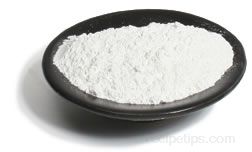
| Chemical leavening agents allow bread dough to be prepared in minutes instead of hours. Chemical leavens, such as baking soda and baking powder, react immediately when combined with a liquid so they are mixed with the other dry ingredients before any liquid ingredients are added. |
|
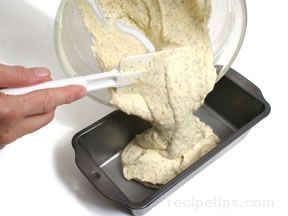
| The dry and liquid ingredients are mixed quickly, but not excessively, resulting in a batter-like consistency. The batter is placed in a baking pan and immediately placed into a preheated oven. The chemical leavening agents become even more active from the heat of the oven, resulting in additional rising. (Chemical leavening agents are also used in breads that are steamed, deep-fried, or cooked on a griddle.) |
 |
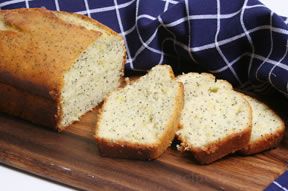
| Breads prepared with chemical leavening agents are known as "quick breads" because of the quick action of the chemical leavens and the speed in which the breads can be prepared, although the cooking time is often a bit longer than that of yeasted breads. Some quick breads are savory while others are sweet and more cake-like than bread-like. Quick breads are often best when served warm from the oven, since they tend to dry out quickly. They often lose much of their appeal after a day or two unless they are properly stored to retain moisture and freshness. |
 |
|
 |
| More Bread Preparation Guide >> |
 |
|
Leavening: Using Chemical Leavens article - Related Content |
 |
 |
 |
 |
 |
|
 |
|
|
 |
|
 |
| Sourdough Starter | Sponge Starter | Old Dough Method
The primary difference between making bread with a starter and making bread with the direct or straight yeast method ... |
|
 |
|
|
 |
|
 |
| Fresh Cake Yeast | Active Dry Yeast | Quick-Rising Active Dry Yeast
Yeast that is activated in warm water before it is mixed with the flour and other ingredients to form ... |
|
 |
|
|
 |
|
 |
|
Risen breads rely on a means of producing carbon dioxide gas that becomes trapped in the batter or dough causing the dough to rise. The carbon dioxide gas is produced ... |
|
 |
|
|
 |
|
 |
|
Breads Using Starters
Many basic bread varieties use a starter as the leavening agent. Using a starter is a traditional method of leavening requiring only a mixture of ... |
|
 |
|
|
 |
|
 |
|
Bread Making Demonstration:Bread Using a Starter
Ciabatta
Ciabatta is typically identified by its shape, which is that of a worn or flattened slipper, and thus the ... |
|
 |
|
|
 |
 |
 |
 |
 |
|
 |
|
|
 |
|
 |
| Compounds, produced from chemicals, that are used as leavens for a wide range of baked goods. Baking soda and baking powder are among the most often used chemical leavens. Breads ... |
|
 |
|
|
 |
|
 |
| Chemical compounds such as baking powder and baking soda that react with other ingredients to produce carbon dioxide gas. This helps dough and batter, used for baked goods, to ... |
|
 |
|
|
 |
|
 |
| The process of adding a substance to bread dough (and other baked goods) that enables the dough to rise. Risen breads rely on a means of producing carbon dioxide gas that becomes ... |
|
 |
|
|
 |
|
 |
| A word describing baked goods that have a leavening agent added to them. |
|
 |
|
|
 |
|
 |
| An agent added to baked goods to cause the dough or batter to rise, lightening the texture and adding volume. Some of the leavening agents used are beaten eggs or egg whites, ... |
|
 |
|
|
 |
 |
 |
 |
 |
|
 |
 |
 |
 |
 |
|
 |
 |
 |
 |
|
|
|
|
|
|
|
|
|
 |
|
| Reproduction in whole or in part without written permission is strictly prohibited. |
| © Copyright 2008 Tecstra Systems, All Rights Reserved, RecipeTips.Com |
|
|
 |
|