


|
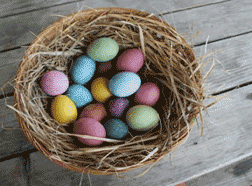
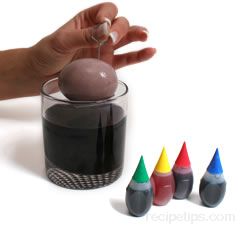
Decorating Eggs The Natural Alternative An alternative to purchasing an egg coloring kit is to create your own, straight from the kitchen cupboards. Most eggs must be left in natural dye for hours to develop the color you desire. Do not eat these eggs. Boil extra eggs specifically for eating and refrigerate those eggs immediately.
If you prefer not to dye your eggs, try these simple creative ideas: *Using glue that dries clear, decoupage or wrap colorful string around the egg. *Decorate hard boiled egg with markers, stamps, and/or stickers. *Glue craft jewels on hard boiled eggs or use glitter glue for the look of jewels. *Be creative with “puffy” paints.
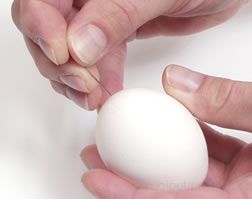
Safely Prepare Eggs for Eating or Decorating Hollow Eggs If you would like to display your eggs, it is a good idea to “blow out” your eggs before decorating. Poke a whole in each end of a raw egg, the largest whole on the large end, with a pin. With the pin, break up the yolk on the inside of egg. Blowing through the small end of egg, blow egg through the large whole. Wash egg and let dry before decorating. If you prefer to decorate hard boiled eggs, remember, it is much safer to use decorated eggs for display only, do not eat. Hard Boiled Eggs Before decorating Easter eggs, it is important to prepare and store them safely. *Eggs should be stored in the coldest part of the refrigerator, not in the storage compartment of the door where temperature fluctuates with the opening and shutting of the door. *Store eggs with the rounded end pointed up in order to keep the air cell on top and help keep the yolk centered. *Do not store eggs next to strong smelling food, the shells are porous and eggs will absorb strong odors. *Do not leave uncooked eggs at room temperature for more than 2 hours. *Eggs that have been hard boiled for decorating must be refrigerated within 2 hours to prevent food borne illnesses. *Do not dye eggs that have cracked during boiling. *Use hard boiled eggs that have been stored in the refrigerator, within one week. Follow these steps when preparing hard boiled eggs: 1. Pour cold water into a saucepan and add 1½ teaspoons of salt per quart of water (salt may make peeling easier). There should be enough water in the pan to completely cover the eggs. Wait for water to come to a boil before placing eggs into the pan. Using a spoon, lay eggs in a single layer at the bottom of the pan. 2. When the water returns to a boil, turn down the heat so that the water is at a low simmer and then begin timing the eggs for the desired doneness. Do not cover the pan. Use the following cooking times as a guide for the desired yolk firmness of each egg size (the whites will be firm). Hard cooked eggs are preferred for decorating.
Note: The temperature of the egg at the start of cooking process effects cooking time. An egg that is at room temperature at the start of the cooking process will require about 1 minute less cooking time for each time listed above. The times listed above are based on eggs taken directly from the refrigerator. After the required time has elapsed, run cold water over the eggs to stop the cooking process. This will help prevent discoloration of the yolk and will also assist with the peeling process.
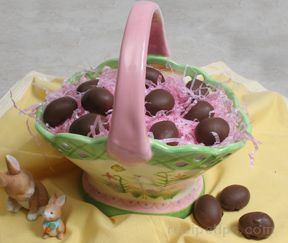
No Candy Ideas for Easter Baskets Rather than filling your children’s Easter Baskets with candy, why not “Think Spring”? A new swimsuit and beach towel together with water toys for pool fun, one or two throw away cameras along with scrapbook accessories for them to create their own memories of Easter, puzzles, music cd’s, or computer games. Fill plastic eggs with change, stickers, tattoos, sidewalk chalk, or miniature cars.
Easter Lily The traditional flower of Easter is the Lily. Whether you purchase the lily yourself or receive it as a gift, the following helpful hints will help you care for your lily for years to come. * Expose to medium light and allow top of soil to dry before watering. * When flowers die, let plant dry out. * Cut stem down to bulb. * Clean the bulb and store where it is cool and dark. * August is the month to replant the bulb in a pot, covering very little with soil. * Water just enough to keep bulb and soil damp, do not water too much. * A bloom should occur within 100 to 120 days. * When lily has bloomed, expose to medium light. This is the program to follow so you can enjoy your lily year after year.
Set Your Table With Thoughts of Spring Although Easter Lilies are customary, they may obstruct the view of your guests when used as a center piece. A display of tulips, daisies, and other shorter stemmed spring flowers is practical choice. *Jellybeans used in place of rocks or marbles in a glass vase. Layer the colors or mix them up a bit. Do not add water to the vase. To prevent flowers from wilting, create the arrangement within 1-2 hours of your gathering. *Remove the stems of your spring flowers (tulips, lilies, carnations, daisies, even sunflowers) and float them in a crystal or clear glass decorative bowl. *Collect small, miscellaneous style/colored vases and place down the center of your dining table. Insert one spring flower in each. *Place old pickle/canning jars and miscellaneous jars in a worn, handled basket. Place a different spring flower with greens in each jar. *A bowl or tall vase of lemons/limes brings a bit of spring to your table or countertop. *Display spring flowers in a pastel ceramic pitcher or a tin watering can. |

Loading
Simply Easter Tips


Provided By
RecipeTips
RecipeTips


Loading
There currently aren't any reviews or comments for this article. Be the first!













Advertisement

Advertisement