


USDA Mandatory Inspection | USDA Optional Grading | Religious Restrictions
|
All beef sold in the United States must pass inspection by the Food Safety and Inspection Service (FSIS) of the United States Department of Agriculture (USDA). The mandatory inspection concentrates on the safety and wholesomeness of the meat and not necessarily the quality. Visual inspection for animal diseases is performed as well a number of scientific tests on a statistical sampling of beef. The tests are used to determine if any biological or chemical contamination is present in the meat. The primary concern is for the safety of the consumer.
|
| Unlike the mandatory inspection for safety, which is paid through government funding, beef grading is an option paid for by the processing companies that request the service. The processing companies use the grading information to determine how each beef carcass is best used. Beef is graded for quality and yield. The grade of the beef and the yield grade are stamped in several places on the carcass with an edible purple vegetable dye. Since grading is optional, not all beef sold in the United States is graded. Beef that has not been graded is known as "No Roll" because the rolling grading stamp is not applied to the exterior fat as is the case with graded beef. |
|
Quality Grading | |
| In terms of quality, the USDA grades meat according to the following: | |
|
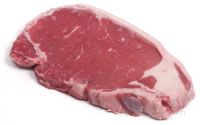
Marbling Marbling refers to small pieces of fat within the meat. Marbling makes the meat more flavorful and tender, so an increase in the degree of marbling raises the level of quality, however, too much marbling or very thick pieces of marbling lowers the quality of the beef. Age of Animal The best beef comes from animals that are 1½ to 2 years old. If the animal is older than 2½ years, the meat is tougher, but it is actually more flavorful. Moist heat cooking methods such as braising will help to tenderize older beef. Miscellaneous Quality Factors Other factors that determine the quality of beef are color, texture, and firmness of the meat. | |
The USDA uses 8 grading levels to indicate the quality of beef. The top 3 levels are Prime, Choice, and Select. | |
|
Prime
|
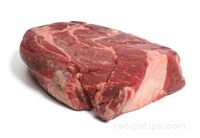
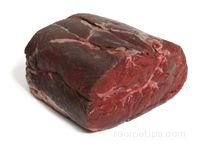
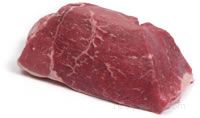
Prime is the top quality possible and represents only about 2% of the beef that is graded. It has the most marbling, which makes it the most flavorful and tender. Prime beef is usually only available to restaurants, but is occasionally found in some specialty meat markets. The term "Prime Rib" is misleading as a description for a cut of beef because it may be mistakenly interpreted as meaning that the beef is graded "Prime". Prime Rib often refers to a rib roast and unless the meat is served in a better restaurant, the Prime Rib may actually be graded "Choice". |
|
Choice
|
Choice beef is usually the highest grade found in food stores and represents about 45% of the graded beef available to the consumer. It has a fair amount of marbling and is juicy and tender (depending on the cut). |
|
Select
|
Beef graded "Select" is the leanest of the top 3 grades and represents about 20% of the graded total. Because it is the leanest, the Select grade has less marbling than Prime or Choice. It is less tender and juicy than higher grades, but it is also less expensive. Beef graded "Select" is beneficial for people who are watching their fat intake and calories as well as their expenses. If all beef in the United States were graded, most of it would be graded "Select". |
|
The following is a list of the other grades of beef in descending order of quality, as determined by the USDA.
Standard and Commercial grades are often sold in food stores as a store brand with no indication of the actual grade. Utility, Cutter, and Canner grades are never found in food stores, but are generally used for commercially canned meat products and sausages. The grade of beef that is purchased not only makes a difference in the tenderness and overall quality of the meat, but also in the method that is selected for cooking. For example, a naturally lean cut such as a bottom round roast will have little difference in marbling between the Select grade and the Choice and Prime grades, but there may be just enough difference in a higher grade to allow the meat to be roasted (if it is not overcooked) rather than braised, which is the usual cooking method for most beef round cuts. | |
|
| |
 |
In addition to the quality grading, the USDA uses a yield scale to indicate the ratio of lean to fat within a beef carcass. Yield grade 1 is given to beef that provides the most meat and least amount of fat, while yield grade 5 indicates carcasses with the most fat. The yield grade is of particular importance to consumers interested in purchasing a whole or half beef carcass with the greatest percentage of usable meat. |



|
In addition to the USDA mandatory inspection, some beef sold in the United States is butchered and processed under religious restrictions.
|