Eggs and Cholesterol | Health Benefits of Eggs | Nutrients in Chicken Eggs
Nutrients in Other Types of Eggs | Comparing Different Types of Eggs
Eggs and Cholesterol
|
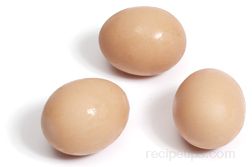
The average large chicken egg has about 213 milligrams of cholesterol, which is all contained within the yolk. Medical studies have shown that excess cholesterol in the diet can raise the level of cholesterol in the blood, causing major health problems such as heart disease. Since the body produces all of the cholesterol it needs for normal functions, eating large quantities of cholesterol rich foods may be unhealthy. It is recommended that the intake of cholesterol in one day should not exceed 300 milligrams. With one egg yolk containing 213 milligrams, it is clear that the recommended daily maximum can be quite easy to exceed. |
 |
|
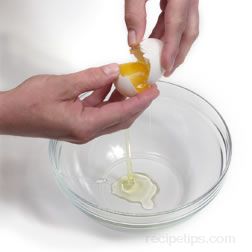
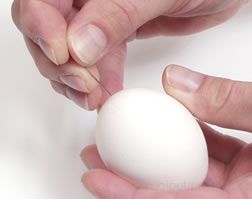
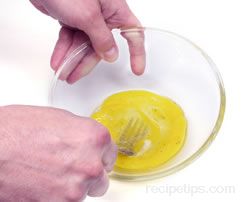
There are a number of ways in which the dietary guidelines for cholesterol can be followed, yet permit eggs to remain a part of the diet. Consider the following points:
| |
Health Benefits of Eggs
In spite of the high cholesterol content of eggs, there are several health benefits relating to the inclusion of eggs in the diet—in limited quantities, of course. Consider the following points:
|
Nutrients in Chicken Eggs
Chicken EggsBased on One Large Egg (50 g) | ||||||
| Component | Whole Egg | Egg White | Egg Yolk | |||
| Quantity | % DV | Quantity | % DV | Quantity | % DV | |
| Calories | 75 | 4% | 17 | 1% | 58 | 3% |
Total Fat |
5.0 g |
8% |
0.0 g |
0% |
5.0 g |
8% |
|
Saturated |
1.6 g | 8% | 0.0 g | 0% | 1.6 g | 8% |
|
Monounsaturated |
2.0 g | 0.0 g | 2.0 g | |||
|
Polyunsaturated |
0.7 g | 0.0 g | 0.7 g | |||
Cholesterol |
213 mg |
70% |
0.0 g |
0% |
213 mg |
70% |
| Carbohydrate | 0.65 g | <1 % | 0.34 g | <1 % | 0.31 | 0 % |
| Protein | 6.7 g | 13% | 4.0 g | 7% | 2.7 | 5% |
Vitamins |
||||||
|
Vitamin A |
244 IU | 5% | 0.0 IU | 0 % | 244 IU | 5% |
|
Vitamin C |
0.0 mg | 0% | 0.0 mg | 0% | 0.0 mg | 0% |
|
Vitamin D |
18.3 IU | 4% | 0.0 mg | 0% | 18.3 IU | 4% |
|
Vitamin E |
0.5 mg | 2% | 0.0 mg | 0% | 0.5 mg | 2% |
|
Choline |
216 mg | 0.45 mg | 215.5 mg | |||
|
Thiamin |
0.031 mg | 2% | 0.002 mg | <1% | 0.029 mg | 2% |
|
Riboflavin |
0.254 mg | 14% | 0.151 mg | 9% | 0.106 mg | 5% |
|
Niacin |
0.037 mg | <1% | 0.035 mg | <1% | 0.002 mg | <1% |
|
Vitamin B6 |
0.1 mg | 3% | 0.0 mg | 0% | 0.1 mg | 3% |
|
Folate |
23.5 mcg | 6% | 1.0 mcg | <1% | 22.5 mcg | 6% |
|
Vitamin B12 |
0.6 mcg | 11% | 0.07 mcg | <1% | 0.53 mcg | 10% |
|
Pantothenic Acid |
0.627 mg | 7% | 0.040 mg | <1% | 0.587 mg | 7% |
|
Vitamin K |
0.1 mcg | 0.0 mcg | 0.1 mcg | |||
Minerals |
||||||
|
Calcium |
26.5 mg | 3% | 2.0 mg | <1% | 23.5 mg | 3% |
|
Iron |
0.6 mg | 3% | 0.01 mg | <1% | 0.59 mg | 3% |
|
Magnesium |
5.0 mg | 2% | 4.0 mg | 2% | 1.0 mg | <1% |
|
Phosphorus |
89.0 mg | 9% | 4.0 mg | <1% | 85.0 mg | 9% |
|
Potassium |
67.0 mg | 2% | 54.0 mg | 2% | 13.0 mg | <1% |
|
Sodium |
63.0 mg | 3% | 55.0 mg | 2% | 8.0 mg | <1% |
|
Zinc |
0.6 mg | 4% | 0.0 mg | 0% | 0.6 mg | 4% |
|
Copper |
0.007 mg | 3 % | 0.002 mg | <1% | 0.005 mg | 2% |
|
Manganese |
0.012 mg | 0.001 mg | 0.011 mg | |||
|
Selenium |
15.8 mcg | 7.0 mcg | 8.8 mcg | |||
Nutrients in Other Types of Eggs
| Component |
Quail Egg (9 g) |
Duck Egg (70 g) | ||
| Quantity | % DV | Quantity | % DV | |
| Calories | 14 | 1% | 130 | 6% |
Total Fat |
1.0 g |
2% |
9.6 g |
15% |
|
Saturated |
0.3 g | 2% | 2.6 g | 13% |
|
Monounsaturated |
0.4 g | 4.6 g | ||
|
Polyunsaturated |
0.1 g | 0.9 g | ||
Cholesterol |
76 mg |
25% |
619 mg |
206% |
| Carbohydrate | 0.04 g | <1% | 1.0 g | <1% |
| Protein | 1.2 g | 2% | 9.0 g | 18% |
| Vitamin A | 48.9 IU | 1% | 472 IU | 9% |
| Vitamin C | 0.0 mg | 0% | 0.0 mg | 0% |
| Calcium | 5.8 mg | <1% | 44.8 mg | 4% |
| Iron | 0.3 mg | 2% | 2.7 mg | 15% |
| Sodium | 12.7 mg | <1% | 102 mg | 4% |
| Component |
Turkey Egg (79 g) |
Goose Egg (144 g) | ||
| Quantity | % DV | Quantity | % DV | |
| Calories | 135 | 7% | 266 | 13% |
Total Fat |
9.4 g |
14% |
19.1 g |
29% |
|
Saturated |
2.9 g | 14% | 5.2 g | 26% |
|
Monounsaturated |
3.6 g | 8.3 g | ||
|
Polyunsaturated |
1.3 g | 2.4 g | ||
Cholesterol |
737 mg |
246% |
1227 mg |
409% |
| Carbohydrate | 0.9 g | <1% | 1.9 g | 1% |
| Protein | 10.8 g | 22% | 20.0 g | 40 % |
| Vitamin A | 438 IU | 9% | 936 IU | 19% |
| Vitamin C | 0.0 mg | 0% | 0.0 mg | 0% |
| Calcium | 78.2 mg | 8% | 86.4 mg | 9% |
| Iron | 3.2 mg | 18% | 5.2 mg | 29% |
| Sodium | 119 mg | 5% | 199 mg | 8% |
Comparing Different Types of Eggs
| It may be difficult to compare the nutrients in various types of eggs because of the differences in their sizes. This table compares different types of whole eggs based on an equal portion, which is 100 grams. | |||||
| Component | Quail | Chicken | Duck | Turkey | Goose |
| Calories | 158 | 147 | 185 | 171 | 185 |
| Total Fat | 11.1 g | 9.9 g | 13.8 g | 11.9 g | 13.3 g |
| Saturated Fat | 3.6 g | 3.1 g | 3.7 g | 3.6 g | 3.6 g |
| Cholesterol | 844 mg | 423 mg | 884 mg | 933 mg | 852 mg |
| Carbohydrate | 0.4 g | 0.8 g | 1.5 g | 1.2 g | 1.3 g |
| Protein | 13.1 g | 12.6 g | 12.8 g | 13.7 g | 13.9 g |
| Vitamin A | 543 IU | 487 IU | 674 IU | 554 IU | 650 IU |
| Calcium | 64 mg | 53 mg | 64 mg | 99 mg | 60 mg |
| Iron | 3.6 mg | 1.8 mg | 3.8 mg | 4.1 mg | 3.6 mg |
| Sodium | 141 mg | 140 mg | 146 mg | 151 mg | 138 mg |