Fish Nutritional Facts

Enter and View Your Recipes
Advertisement


Most fish are low in fat and cholesterol and a good source of protein, which makes them a good choice for a healthy diet. Our bodies require a certain amount of protein daily and the body does not store protein so we need to replenish it in our daily diet. All fish are a good source of B vitamins and oil-rich fish are a good source of vitamins A and D. Many fish also provide a good source for calcium.

Oil-rich fish, such as salmon, trout, mackerel, herring and sardines, are an excellent source of Omega-3 fatty acids, which are essential to our diet. Omega-3 fatty acids cannot be manufactured by the body so it is important that we bring them into our diet and eating oil-rich fish provides the Omega-3 fatty acids we need. Some of the benefits of the Omega-3 oil in fish are shown below.

  • Reduces the risks of heart attacks.
  • Makes the blood flow easier through the body, reducing blood pressure.
  • It is felt that it helps the heart beat steadier and reduces the chances of suffering from a stroke.
  • Some experts think that it can help prevent cancer cells from developing to the tumor stage.
  • It is also thought to reduce the inflammation in rheumatoid arthritis patients.
  • Omega-3 fatty acids can also help in development of the brain, nerves and eyesight.

Fish is a good food for a low fat diet. It is low in calories and many types of fish do not contain any unsaturated fat. The chart below lists the calories, fat, protein and cholesterol in many types of fish. The nutritional value of fish will vary slightly according to the location it is harvested, the cut of fish, and the age of the fish. The method used for cooking will have an affect on it also.

Type of Fish
(3 oz. Servings unless otherwise stated)

Calories

Total
Fat
Saturated
Fat
Protein Cholesterol
Arctic Char
(3.5 oz./raw)
182 8g 1.7g 9g 27mg
Calamari
(4 oz./raw)
80 2.5g 1.5g 15g 215mg

Catfish

140 9g 2g 17g 50mg
Cod 90 .5g 0g 20g 45mg
Haddock 100 1g 0g 21g 80mg
Rainbow Trout 140 6g 2g 21g 60mg
Halibut 110 2g 0g 23g 35mg
Mackerel
Atlantic/Pacific
210 13g 1.5g 21g 60mg
Mahi Mahi 90 .75g 0g 19.5g 60mg
Mako Shark 111 3.9g 18g 44mg
Monkfish 82 2g 0g 16g 27mg
Northern Pike 96 1g 0g 21g 43mg
Ocean Perch 110 2g 0g 21g 50mg
Octopus 70 1g 0g 13g 41mg
Orange Roughy 80 1g 0g 16g 20mg
Pollock 90 1g 0g 20g 80mg
Rockfish 100 2g 0g 21g 40mg
Scallops
14 small/6 large
120 1g 0g 22g 55mg
Salmon/Atlantic 160 7g 1g 22g 59mg
Salmon/Sockeye 180 9g 1.5g 23g 75mg
Salmon/King 200 12g 3g 21g 70mg
Salmon/Chum/Pink 130 4g 1g 22g 70mg
Smoked Salmon
(2 oz.)
140 9g 3g 11g 35mg
Sole 100 1.5g .5g 21g 60mg
Striped Bass
(3/5 oz./raw)
100 2.5g .5g 18g 80mg
Sword Fish 130 4.5g 1g 22g 40mg
Tilapia 110 2.5g 1g 22g 75mg
Tuna/Big-Eye 128 5g 20g
Tuna/Yellow-Fin 150 4g 0g 20g 49mg
Walleye 96 1g 0g 20g 82mg
Whiting 110 3g .5g 19g 70mg
Other Meat Comparisons
Chicken Breast
(skinless)
120 1.5 g .5 g 24 g 70 mg
Chicken Breast
(with skin)
170 7 g 2 g 25 g 70 mg
Chicken Drumstick
(skinless)
130 4 g 1 g 23 g 70 mg
Chicken Drumstick
(with skin)
180 9 g 3 g 23 g 75 mg
Beef Tenderloin
(fat trimmed)
180 8.5 g 3.2 g 24 g 70 mg
Beef Sirloin
(fat trimmed)
170 6.1 g 2.4 g 26 g 75 mg
Pork Chop
(fat trimmed)
170 7 g 2 g 26 g 70 mg
Lamb Chop
(fat trimmed)
180 8 g 3 g 25 g 80 mg
Ground Beef
(90% lean)
210 11 g 4 g 27 g 85 mg

Ratings, Reviews & Comments

There currently aren't any reviews or comments for this article. Be the first!

Fish Nutritional Facts Article - Related Content

Collections
We have enough salmon recipes we're sure you'll find at least one you will love.
We have many seafood recipes that you're sure to enjoy.
Recipes
Ingredients included in this recipe are whole carp, unskinned, unboned, sliced thickly, SPICE RUB (generous amounts of), kosher salt, garlic powder, black pepper.
Ingredients included in this recipe are fish fillet, Freshly ground pepper, Squirt of lemon juice, Onion to taste, chopped, cooked asparagus, olive oil and vinegar dressing.
Ingredients included in this recipe are butter, Brown Sugar, bananas, rings of pineapple.
Ingredients included in this recipe are haddock, salt and pepper, lemon juice, butter, flour, milk, packet chicken granules.
Ingredients included in this recipe are fish fillets, oil, canola, bread crumbs.
Ingredients included in this recipe are frozen fish, chopped onion, chopped celery, half and half, potatoes, diced (large), pack mushrooms, chopped (small pack), Celery seed, Old ...
Ingredients included in this recipe are butter, onions, peeled & diced (medium), potatoes, peeled & cubed (medium), salt & pepper to taste, haddock, milk, or 1/2 & ...
Cooking Tips & Advice
Types of Fat Structures | Fat Composition of Oils and Solid FatsThe Controversy over Coconut Oil | Olive Oil Nutritional Facts   Types of Fat Structures All edible oils and solid fats are 100% fat, but the components that make up the fat structure of a particular edible fat are important in determining whether or not it is considered healthy.
Nutritional Profile of Bread | Significance of Enriched White Bread | Gluten Nutritional Profile of Bread The nutritional profiles for the breads listed below represent average profiles for each type of bread.
Nutritional Advantages | All About Gluten   Nutritional Advantages of Various Types of Flour Most types of flour are composed mainly of carbohydrates, but the quantity varies according to the type of substance used to create the flour.
General Nutritional Facts of Grains | Specific Nutritional Facts of Individual Grains General Nutritional Facts of Grains Grains are composed primarily of carbohydrates, but the quantity varies according to the type of grain.
The USDA recommends 2 or 3 servings of meat, fish, or poultry per day. A serving of any type of cooked meat is equal to 3 ounces and is about the size of a deck of cards. Concerns over saturated fat and cholesterol have caused many people to reduce or eliminate their consumption of many types of red meat and to choose a healthier alternative such as turkey.
Pork production today has drastically changed to produce much leaner meat than what it did 25 years ago. Better breeding and feeding of the hogs and a grading system that stimulates the meat packers to trim more of the external fat than they did in the past has resulted in leaner meat.
The USDA recommends 2 or 3 servings of meat, fish, or poultry per day. One serving of cooked lamb is equal to 3 ounces and is about the size of a deck of cards. An average 3-ounce serving of lamb contains about 176 calories, which is comparable to many other types of red meat and poultry.
Glossary Terms
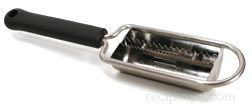
This kitchen tool is made to easily remove the scales attached to the skin of a fish that will be prepared and cooked whole.
Typically, a type of paste that may be semi-firm in texture or very fluid and easy to pour. Made from fresh meat of various species of fish or shellfish, this paste is produced after the meat has been salted, dried and often fermented, providing a salty overtone and a distinct aroma.
A common Jewish food, Gefilte fish is made from bits of fish that are formed into either a fish cake or a fish ball to be served as a hot or cold food dish.
Common in Asian cuisine, this round-shaped food is a meatball-like product made from fish meat that is most often sold by street vendors as well as restaurants.
An ocean fish that commonly jumps out of the water and glides airborne over the surface for a distance of 10 to 20 feet.
This type of basket is made to hold the fish securely as it cooks on a grill, preventing it from falling apart and making it easy to flip.
Fish fillets that have been cured with smoldering, aromatic hardwood. Placed into a smoking chamber, the fish filets are exposed to smoke from the burning wood gives which provides a distinctive smoky flavor and aroma.
Reproduction in whole or in part without written permission is strictly prohibited.
© Copyright 2012 Tecstra Systems, All Rights Reserved, RecipeTips.com