
Loading
Search
We hope you found what you are searching for. If not, contact us and let us know what your want. We will do the work for you and get back to you when we're done.
seven grain flour - Glossary Search
Top 17 glossary terms found
Displaying 1-17
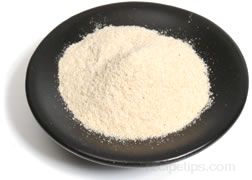
1. A product created by grinding and sifting various types of substances, such as grains, legumes, nuts, and some vegetables into a powdered form that varies from very soft to coarse in texture.
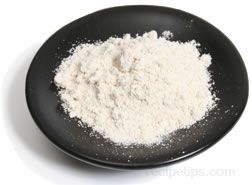
A type of flour made from barley grain. The flour is usually produced from “pearled” barley, which refers to barley that has been scoured and polished to remove the husk and the bran.
A type of flour milled from seeds obtained from the amaranth plant. The small, lens shaped seed or grain is light tan in color and provides a very mild tangy, somewhat peppery or nutty flavor, which may be quite noticeable if the flour is not combined with another flour when preparing baked foods.
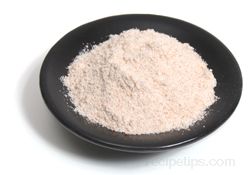
A type of whole-wheat flour that is slightly coarser than regular flour. The Rev. Sylvester Graham, an early advocate of healthier foods, developed the flour.
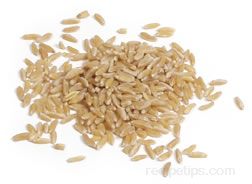
The brand name for a type of grain that is closely related to durum wheat and is often considered a specialty grain.
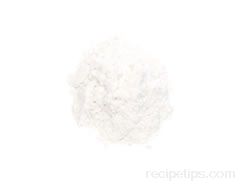
Raw long or short grain rice that has been ground into a very fine powder. Flour made from long grain rice is used to make a soft, light bread and other baked goods.
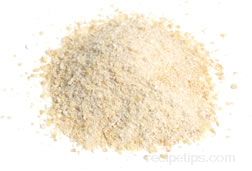
The brand name for a type of flour milled from grain that is closely related to durum wheat and is often considered a specialty grain.
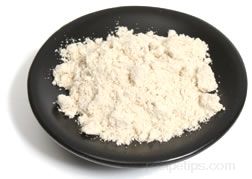
A type of flour milled from sorghum grain. Sorghum flour lacks gluten, so it isn’t suitable for making yeast breads.
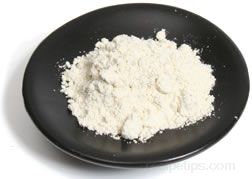
A type of flour produced from grinding quinoa seeds into a powder. Quinoa flour is rich in protein and nutrients, especially amino acids.
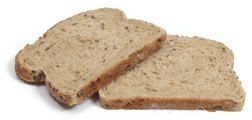
A type of yeast bread that is made with ground whole-wheat flour rather than processed white flour. Whole-grain flour produces bread that is brown in color and more flavorful than bread prepared with white flour.

A commercially blended flour mixture of seven ground grains, generally wheat, rye, corn, oats, barley, millet and flax or triticale.
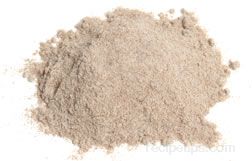
A type of flour milled from teff grain. Teff flour is high in calcium, iron, magnesium, zinc, and thiamin and it is a good source of fiber.
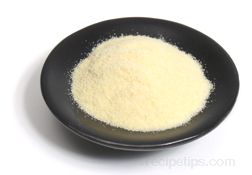
A granular flour with a light yellow color. Semolina is produced from durum wheat, which is used almost exclusively for making pasta.
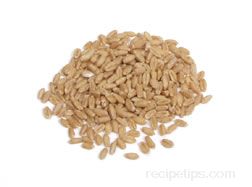
The kernel or seed of food plants that are used as a staple food source throughout the world. Plants such as wheat, barley, corn, oats, rye, and rice, are among the most popular cereal grains.
A type of flour ground from a high protein man-made grain produced by crossbreeding wheat and rye. Pronounced “trit-i-KAY-lee”, the name is a combination of the Latin botanical names of wheat and rye – “triti,” referring to triticum for wheat and “cale”, referring to secale for rye.
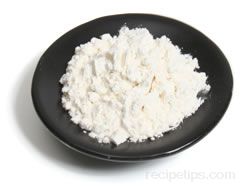
Flour that has been processed from grain to remove the bran and germ, bleached to whiten the appearance, and then reformulated with nutrients, such as thiamin, riboflavin, niacin, Vitamin D, iron, and calcium added in accordance with established government guidelines.
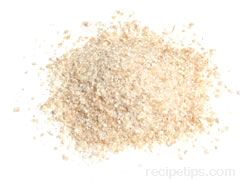
A type of flour milled from an ancient Italian grain that is similar in taste to barley. Most people consider farro to be a type of wheat and although they are related, farro is of a different species.
Top 17 glossary terms found
Displaying 1-17


Advertisement
Advertisement