
RecipeTips.Com Home cooking tips & advice | Knowledge | Tying Pork
Join Now | Sign In | RSS Feeds RSS Feeds
Tying Pork: Easy How-To Cooking Tips & Advice: RecipeTips.com
Recipes Cooking Tips & Advice Glossary Community Videos
hints
e-Newsletter
RecipeTips.com Newsletter Sign Up

Tying Pork

print Print Tying Pork article  |  email Email Tying Pork article  |  rate this article Rate this article  | Bookmarks
Meat > Pork > Pork Preparation Guide > Tying Pork

The process of tying meat is used to ensure even cooking and helps hold the shape of the cut. Tying is used on several different cuts and there are several styles of tying that can be used. Some of the common cuts where tying is helpful are shown below.

  • Roasts - Most often a boneless roast will be tied to reshape it once the bones have been removed. It is shaped into a roll that is the same thickness throughout. Roasts with the bones in can also be tied to provide a more appealing roast when it is cooked.


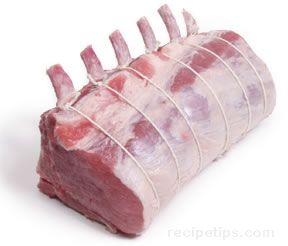
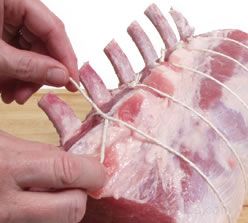
A standing rib roast, which has an outside layer of meat that has a tendency to separate from the inner rib-eye muscle is generally tied to hold the roast together during the cooking process. Cut strings approximately 18 to 20 inches in length and tie firmly, but not too tight, around the roast in between each of the bones. Tie in a knot and trim strings to 1/4 inch.

The strings should be tied firmly but not too tight. If the strings are tied too tight they will force some of the juices out of the meat as it is cooked. Tying the rib roast will prevent the outside layer of meat from separating from the inner rib-eye muscle, providing a roast that is appealing in appearance when it is cooked.


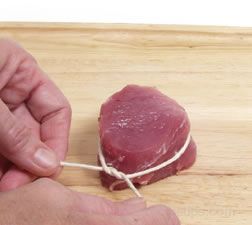
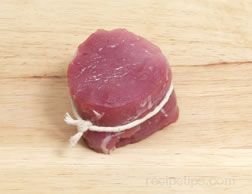
  • Medallions - Tenderloin medallions or boneless steaks are commonly tied with a string around the edges and secured with a knot to provide a more appealing shape when cooked. If barded with a strip of bacon, the bacon is wrapped around the edges first and then the cut is tied.


To tie a medallion, cut a string approximately 12 inches long and wrap it around the meat and tie firmly.
Tie the string in a knot and trim the ends to 1/4 inch in length.
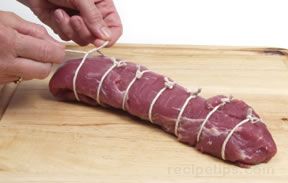
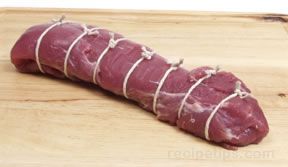
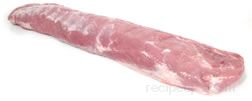
  • Tenderloins - Most often the tenderloin is tied so that the more slender end of the cut can be tucked under and held in place to create a more uniform thickness for cooking. The slender end of the tenderloin is folded under and tied into place.


Fold the last 4 to 5 inches of the slender end of the tenderloin under so that the tenderloin will be closer to the same thickness throughout. Cut strings approximately 12 inches in length and tie around the tenderloin at 1 to 1 1/2 inch intervals.

Tie all knots firmly and trim the ends of the string to 1/4 inch. The entire tenderloin does not have to be tied, only the folded under end must be, but it will be more appealing when cooked if tied all along the cut.

The style and type of knot used to tie the cut of meat you are working with will vary depending on one's experience, the style one has been taught and personal preference. The important aspect of tying is that the string is tight enough to hold the shape of the cut but not too tight so that it will squeeze the juices from the meat while it is cooking. Use a kitchen twine that is made from an all-natural cotton or linen to ensure that it will not burn or affect the flavor of the meat. Butcher's twine works well because it is bulkier, which makes it easier to handle. Keep in mind that there are many styles of tying and knots that can be used.

More Pork Preparation Guide >>

Tying Pork article - Related Content

Cooking Tips & Advice
Pork Cooking Times

Pork Cooking Times

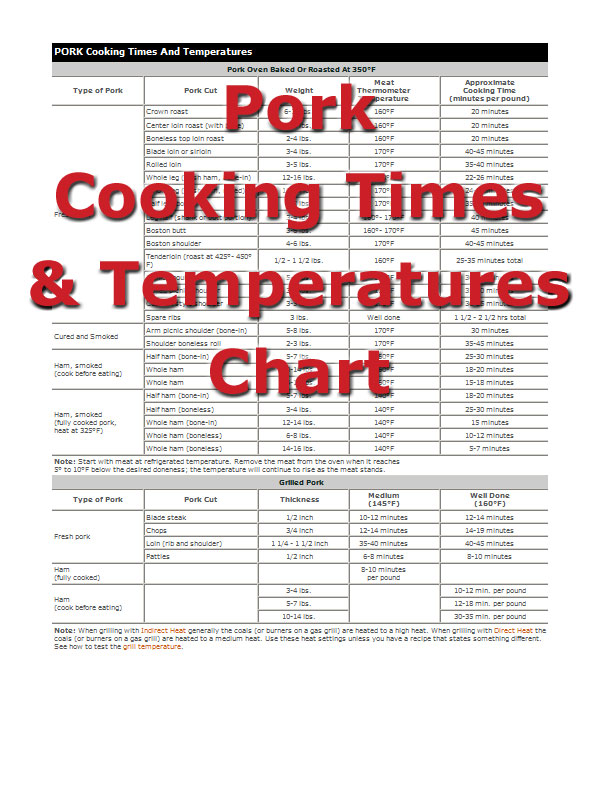
Pork cooking temperatures are important to monitor in order to insure meat is safely cooked to the proper temperature. When preparing pork, use the chart below as a guide to ...
Pork Recipes

Pork Recipes

Pork Recipes
Pork Cooking Tips

Pork Cooking Tips

Tenderness Tips Avoid freezing whenever possible to eliminate moisture loss that occurs during thawing. The moisture loss in thawing results in less tender meat. Keep pork ...
Pork Doneness

Pork Doneness

Checking doneness is accomplished in basically the same manner regardless of the cooking method you are using. While some methods are more accurate than others, there are ...
Pork Roasting

Pork Roasting

Pork today is leaner than ever before, decreasing the amount of fat in diets and resulting in health benefits for all ages. But, leaner pork also affects the way pork should ...
Recipes view more
Pork Schnitzel

Pork Schnitzel

A delicious pork chop that is cooked and ready to serve in a few minutes.
Pork Chops with Braised Red Cabbage

Pork Chops with Braised Red Cabbage

A colorful and tasty combination. Add a wedge of cornbread for a satisfying supper.
Pork and Bean Stew

Pork and Bean Stew

A new take on the perennial favorite, pork and beans - only this version is savory rather than the more familiar, molasses-sweetened style. The meat can be from any cut, and could even be trimmings from a loin or roast. Can be multiplied as needed.
Pork Egg Rolls

Pork Egg Rolls

A delicious way to have pork and veggetables either as an appetizer or an entrée.
Pork Chops with Apricot Onion Topping

Pork Chops with Apricot Onion Topping

Juicy grilled pork chops, flavorfully seasoned, are even tastier when topped with this sweet and savory apricot, onion mixture.
Glossary Terms
Pork Loin

Pork Loin

The loin is located on both sides of the backbone starting at the shoulder and continuing back to the hind leg. It is the largest, most tender and leanest cut from the pig. Some ...
Pork Rind

Pork Rind

The skin of a pig that is deep-fried in lard to make light, crunchy chips. The chips are high in protein and contain no carbohydrates. They are available in flavors such as ...
Pork Roast

Pork Roast

A reference that can apply to several different cuts of pork used for roasting, referred to as: the loin roast, shoulder roast, butt roast, blade loin roast, pork tenderloin, ...
Pork

Pork

A term customarily applied to the meat of a pig that is under a year old. The pig carcass is generally split into two sides of pork; each consisting of four primal cuts known as ...
Pork Sausage

Pork Sausage

A type of sausage consisting of fresh ground pork that is seasoned with sage and pepper. It is uncooked and marketed as links, patties, or in a bulk form.
USDA Nutrition Facts

Pork cured bacon cooked broiled pan-fried or roasted reduced sodium

Pork cured ham boneless low sodium extra lean approximately 5% fat roasted

Pork cured ham low sodium lean and fat cooked

Pork cured ham boneless low sodium extra lean and regular roasted

Pork oriental style dehydrated

Quick Tags
  Meat   Pork   Pork Preparation Guide
Advertise With Us ADVERTISEMENT
Summer Of Grilling Giveaway
Advertise With Us ADVERTISEMENT
Daily Feature
Zucchini, Red Onion and Pepper Flatbread Recipe
view past daily features
Party Planner
RecipeTips.Com Home cooking tips & advice | Knowledge | Tying Pork
Join Now | Sign In | RSS Feeds RSS Feeds
Reproduction in whole or in part without written permission is strictly prohibited.
© Copyright 2008 Tecstra Systems, All Rights Reserved, RecipeTips.Com