|
What You Will Need
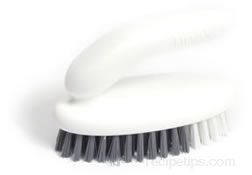
Stiff kitchen brush |
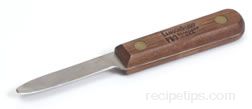
Clam knife |
- If a clam knife is unavailable, use a thin, short, dull knife. Do not use a sharp kitchen knife.
- Access to cool running water.
- A bowl to catch the liquor from the shell when opening.
- A towel that can be used to protect your hand while opening the shell.
Check for Freshness
- Clams are at their best if they are no more than four days old. Ask your fish monger for the harvest date.
- When at the market, the clams should be stored in or on ice.
- Unless they have been shucked and frozen, clams should be alive when you buy and cook them. If the shell is tightly closed, it is still alive. If the shell is slightly open, it should close promptly when tapped. If the shell is open and does not close when tapped, throw it out.
- Throw out any clams that have broken shells.
Preparing Clams
Clams that are purchased at a market have been purged for sand. If you have dug the clams yourself, soak them in a bucket of sea water. If you do not have access to sea water, mix 1 cup of salt per 3 quarts of water. Add a handful of cornmeal to the water. The cornmeal will clean the stomach, purging them of sand. Soak in the refrigerator for several hours or overnight, changing the water at least once. Do not use fresh water, it will kill the clams.
If you are not going to cook the clams immediately, clean the shells with a kitchen brush, place in a bowl, cover the bowl with a damp towel and refrigerate. Clams will keep for 2 to 3 days, however, they are best when cooked as soon as possible. Shucked clams that have not been cooked can be stored in water or their liquor, covered and refrigerated for up to 2 days.
If you are cooking clams in the shell, do not open and remove the clam from the shell. Wash the clams with a stiff kitchen brush under cool running water only.
Never eat a clam whose shell is not open after cooking.
Opening Clams
Before you begin: Chill the clams in the freezer for an hour or longer to make them easier to open. When you remove the clams from the freezer, you may need to let them rest for a few minutes before you are able to insert the clam knife into the opening.
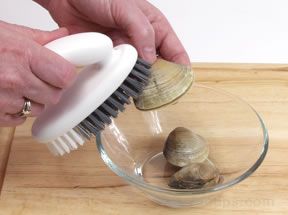
| Scrub clams under cool running water using a stiff kitchen brush. |
 |
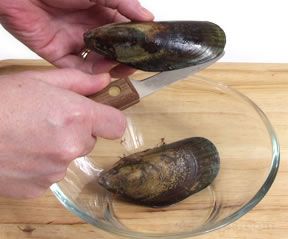
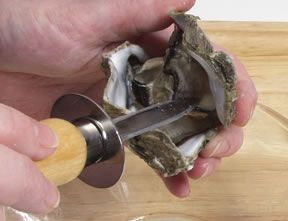
| Over a bowl, hold the clam firmly in your hand and insert the clam knife between the top shell and bottom shell. A towel can be used to protect your hand. Work the knife around to cut through the hinge muscle. The bowl will catch the liquor from the clam. |
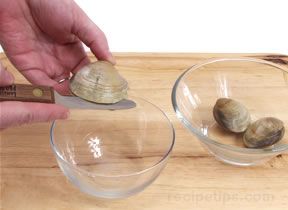 |
| Open the shell. Slide the knife between the clam and the shell. Detach the clam. |
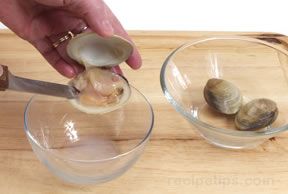 |
| The clam is now ready to be cooked or eaten raw. |
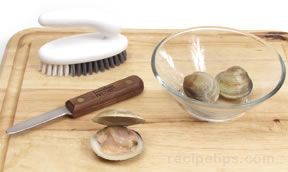 |
Storing Clams
- If you are not going to cook the clams immediately after purchasing, clean the shell with a kitchen brush under cool running water. Place in a bowl and cover with a damp towel. Refrigerate. Clams will keep for 2 to 3 days, however, they are best when cooked as soon as possible.
- Shucked clams that have not been cooked should be stored in water or their liquor, covered and refrigerated for up to 2 days.
- To freeze, remove clam meat from the shell. Wrap the meat in freezer paper and place in a plastic freezer bag. Store for up to 2 months. Thaw the frozen clams in the refrigerator overnight. To thaw faster, place clams, in a water proof plastic storage bag, in the sink with cool running water. Allow approximately 30 minutes per pound.
|