Rhubarb Preparation | Rhubarb Cooking | Freezing Rhubarb | Tips
Rhubarb
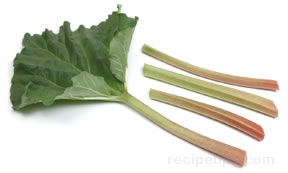
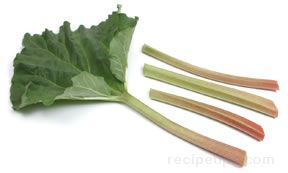
A perennial plant that has celery like stalks that are greenish pink to dark red in color. Rhubarb is a vegetable but is generally prepared and served in the same manner as a fruit. It is most often cooked and sweetened with sugar. It is called the "pie plant" because one of its most popular uses is as pie filling. The rhubarb stalk can be eaten raw but its tart flavor deters people from eating it in that manner. The leaves of the rhubarb should not be consumed because they contain oxalic acid, which makes them toxic. There are two types of rhubarb available. Hothouse rhubarb has yellow leaves and pink to light red colored stalks that are milder in taste and not as stringy. Field-grown rhubarb has green leaves and deeper red stalks that have a more intense flavor.
Uses:
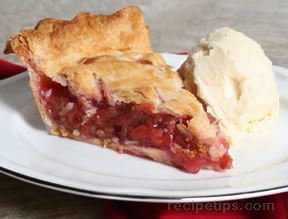
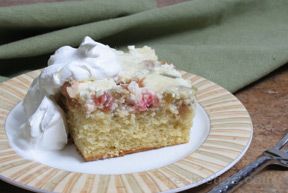
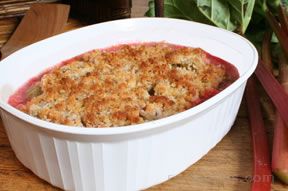
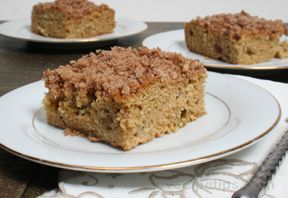
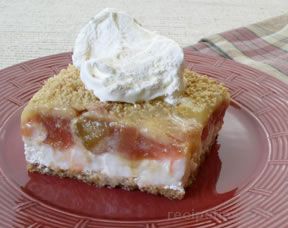
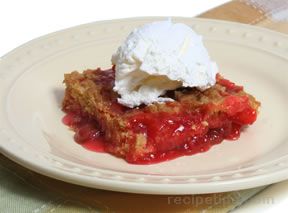
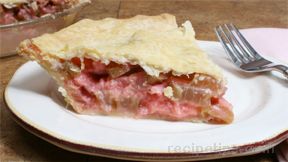
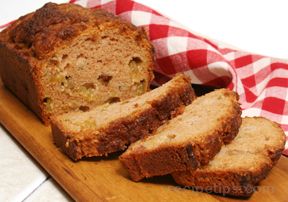
Rhubarb can be eaten raw with a little sugar sprinkled over it but it is generally cooked with other ingredients to produce a fruit dish of some type. Rhubarb can be used nicely to enhance the flavor of other fruits, such as pairing it with strawberries in baked sauces or beverages. It makes a delicious pie filling and is also used to make sauce in the same manner as applesauce. Rhubarb can also be used to make jellies, jams, cakes, muffins, and other desserts. It can also be used in savory dishes and is good as a sauce to serve with meats and fish.
How to Buy:
Rhubarb stalks vary from red to pink and they may also appear speckled or green. This color variation has little or no impact on the ripeness of the rhubarb. When selecting, choose stalks that are fresh looking, crisp and blemish free. Mature stalks will range from 1 to 2 inches in diameter but the smaller diameter stalks are younger and generally tenderer. If the stalks have the leaves still on them, look for smaller leaves, which is also an indication of a younger stalk. Avoid limp stalks and stalks with split ends, which are indications that the rhubarb is not fresh or that it has not been stored properly. Rhubarb is also available canned and frozen.
At Their Best:
Field-grown rhubarb's peak season is April and May and it is available through the early summer. Hot-house rhubarb is generally available January through June.
Storage:
Before storing, remove any leaves from the rhubarb stalks and discard. Rhubarb stalks can be stored in the refrigerator for 5 to 7 days, unwashed and sealed in an air tight plastic bag or tightly wrapped in plastic. It is best to store fresh rhubarb in whole stalks because cut or diced pieces will dry out more quickly. Trim just before using. Rhubarb can be frozen for future use by cutting the stalks into 1-inch lengths and packaging in airtight bags or by stewing first and then freezing. Rhubarb does not need to be sweetened before it is frozen.
Varieties:
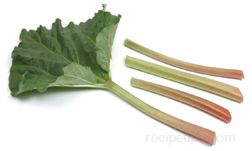
Field-Grown Rhubarb
Field-grown rhubarb is grown outdoors and has a more intense flavor and a coarser texture. It generally has darker red stalks with green leaves but there are varieties with green stalks tinted with pink. The green variety produces more rhubarb when harvested than the red variety.
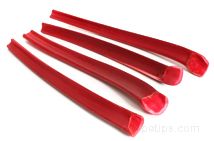
Hothouse-grown Rhubarb
Hothouse-grown rhubarb is grown in a greenhouse and is more tender, with a milder flavor. It is also slightly sweeter than field-grown rhubarb. Hothouse-grown rhubarb has pink colored stalks with yellow leaves.
Rhubarb Preparation
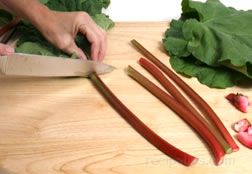
Trim off leaf ends and roots using a sharp knife and discard. Be sure to discard the leaves, which contain toxic levels of oxalic acid.
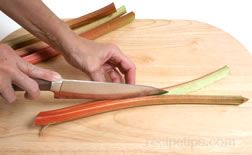
If the more mature stalks are wider than 1 inch, slice lengthwise in half or thirds.
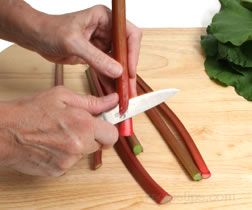
Check stalks for blemished areas and trim off before using.
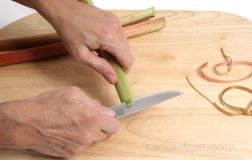
When preparing field-grown rhubarb the stems may be too fibrous and will need to have the strings pulled off. At one end of the stalk, cut just under the skin.
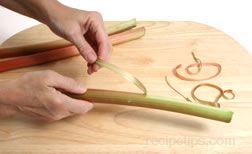
Pull the piece down the stalk to remove the strings. Continue until all of the strings are removed. When preparing hothouse-grown rhubarb the stems are tender and should not be stringy.
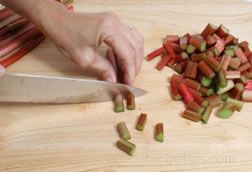
Wash stalks and slice them into 3/4 inch to 1 inch pieces when preparing for stewing or making sauce. Pies and other recipes may call for the pieces to be cut to a smaller size, such as 1/4 to 1/2 inch.
Tip:
Refresh rhubarb stalks by standing them in a pitcher that has been filled partially with cold water. Allow them to stand for a minimum of 1 hour.
Rhubarb Cooking
Stewed Rhubarb | Baked Baked | Rhubarb Jam
Rhubarb can be eaten raw but because of its tartness, it is generally cooked and sweetened first. It can be sweetened with sugar, honey, syrup, or berry preserves. When cooking rhubarb do not use aluminum, iron or copper pans. Rhubarb has high acidity and will react with these types of metals. The reaction will cause the rhubarb to turn a brownish color and can cause the pan to discolor. It is best to use anodized aluminum, non-stick coated aluminum, or enameled cast iron pans. If the rhubarb is being baked, glass bakeware can be used also.
Stewed Rhubarb
Because rhubarb varies in sweetness, it is hard to determine how much sugar is needed. The rhubarb will also sweeten as it cooks. Start out with a small amount of sugar. Once the rhubarb has cooked, more sugar can be added if necessary.
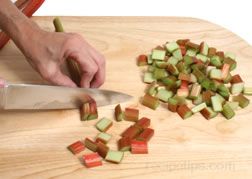
Clean 1 pound of rhubarb and cut into 3/4 to 1 inch pieces. This should produce approximately 3 cups of rhubarb.
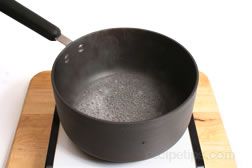
Combine 1/4 cup of sugar and 1/4 cup of water in a saucepan. Bring to a boil over medium heat and stir until sugar has dissolved.
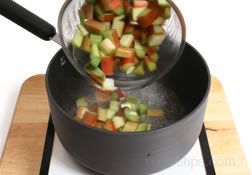
Add the rhubarb and bring sauce back to a boil.
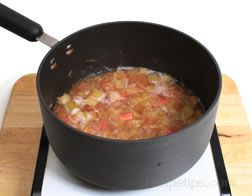
Reduce heat to a simmer and cook uncovered until rhubarb is crisp-tender, approximately 10 minutes.
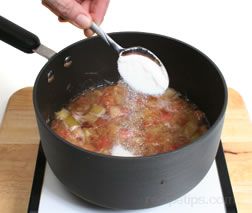
Taste to see if sauce is the desired sweetness. If it requires additional sugar, add 1 or 2 tablespoons at a time and bring sauce back to a boil to be sure sugar dissolves.
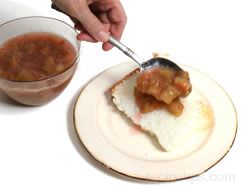
Remove from the heat when sauce is at desired sweetness. Serve as a sauce warm or cold. The sauce can be eaten on its own or it can be served as a topping on other food, such as cake, ice cream, pancakes, and waffles.
Baked Rhubarb
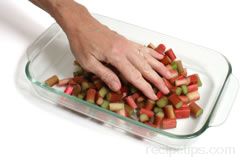
Spread 2 pounds of rhubarb, cut into 3/4 to 1 inch pieces, on the bottom of a 9 x 13 inch baking dish.
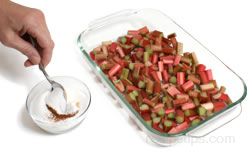
Add 1/4 teaspoon of ground ginger and 1/4 teaspoon of nutmeg to 1 1/2 cups of sugar. Mix ginger and nutmeg into the sugar until evenly distributed.
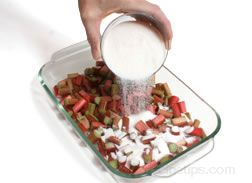
Pour the sugar mixture evenly over the rhubarb.
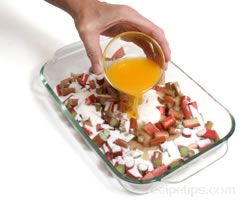
Drizzle with 1/2 cup of orange juice. Pineapple juice can also be used.
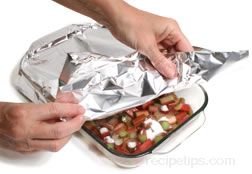
Cover baking dish with foil. Bake for 30 minutes in a 350°F oven. Remove rhubarb from the oven and stir mixture. Put back in the oven and bake uncovered for an additional 10 minutes or until rhubarb is tender.
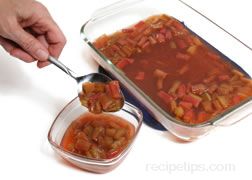
Remove from the oven and serve as a warm sauce on its own or as an accompaniment to other foods, such as meats and fish.
Rubarb Jam
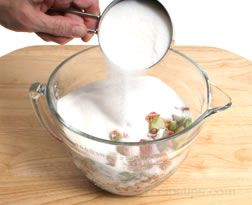
Clean enough rhubarb to produce 5 cups cut into 1/2 inch pieces. Place rhubarb in a large bowl and add 3 cups of sugar.
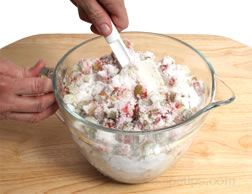
Stir until the sugar is distributed evenly throughout the rhubarb.
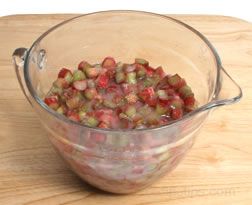
Allow rhubarb to stand for 3 to 5 hours. Stir occasionally.
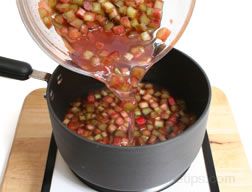
After the rhubarb and sugar have been allowed to stand for the appropriate amount of time, place them in a large saucepan.
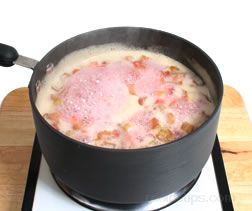
Cook rhubarb to a boil over medium to medium high heat. Once the rhubarb comes to a boil, reduce heat to medium and allow to boil for 10 minutes.
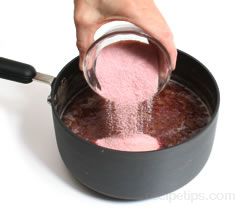
Remove from heat and add one 3 ounce package of strawberry gelatin. Stir until gelatin has dissolved.
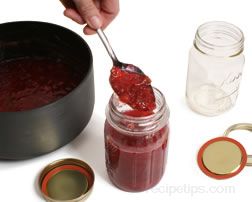
Make sure canning jars are clean and ready to fill before jam is done. The lids should be placed in a small sauce pan with enough water to cover them and brought to a simmer. Leave lids in hot water until placing on jars. Spoon or pour hot jam into pint canning jars.
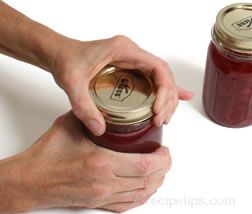
Be sure the top edge of the jar is clean and then seal with canning lids and covers. Screw cover on firmly but do not over tighten. Allow jam to cool completely.
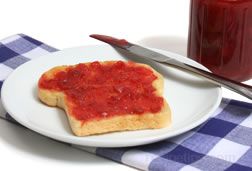
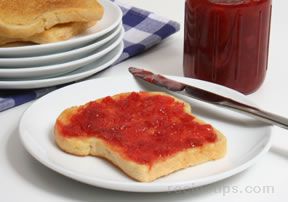
Rhubarb jam is great on bread, biscuits, crackers, toast, French toast, pancakes, and waffles.
Freezing Rhubarb
Rhubarb can be frozen so it can be stored for a longer period of time. Rhubarb can be frozen as whole stalks but it is easier to store if it is first cut into pieces and packaged in a freezer container. It can also be made into sauce and then frozen. Frozen rhubarb can be used for making jams and sauces, and it can also be used in pies and desserts.
There are several methods that can be used for freezing rhubarb. Determining which method to use will depend on end use and personal preference. All methods are fairly simple. Before using any of the methods, there are some tips listed below that may help produce a better quality frozen product.
- Be sure to use only fresh, good quality rhubarb. They should be fresh looking, crisp and blemish free. If the stalks are fibrous, be sure to remove the stringy fibers.
- Clean the rhubarb thoroughly and cut into the size pieces you desire for the end product.
- Be sure to use airtight freezer safe containers. If using freezer bags, be sure to remove as much air from the bag as possible before sealing.
- Allow enough headspace in the freezing containers or bags before sealing to allow for expansion when the rhubarb freezes. Allow approximately 1/2 inch for pint size containers and 3/4 to 1 inch for quart size containers.
- Place the rhubarb in the coldest part of the freezer so that they will freeze as quickly as possible. Store for up to 9 months.
Selecting a Freezer Container
Before starting the freezing process you should consider what type of freezer container will be best for the method you are using. The container must be freezer proof so that it will not crack or break when the content freezes. It must also have an airtight seal to prevent moisture loss and leakage, and to keep rhubarb from absorbing unwanted odors. When freezing rhubarb, there are two types of packaging that can be used, rigid containers or sealable bags.
Rigid Containers - Rigid containers are probably best used for freezing rhubarb when there is a fair amount of liquid added, such as water, juice or syrup, or for freezing sauce. Freezer-safe plastic containers with tight fitting lids or waxed cardboard cartons, such as milk cartons, work well. Be sure the waxed cartons are sealed tightly.
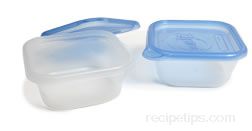
Square or rectangular shaped rigid containers are better than round for using freezer space efficiently. Using the same size and shape containers will also help use freezer space more efficiently. Be sure to leave the proper amount of headspace to allow for the contents to expand when it freezes but do not leave to much empty space in the container because it will expose the contents to too much air.
Sealable Freezer Bags - Sealable bags work well for rhubarb where there is minimal liquid involved. The flexibility of the bag makes it more difficult to fill without spilling when the rhubarb being frozen contains a lot of liquid.
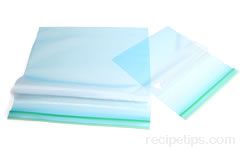
Be sure the plastic bags are sealed completely and that all the air has been pressed out. Place freezer bags of rhubarb flat on a solid surface to freeze, such as a baking sheet. Do not place in freezer baskets while they are first freezing because they will form around the wire and be hard to get out or the bag may get punctured as it expands while freezing. Once the packages have completely frozen, they can be taken off the baking sheet and stacked neatly in one of the baskets.
Either type of freezer containers can be used for any of the freezing methods but some will be more suitable than others for different methods.
Blanching Rhubarb Before Freezing
Before freezing the rhubarb, it can be blanched to help preserve its color and flavor but the rhubarb can be frozen without blanching also. Blanching of the rhubarb is shown below.
Clean rhubarb, pull any fibrous strings from the stalks, and cut into 1/2 to 1 inch pieces.
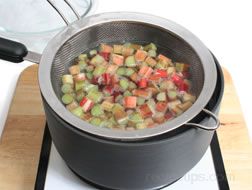
Add rhubarb to boiling water and allow to boil for 1 minute.
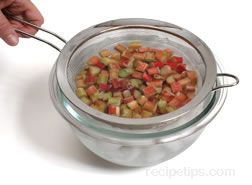
Remove from boiling water and plunge immediately into ice water to stop the cooking process.
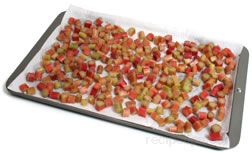
Remove from ice water and spread rhubarb out on paper towels to drain well.
Freezing Methods
Some common methods for freezing rhubarb are dry pack - individual tray freezing, dry pack - unsweetened, and syrup packed. Each method is described below.
Dry Pack - Individual Tray Freezing
Clean rhubarb, pull any fibrous strings from the stalks, and cut into 1/2 to 1 inch pieces.
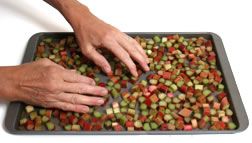
If desired, blanch rhubarb as shown above. Spread raw or blanched rhubarb in a single layer on a baking sheet. Place baking sheet in the freezer.
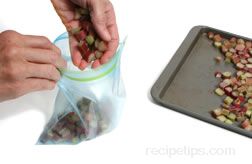
The rhubarb should freeze within 2 hours. When the rhubarb has frozen solid, remove it from the baking sheet and place in an airtight freezer container or freezer bag. Fill the bag, leaving the appropriate headspace.
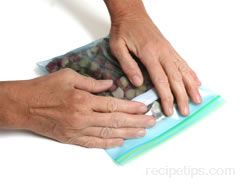
Leave at least 1/2 inch headspace when packaging and be sure to remove excess air from bags before sealing.
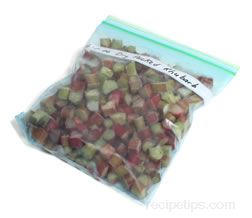
Be sure to mark the container or bag with contents, quantity and date. Return the bagged rhubarb to the freezer as soon as possible.
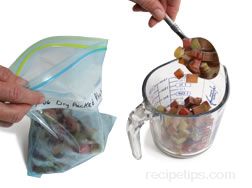
Since the rhubarb was frozen individually before placed in the bag, it will be easy to remove just the amount needed from the bag and return the remainder to the freezer to use at a later date.
Dry Pack
Clean rhubarb, pull any fibrous strings from the stalks, and cut into 1/2 to 1 inch pieces. If desired, blanch rhubarb as shown above.
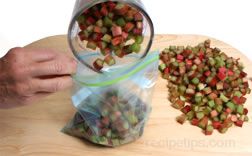
Pack blanched or raw rhubarb in freezer container or bag, leaving 1/2 inch headspace. If you are freezing the rhubarb to be used in specific quantities, fill each container with a premeasured amount.
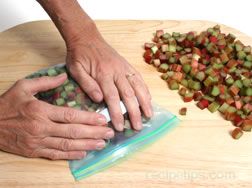
If using bags, be sure to remove excess air in bags before sealing.
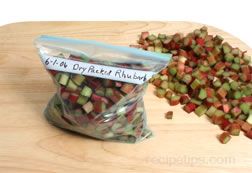
Mark the container or bag with contents, quantity and date.
Place the rhubarb in the coldest part of the freezer.
Note: The rhubarb can also be sweetened before it is dry packed if desired. Before placing the rhubarb in the freezer container, mix 4 cups of rhubarb with 1 cup of sugar and stir until sugar is well distributed. Then follow the directions as shown above for dry packing without sweetening.
Syrup Packed
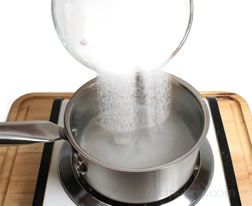
Syrup should be chilled before using so it is a good idea to prepare the syrup the day ahead of freezing the rhubarb. Refrigerate overnight.
Combine 3 cups of sugar with 4 cups of water in a saucepan. For lighter syrup use only 2 cups of sugar.
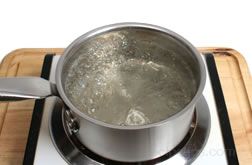
Bring mixture to a boil, stirring until sugar is dissolved. Remove from heat and allow syrup to cool.
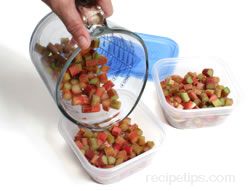
Clean rhubarb, pull any fibrous strings from the stalks, and cut into 1/2 to 1 inch pieces. Place in the freezer containers or bags. Because syrup that is going to be added, a container would be a better choice for this method.
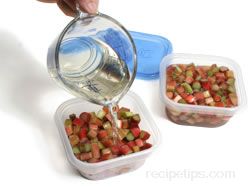
Add syrup so that it covers the rhubarb. It should take 1/2 cup or less of syrup if working with pints and 2/3 to 1 cup for quarts.
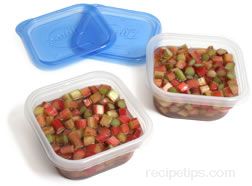
Leave 1/2 inch headspace for pints and 1 inch for quarts.
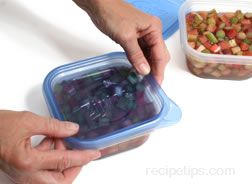
Make sure the freezer container is sealed tightly along all edges to prevent leakage of syrup and to prevent the rhubarb from being exposed to excess air.
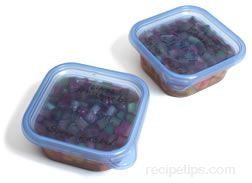
Mark the container or bag with contents, quantity and date. Place the rhubarb in the coldest part of the freezer.
Rhubarb Tips
- One pound of rhubarb will equal approximately 3 cups of chopped and 2 cups cooked. A 12 oz. package of frozen rhubarb equal approximately 1 1/2 cups.
- Rhubarb can be substituted in most recipes that call for cranberries.
- Combining rhubarb with sweet fruit, such as apples, oranges or strawberries, will help reduce the amount of sugar needed to sweeten the rhubarb.
- Rhubarb can also be sweetened with honey, corn syrup or maple syrup.