
|
|
| back to Glossary Index |
 |
|
|
 |
|
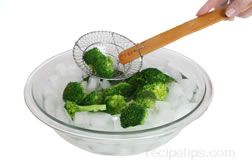
A preparation technique, used primarily for vegetables, that "shocks" the food item by exposing it to ice water after the food item has been blanched. Also referred to as "refreshing" a vegetable, the process of shocking is undertaken to immediately stop the food from cooking and to preserve the flavor, the food color and the texture at the point when the shocking occurs. This procedure enables cauliflower and broccoli to be tender on the interior while crispier-textured on the exterior. If additional crispness is desired, the vegetable can be browned in a skillet with a little butter after it has been shocked.
A typical procedure to shock a vegetable involves the preparation of an ice bath into which the vegetable will be immersed. Using a mixing bowl, fill it half or two-thirds with ice and cover the ice with cold water. For each quart of water added to the bowl mix in a 1/2 teaspoon of salt, which helps to retain any salt used during the cooking process that may be removed during the bath. After blanching the vegetable, remove it from the boiling water with tongs or a slotted spoon and place the vegetable in the ice bath. The vegetable should remain in the bath for a minute or so and then be removed. Vegetables that are often blanched and shocked include asparagus, broccoli, carrots, cauliflower, and string beans.
If they are to be stored, shocked vegetables should be placed in a airtight container and refrigerated, to be used within 4 to 6 days. When ready to prepare, simply remove the vegetables, moisten them lightly with a spray of water and some butter, and reheat in a mircowave or on a stovetop in a skillet for a few minutes.
|
 |
 Cold Water Bath - Shock |
|
 |
|
 |
Cold Water Bath term - Related Content |
 |
 |
 |
 |
 |
|
 |
|
|
 |
|
 |
| A method of cooking in which food is prepared (cooked) by placing it in a bath of hot water. The food is initially placed into a pan which is then placed within another pan ... |
|
 |
|
|
 |
|
 |
| A term that is used to describe the process of pressing fruit, seeds, and nuts to obtain oil without the use of additional heat to extract the oil. Oils obtained through cold ... |
|
 |
|
|
 |
|
 |
| A type of flour ground from water chestnuts, which are the edible tubers of an aquatic plant that grows along the muddy edges of lakes, ponds, rivers, and streams or is cultivated ... |
|
 |
|
|
 |
|
 |
| A critical element for all aspects of food preparation and consumption. Water is an important part of human health as it provides nutrients and oxygen to the body, works to ... |
|
 |
|
|
 |
|
 |
| A corm or fleshy bulb that forms at the base of a plant known as the trapa natan, which is grown in streams and bodies of water. A common ingredient in Asian cooking, the water ... |
|
 |
|
|
 |
 |
 |
 |
 |
|
 |
|
|
 |
|
 |
| Smoking Sausage |
|
 |
 |
 |
|
 |
| Although this soup is tasty when served hot, it is also a very enjoyable and refreshing soup served cold. Garnish with crumbled pieces of feta or blue cheese. |
|
 |
 |
 |
|
 |
| Wrap crunchy water chestnuts in the smoky sweetness of bacon to make an easy hors d’ oeuvre for any function. |
|
 |
 |
 |
|
 |
| A satisfying way to serve meat with greens. Since this easy marinated beef salad is made the day before, it is then ready the next day with only minor preparation. |
|
 |
 |
 |
|
 |
| A delicious appetizer of shrimp and water chestnuts wrapped in crispy strips of bacon topped with a creamy horseradish sauce. |
|
 |
|
|
 |
 |
 |
 |
|
|
 |
|
|
|
|
|
|
|
|
 |
|
| Reproduction in whole or in part without written permission is strictly prohibited. |
| © Copyright 2008 Tecstra Systems, All Rights Reserved, RecipeTips.Com |
|
|
 |
|