|
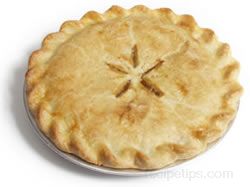
Making a homemade pie crust may seem like a challenge but with the right advice and techniques you can learn how to make a pie crust with just a little practice. The tender, flaky crust that you create will be worth the effort. The tips on how to make a pie crust and the easy pie crust recipe below will help make your homemade pie crust a success.
Tips on How to Make a Pie Crust
- Be sure the butter or margarine is cold when you start mixing it with the flour.
- When adding water to moisten the flour and butter mixture, be sure the water is ice cold.
- Work on a cool surface if possible and be sure the kitchen is cool. Avoid making crust on a hot day unless the room is air-conditioned.
- Do not overwork the dough and work as quickly as possible.
- Chill the dough before baking.
- A metal or unglazed ceramic pie plate is the best type of pan to use.
Single Pie Crust
Ingredients:
1 1/4 cups all-purpose flour
1/4 tsp. salt
2 tbsp. shortening (chilled) |
|
4 tbsp. cold butter or margarine (cut in 1/4 inch slices)
3 to 5 tbsp. ice water |
Mixing the Ingredients
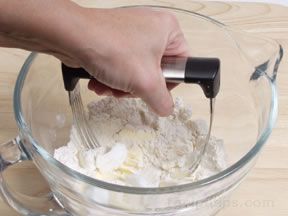
- In a large bowl, mix the flour and salt together. Using a pastry blender, cut in the chilled shortening and butter (or margarine).
|
|
|
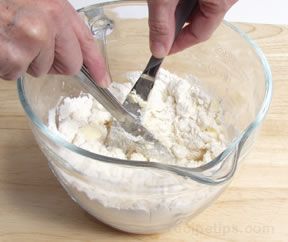
- An alternative method to using a pastry blender for cutting in butter (or margarine) is using two knives to scissor cut the ingredients.
|
|
|
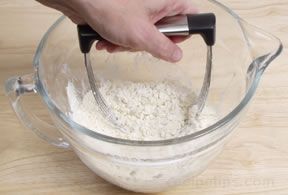
- Work the mixture only until it forms coarse crumbs that resemble tiny split peas.
|
|
|
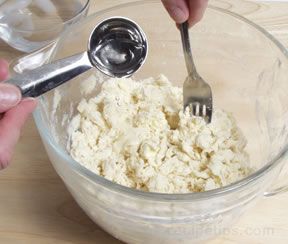
- Sprinkle the flour and fat mixture with 3 tbsp. of ice water and gently mix together using a fork. If the dough seems dry, add more ice water, one tablespoon at a time.
|
|
|
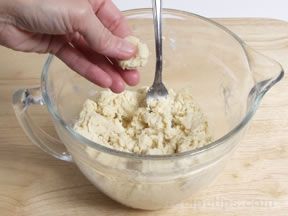
- Only add enough water to make the dough hold together. Mix quickly and gently. Test the dough by pinching a small piece of dough between your fingers. If it holds together you have added enough water.
|
|
|
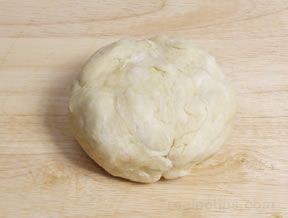
- Gather the dough and form a ball but be careful that you do not overwork the dough.
|
|
 |
Some recipes indicate that the dough should be wrapped in plastic and refrigerated for 30 minutes before rolling it out. Others state that chilling the dough at this point is not necessary. You may have to experiment with this to see what works best for you.
Rolling the Pie Crust
|
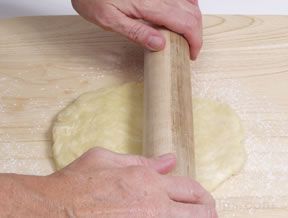
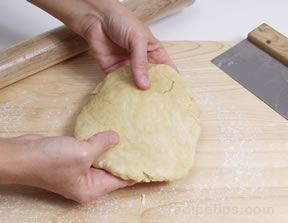
- Flatten the ball of dough into a 4 to 6 inch disc and place on a cool, lightly floured surface. The dough can also be rolled between two pieces of wax paper or rolled out on a pastry cloth.
- Starting in the center of the flattened disc, roll outwards.
|
|
- With every couple of rolls, turn the dough a quarter of a turn to produce a round uniform crust.
|
- Instead of picking the roll up after every few rolls, you can rotate your rolling angle. Always start in the middle and roll out, but rotate about 45° with each roll until you have moved all around the dough. Continue to roll in the same pattern until the dough is the desired size and thickness. Be sure to check frequently to see if the dough is sticking to the surface.
|
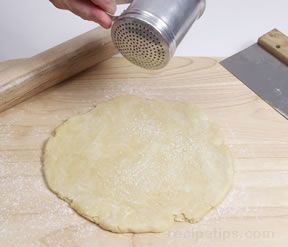
- Sprinkle the dough lightly with flour when it shows signs of sticking. Only add flour when necessary.
|
|
|
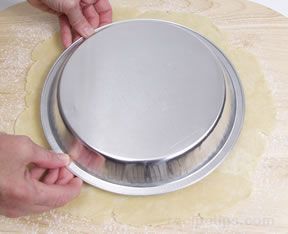
- Roll crust to approximately 1/8 inch in thickness and 2 inch in diameter larger than an inverted 9-inch pie plate.
|
|
|
|
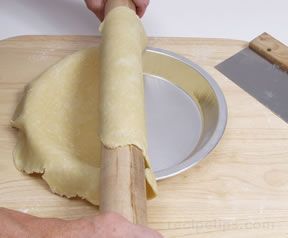
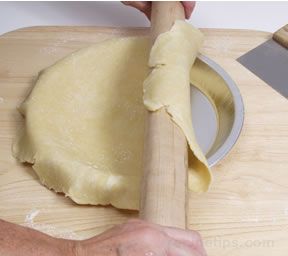
- To transfer the crust to the pie plate, partially wrap the crust around the rolling pin and gently lift the crust onto the pie plate, being careful to get it centered over the plate and not stretch the dough.
|
|
- Once it is in place, unroll the crust from the rolling pin.
|
|
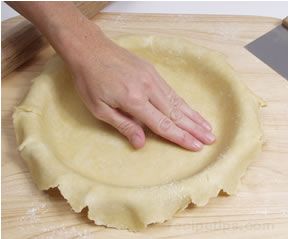
- Gently press the crust against the bottom and sides of the pie plate.
|
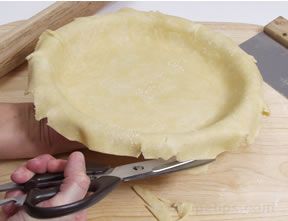
- Trim the overhang to about 1 inch. If saving the trimmings for decorating the pie, wrap them in plastic and refrigerate until ready to use.
|
|
|
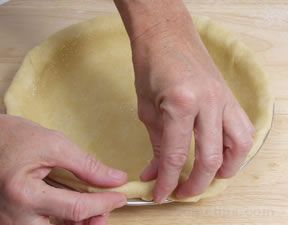
- Fold the overhang under so that it is flush with the rim of the pie plate.
|
|
|
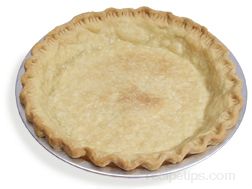
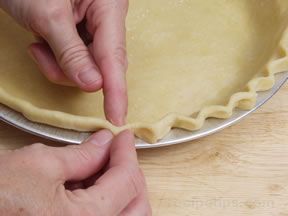
- Flute the edge to finish it. Place the finished crust in the refrigerator for 30 minutes before baking or filling.
|
|
 |
|
Note:
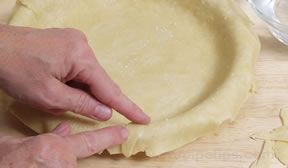
- If the crust tears or gets a hole in it when you transfer it to the pie plate, the crust can be repaired. Make a patch with a scrap piece of dough. Shape the dough to fit the tear and moisten its edges. Also moisten the edges of the the hole.
- Cover the damaged area with the patch and gently press in place.
|
 | |