Selecting Cuts | Inspection and Grading | Look and Feel | Quantity to Buy
| A successful outcome in cooking lamb depends on matching the recipe or cooking method with an appropriate cut of lamb. For example, if you plan to grill chops, you will get the best results using rib, loin or sirloin chops. If your recipe calls for chops to be marinated and then baked, shoulder chops are a much better choice. The following shopping guide will give you helpful suggestions in making your choices from the many lamb cuts that are available. |
|
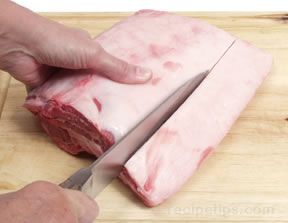
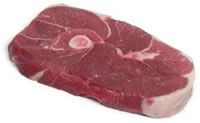
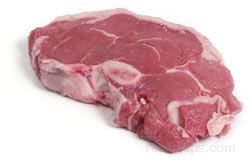
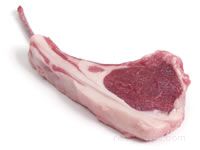
Lamb Chops Lamb chops vary a lot in tenderness and flavor, depending on the section of the lamb from which they are cut. Chops can come from the shoulder, rib, loin or leg. Chops are usually sold bone-in and should have a clear pink-to-red color. Dark purplish red indicates mutton which is less tender and has a stronger flavor, but could be a good choice for a highly seasoned, long-cooking recipe that might overwhelm the milder taste of young lamb. |
 |
|
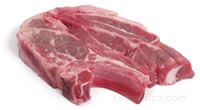
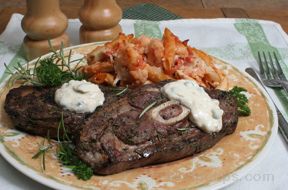
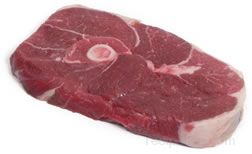
The most tender and expensive chops come from the rib and loin. The slightly fatter rib chops have a bit more flavor, but many people prefer the leanness of the loin chops. Rib and loin chops should be cooked quickly, using dry heat cooking methods such as grilling, broiling, or pan-broiling. They should not be overcooked - there should be some pink visible in the cooked meat. Rib and loin chops will be dry and tasteless if they are cooked until the center is gray. Rib and loin chops may be marinated for a very short time to add flavor, but long exposure to the acids in a marinade will cause the tender meat to become mushy. Rib and loin chops should be at least 3/4" thick, but 1" or more is ideal. Shoulder chops are less tender and less expensive than rib or loin chops. They are also from a more complicated muscle, so there are several "sections" in a shoulder chop, with more fat and connective tissue, making it less elegant and "chop-like" in appearance. Shoulder chops can be tenderized by marinating or moist heat cooking and are the best choice for recipes calling for the meat to be baked, braised, or simmered with other ingredients, as in a curry. Leg, or sirloin chops are larger, meatier and may be less tender than rib or loin chops, but are still a good choice for grilling or broiling. Leg steaks, cut from the center of the leg, can be used like leg chops. Both leg steaks and leg chops make good shish kebab cubes. | |
|
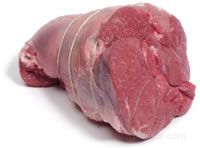
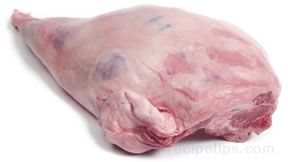
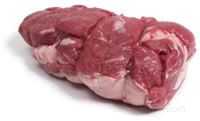
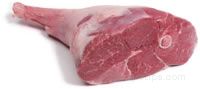
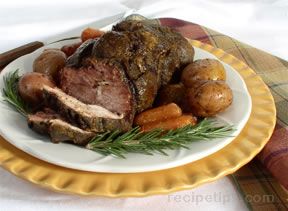
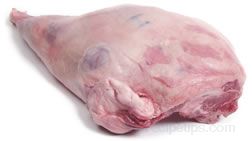
Lamb for Roasting There are several lamb cuts that make good roasts. The leg and the shoulder are typically the larger roasts. The leg, boned or bone-in, whole or half, is the cut most commonly roasted. Leg roasts can be successfully cooked at low, medium or high temperatures. The whole shoulder can also be roasted, boned or bone-in. Boneless shoulder roasts are often stuffed with a zesty filling, then rolled and tied. Because shoulder cuts are not as reliably tender as the leg, they are usually slow cooked at low heat after an initial few minutes at high heat to brown the surface and destroy any surface bacteria. |
 |
|
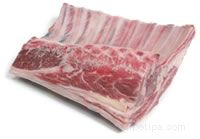
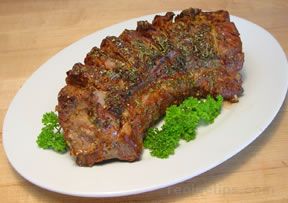
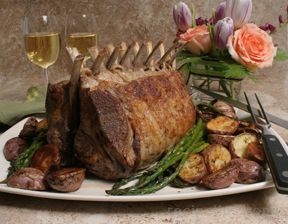
The rib and loin areas provide small, tender, expensive roasts. The rack, or rib roast, is an elegant small roast, usually only large enough for two or three. It is usually roasted quickly, at high heat. Two racks may be joined end-to-end then curved into a circle and tied, to make a Crown Roast. Two racks can be joined side-by-side with the protruding rib-ends interlocked, to make a Guard of Honor. A whole loin roast is somewhat larger and will usually serve four or five. A double-loin roast, or Saddle of Lamb, consists of the loin roast from both sides of the backbone, left in one piece. More exotic roasts, which would have to be special ordered, are the rear half of the lamb, known as the "Baron of Lamb", and the front half of the lamb, known as the "Foresaddle". These would usually be obtained from a small lamb weighing 20 pounds or so. | |
|
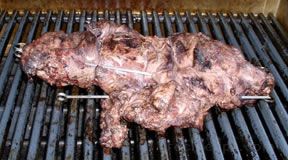
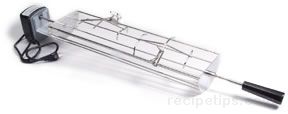
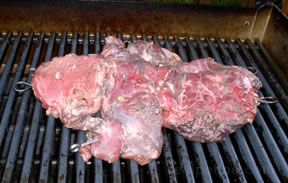
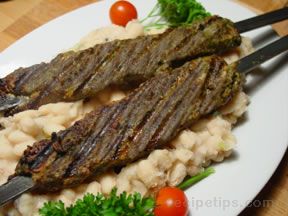
Lamb for Shish Kebab Chunks of meat threaded on skewers, with or without other ingredients, and grilled over hot coals, has long been a favorite way to cook lamb. Kebab chunks are usually regular cubes, about 1 inch on a side, trimmed of fat and connective tissue. Irregular shaped pieces can be cooked this way as well, but they won't cook as evenly. Some cooks enjoy the varying doneness this produces. Whether you purchase meat precut or cut your own from larger pieces, the best cuts to use are shoulder and leg. Since kebabs are typically marinated prior to grilling, the somewhat tougher shoulder meat, tenderized by the marinade, is a good choice because it is economical and flavorful. Rib and loin cuts can be used, but they are very expensive. They may be marinated for a very short time to add flavor, but long exposure to the acids in a marinade will cause the tender meat to become mushy. Meat from the breast is too fat; neck or shank meat is too tough. | |
|
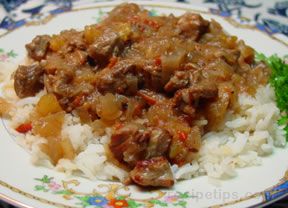
Lamb for Stewing or Braising "Stew meat" can vary from tidy 1 1/2 inch cubes to small irregular bits left from trimming various cuts. To be sure of what you're getting, buy a suitable cut, such as shoulder, neck or shank, and cut it into the size pieces you need. A pound of bone-in shoulder will be enough for three people; with the bony (but economical) neck or shank you'll need about one pound per person. Leg meat is easy to cut into uniform shapes, but will not be as moist or flavorful as shoulder, neck or shank meat. Shoulder, neck and shanks are also ideal for braising, as the long slow cooking dissolves the collagen (connective tissue) and makes a rich smooth sauce. Leg roasts are sometimes braised, although the result will be less flavorful than if using a shoulder roast. Loin and rib cuts are better prepared with a quick dry-heat method such as grilling or pan-broiling. | |
|
USDA Inspection The federal government inspects all American lamb that is sold commercially. Government inspection of lamb is mandatory and concentrates on the safety and wholesomeness of the meat and not necessarily the quality. Visual inspection for animal diseases is performed as well a number of scientific tests on a statistical sampling of the meat. The tests are used to determine if any biological or chemical contamination is present. The primary concern is for the safety of the consumer. Quality Grading The USDA grades lamb on the proportion of fat to lean and also on the texture, firmness, and color of the meat. The five USDA grades for lamb are: Prime, Choice, Good, Utility, and Cull. Most of the lamb available to the consumer is graded Choice or Prime. In fact, about 90% of American lamb is graded Choice or better. Yield Grading Lamb carcasses are also graded according to the ratio of lean to fat. A grade of 1 to 5 is given to a carcass based on the ratio. A yield grade of 1 is given to carcasses that yield the most meat and least amount of fat and a yield grade of 5 is given to carcasses with the lowest amount of usable meat. |
|
Cuts of lamb may vary in color from pink to light red but should always look fresh, not dull or slimy. The fat should be white and waxy looking. The bones should be reddish in color and moist looking, rather than dry. Some cuts may be all or partially covered with a silvery membrane, the "fell", which may be removed or left on depending on the recipe being used. When purchasing packaged fresh lamb in a food store, the packages should be cold and the meat should be firm. The packaging should be in good condition with no tears or holes in the wrapping. Lamb that has dried out edges and does not smell fresh, should not be purchased. Lamb that has a slimy feel should be avoided. Excess liquid may indicate that the lamb is old or has been stored at the incorrect temperature. It may also indicate that the meat has been previously frozen. Lamb that has little excess liquid in the package is the best to purchase. |
| It is sometimes difficult to know just how much lamb to buy to have the proper amount for a particular recipe or to serve to a specific number of people. Some of the information that will determine the quantity needed may be the type of cut you are selecting, whether the meat is bone-in or boneless, the number of people being served, whether or not it will be served in controlled portions, or if the meat will be served on a "help yourself" basis. The following information may be helpful in determining your needs. |
| Approximate Pounds Per Serving | |
| Type of Lamb Cuts | Serving Size |
|
Lamb Rib Crown Roast |
3 to 4 ribs per serving |
| Rack of Lamb | 3 to 4 ribs per serving |
| Double Ribbed Lamb Chops | 1 chop per person |
| Center-Cut Loin Roast | 1/2 lb. per serving |
| Shoulder Roast | 1/2 lb. per serving |
| Leg of Lamb | 3/4 lb. to 1 lb. per serving |
| Boneless Leg of Lamb | 1/2 lb. per serving |
| Shank, Spare Ribs, Brisket | 1 lb. per serving |
| Ground Lamb, Stew Meat | 1/4 lb. per serving |