|
Types of Lamb | Shoulder | Breast and Foreshank
Rib | Loin/Flank | Leg | Variety Meats | Special-Order Cuts
Lamb, the meat from the carcass of a young sheep, is a lean red meat with a mild, but distinctive flavor. A very nutritious food, lamb is a good source of protein, B vitamins and iron. Although it is eaten less often than beef in the U.S., lamb is the meat of choice in many parts of the world, both for everyday meals and holiday feasts.
|
Types of Lamb
|
| Type |
Description |
Cooking Method |
|
Baby Lamb
(sometimes called Hothouse Lamb)
|
Milk-fed lamb not more than 10 weeks old, less than 20 pounds, very
pale pink in color. |
Usually roasted whole. |
| Spring or Easter Lamb |
Several months old, usually 20 to 40 pounds. |
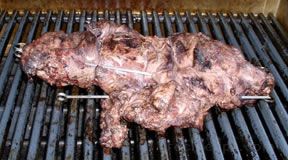
Often spit-roasted. |
| Lamb |
Five months to one year old. This is the age at which most lamb
is marketed. |
A wide variety of cooking methods are suitable. |
Yearling
(sometimes called Hogget) |
Meat from animals 1 to 2 years old. The meat is darker and more
flavorful than lamb. |
Although not widely available, both yearling
and mutton are excellent choices for flavorful ethnic dishes. |
| Mutton |
Meat from any sheep more than 2 years old. (Sometimes yearling is
considered mutton.) Cuts are larger, the color darker red, the flavor
more pronounced. |
There are five primal, or basic, cuts of lamb: Shoulder, Breast/Foreshank,
Rib, Loin/Flank, and Leg. Each of the primal cuts can be further divided
into a variety of subprimal and market ready, or ready to cook, cuts.
Described in the tables below are the lamb primal cuts and the subprimal
and market ready cuts obtained from them.
|
Shoulder
The shoulder is the primal cut that includes the upper front leg,
the shoulder blade, ribs 1 through 5, and the neck. Because these
muscles get a lot of exercise, the meat is tougher and more flavorful
than the loin or hind leg. It also has more connective tissue, veins
of fat, and many bones. Shoulder cuts are usually cooked using moist
heat, although meat from young animals can be successfully roasted
at low temperatures.
One of the larger cuts of lamb, whole shoulder is very flavorful.
Bone-in shoulder roast can be used in a variety of recipes and is
a more economical cut than leg roast. Although many cooks believe
that a bone-in roast produces better flavor, the complex bone structure
of the shoulder makes it difficult to carve. The bone-in shoulder
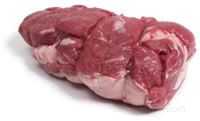
is also known as the square-cut shoulder. Boned whole shoulder is
usually rolled and tied to maintain its shape, if it is to be roasted.
This is an ideal cut for stuffing.
The shoulder can also be divided into three subprimals: neck, blade,
and arm.
|
| Subprimal Cut |
Market Ready Cuts |
Description |
| Neck |
Neck Slices
Stew Meat
Ground Lamb
|
The neck is a small, tough, flavorful cut
usually sold whole or cut into crosswise slices, and is cooked using
moist heat. Neck meat may also be used as stew meat or it may be ground. |
| Blade |
Blade Roast
|
The blade roast is cut from the shoulder blade section of the shoulder
primal.
|
| Saratoga Roll |
This refers to a boneless center roast obtained from
the blade portion of the shoulder and is also known as a chuck eye
roast. |
| Blade Chop |
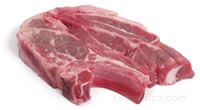
The most flavorful and economical chops come from the
shoulder. They can vary a lot in degree of tenderness. In general,
the blade chop, from the back side of the shoulder will be more tender
than the arm chop from the front side. |
|
Arm
|
Arm Roast
|
The arm roast is cut from the upper arm section of the shoulder
primal.
|
| Arm Chop |
The arm chop is cut from the upper arm section and contains
a cross-section of the upper arm bone. It is a bit less tender than
the blade chop. |
| Other |
Stew Meat |
Shoulder meat, trimmed of fat and connective tissue,
is the best choice for stew. It is usually sold already cut into cubes,
but a shoulder roast, boned or bone-in, can easily be chunked into
stew pieces. |
| Kebab Meat |
Cubed shoulder meat is sometimes used for kebabs to
be grilled, but since the shoulder is not as reliably tender as the
leg, kebabs prepared with leg meat are a better choice for grilling. |
|
Breast and
Foreshank
The breast is the lower part of the front half of the lamb's carcass.
It tends to be quite fat, but very flavorful. The foreshank is the
front leg from the knee to the shoulder primal.
|
| Subprimal Cut |
Market Ready Cuts |
Description |
| Breast |
Whole Breast
|
The whole bone-in breast can be used as a roast when cooked with
moist heat. It is often boned and rolled in which case it is usually
stuffed and braised.
|
|
Spareribs
Riblets
Denver Ribs
|
Spareribs, which contain more bone and fat than meat,
may be in large slabs or separated into riblets. Spareribs that have
been trimmed of all fat and connective tissue are known as Denver
ribs. |
| Foreshank |
Foreshank |
The foreshank is the leanest cut of lamb and requires long slow
cooking with moist heat to dissolve the connective tissue. It may
be whole or cut across the bone into rounds.
The foreshank is also known as simply a "lamb shank",
but this can be confusing because the lower part of the shank half
of the rear leg is also known as a lamb shank. A lamb shank is also
known as a trotter.
|
| Other |
Ground Lamb |
Scraps from the breast and foreshank are often ground
into lambburger. |
|
Rib
The rib is the section of the lamb carcass on either side of the
backbone between the shoulder and the loin and includes ribs 6 through
12. Rib meat is expensive, mild flavored, and tender. The rib cut
has an outer layer of fat which can be trimmed off but, if left
on during cooking, melts and bastes the meat. Rib meat is best cooked
using dry heat: by roasting, broiling, or grilling.
|
| Subprimal / Market Ready
Cuts |
Description |
|
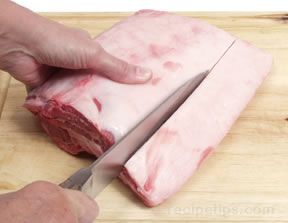
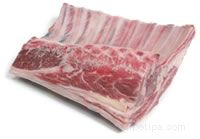
Rib Roast:
|
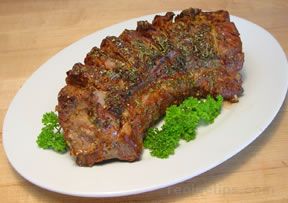
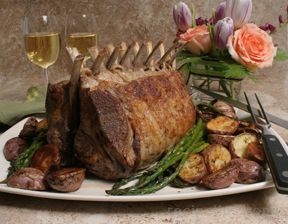
A whole rib roast, or "rack of lamb" has seven
or eight ribs. Although it may be cooked as any roast, there are several
traditional and very elegant treatments. When "Frenched,"
or prepared with the upper ends of the rib bones trimmed (and often
capped with decorative covers) it is one of the most elegant cuts
from the lamb carcass. Two or three racks can be combined end to end
and then curved into a circle to make a Crown Roast, or a pair of
racks can be roasted with their rib ends interlaced. Be sure the chine
bone has been cut through. |
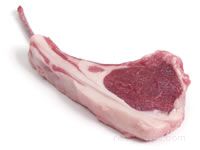
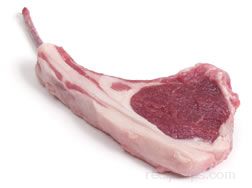
| Rib Chop |
A rib chop is, with the loin chop, the most highly prized,
the most tender, and tastiest cut of lamb. The rib chop has somewhat
more fat than the loin chop and is therefore somewhat more flavorful. |
|
Loin/Flank
The loin primal cut is the section along the lamb's back from the
13th rib to the hip. It also includes the flank, or belly section,
which is much tougher than the loin section.
The loin contains the most expensive, highly prized, and tender
meat. It is somewhat leaner than the rib cut. Care must be taken
in preparing loin meat, whatever the cut, so that it doesn't dry
out during cooking. Therefore, it is recommended that cuts from
this area be served medium rare or medium, and never well done.
|
| Subprimal Cut |
Market Ready Cuts |
Description |
| Loin |
Loin Roast |
The entire section may be left whole as
a bone-in roast. It is not a large cut and should be cooked carefully
to prevent overcooking and drying out. |
| Loin Eye Roast |
This is a boneless cut which consists of
the muscle that lies along the backbone. It makes an elegant, expensive
roast but is quite small, usually weighing not more than two pounds. |
| Saddle of Lamb |
This cut is a double loin roast, from both
sides of the backbone. It does not contain a large quantity of meat,
but the quality is unsurpassed, and it is easy to carve. The cut would
probably need to be special-ordered from your butcher. |
|
Loin Chop
|
The loin roast can be sliced crosswise
into individual chops. Loin chops are the most tender, leanest, and
most expensive of the various lamb chops and can be identified by
the "T-bone". The loin chop is sometimes called the lamb
T-bone chop. If cut from both sides of the backbone, they are called
double chops. |
| Medallion or Noisette |
These are crosswise slices of the boneless
loin and are suitable for very quick cooking. They are often served
with a sauce. |
| Tenderloin |
Tenderloin |
This cut consists of the other muscle in the loin and
is very tender and small - too small to roast, it should be grilled
or sautéed. |
| Flank |
Flank/Apron |
Unlike other cuts from the loin, the flank is tough
and is usually ground into lambburger. |
|
Leg
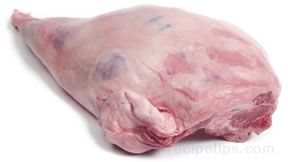
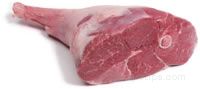
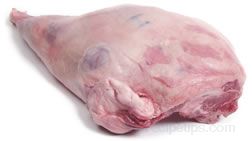
Although a lamb has four legs, only the two hind legs produce the
cut referred to as "leg of lamb". It is a large, lean,
and tender cut and can be used whole or subdivided into smaller
cuts, which can be prepared in many different ways and are usually
cooked using dry heat. The whole, bone-in leg can weigh from five
to nine pounds and may be American style (no shank bone attached)
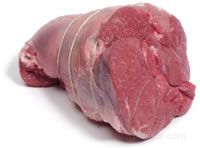
or French style (shank bone left on). A whole leg that has been
boned makes a compact and tidy roast when rolled (with or without
stuffing) and tied or netted to keep its shape. It may also be butterflied
(so-called because the deboned, flattened leg resembles a butterfly's
shape) for grilling.
|
| Subprimal Cut |
Market Ready Cuts |
Description |
| Sirloin Half |
Sirloin, Half-leg Roast, Bone-in |
The sirloin (top of the leg, hip area) is meatier and
more tender than the shank half and makes an excellent oven roast
and usually weighs 3 to 4 pounds. |
| Sirloin, Half-leg Roast, Boneless |
The sirloin half, when boned and rolled, makes an ideal
size (about two pounds) for four people. |
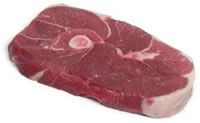
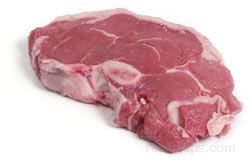
| Leg (Sirloin) Chop |
Leg chops come from the sirloin end of the leg. They
are identifiable by the crosscut section of round leg bone within
the meat. Sirloin chops are very meaty and make a larger and more
economical chop than either rib or loin chops. |
| Shank Half |
Shank Roast |
The shank half of the leg is leaner than the sirloin half, but
it is tougher and chewier and has a higher percentage of bone. It
makes a flavorful small roast if cooked properly. It typically weighs
3 to 4 pounds.
The shank half of the rear leg is often confused with "lamb
shank", which most often refers to the foreshank, but may also
refer to the lower end of the shank half of the rear leg.
|
| Lamb Shank |
A lamb shank is the lower end of the shank half of the
rear leg. The foreshanks are also known as lamb shanks. |
| Crosscuts |
Center Leg Roast |
Cut from the center of the rear leg, the center leg
roast contains a portion of the sirloin half and a portion of the
shank half of the leg. |
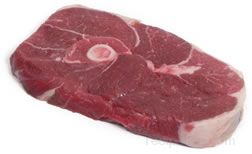
| Leg Steak |
Steaks are cut from the center of the leg. They are
identifiable by the crosscut section of round leg bone within the
meat. |
| Other |
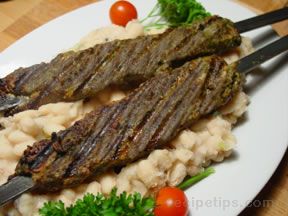
Kebab Meat |
Kebabs are cubes of meat, ideally free of fat, bone
or connective tissue, usually meant to be grilled, as in shish kebab,
souvlaki, or shaslik. Leg is the preferred cut for kebabs since it
has large muscle areas which yield cubes free from gristle and bone,
and is tender enough for grilling. Leg cubes are sometimes used for
stew meat although this lean, tender cut is less suitable for stew
than the more flavorful shoulder. |
|
Variety Meats
|
| Market Ready Cuts |
Description |
| Liver |
Although it has the characteristic liver taste, lamb
liver is milder and sweeter than beef or pork liver and is very tender.
It is an excellent source of iron and B vitamins but is also quite
high in cholesterol. |
| Kidney |
Lamb kidneys are valued for their tenderness and mild
flavor. They are often grilled or roasted, but should never be overcooked. |
|
Tongue
Heart
|
Cooked until tender and covered with a seasoned broth,
these organ meats make excellent cold cuts. |
|
Special-Order
Cuts
|
| Market Ready Cuts |
Description |
| Saddle of Lamb |
This cut is a double loin roast, from both sides of
the backbone. |
| Foresaddle of Lamb |
The entire front half of the lamb carcass, from a lamb
of about 20 pounds. It is usually stuffed and roasted. |
| Baron of Lamb |
The entire rear half of the lamb carcass, usually from
a lamb of about 20 pounds. It is usually roasted. |
Crown Roast
Guard of Honor |
These are both special preparations of Rack of Lamb and may be
available from some butchers without special ordering; or they can
be created by the home cook from two racks.
|
|