


Hand Mixing on a Flat Surface | Hand Mixing in a Bowl
Hand Mixing on a Flat Surface (Well Method)
|
A traditional method for dough preparation is to combine the dry and liquid ingredients directly on a clean, smooth work surface. A board or marble slab work very well for this method, which is also known as the "well method." This method is useful for basic breads in which yeast is first dissolved in water and for breads using starters. Well Method - Breads Prepared with Yeast |
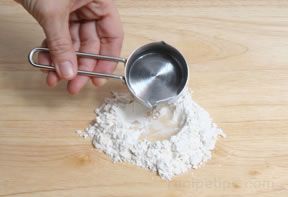
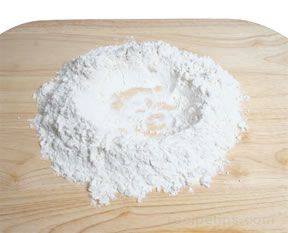
| On a flat work surface, combine the flour and other dry ingredients. After mixing, create a well in the center of the dry ingredients. |
|
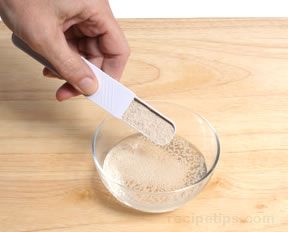
| If the bread recipe uses yeast that has been dissolved in water, pour the yeast liquid into the center of the well. | 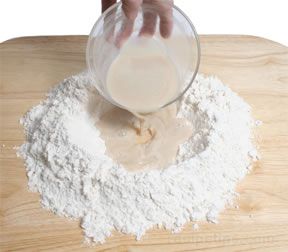 |
| Slowly stir the liquid, picking up some of the flour from the inside walls of the well. Continue drawing in flour until a paste forms. Then add most of the remaining water called for in the recipe and continue drawing in the flour. | 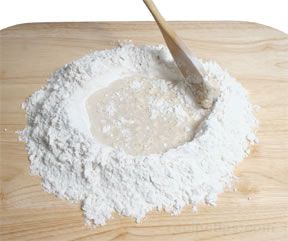 |
| When about a third of the flour remains on the sides of the well, pull the remaining flour into the center and quickly incorporate it into the dough. Add small quantities of water to the dough if it is too dry. | 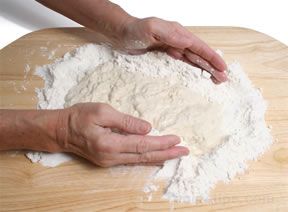 |
Well Method - Breads Prepared with a Starter |
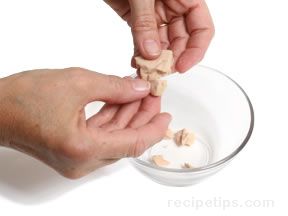
| If a starter dough is used as the leavening agent rather than dissolved yeast, break up the starter and place it in the middle of the well. | 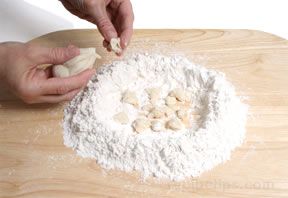 |
| Add water to the starter dough and stir to form a paste. | 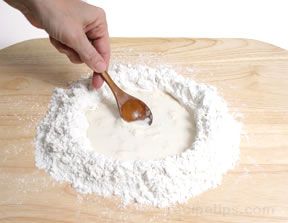 |
| Using the same procedure as when using dissolved yeast, incorporate the dry and liquid ingredients to form the dough. | 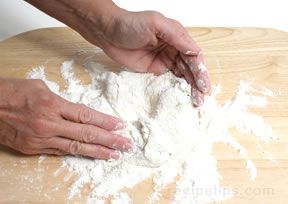 |
Hand Mixing in a Bowl
|
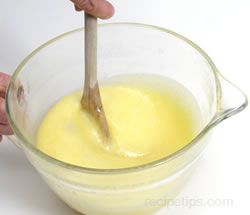
One of the simplest methods for mixing ingredients to make dough or batter for bread is by stirring the ingredients together in a bowl. A large bowl is often used for the "well method" rather than a flat work surface because it is easier to manage the ingredients when they are contained in a bowl and it is also less messy. A wooden spoon is the best utensil for mixing the ingredients in a bowl. Ingredients for quick breads are usually mixed in a bowl because the dough is often not as firm as the dough for yeast breads. | |
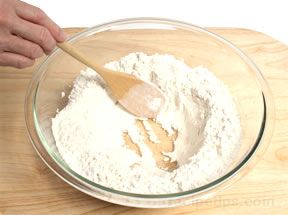
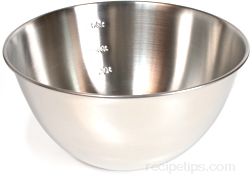
| When using a bowl for the "well method," make sure that a very large bowl is used to provide ample room for the ingredients and for the well. | 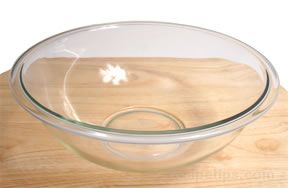 |
|
Using the same procedure as described previously for the well method on a flat surface, form a well in the center of the flour in the bowl. |
|
| Add the liquid, and gradually pull the flour into the center. | 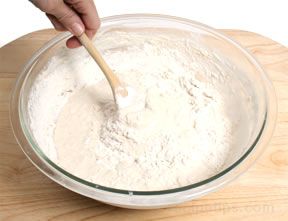 |
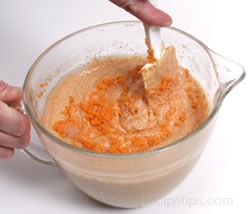
| When mixing ingredients for quick breads, a large bowl is almost always used because the dough is usually not as firm as dough for yeast breads. Depending on the recipe, the ingredients for some quick breads create a batter-like consistency when mixed together. The dry ingredients are often combined first and then the liquid ingredients, which have also been mixed together, are added to the dry ingredients and quickly folded in. Other quick breads may contain ingredients that create a dough-like consistency when mixed, similar to yeast breads, and so the well method (in a bowl) is often used to mix the dry and liquid ingredients. |
|