
Measuring Flour

Enter and View Your Recipes
Advertisement

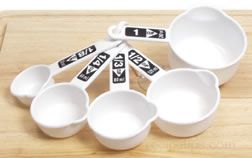
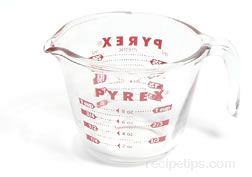
Individual graduated dry measuring cups are used to measure large quantities of flour while measuring spoons can be used to measure the smallest quantities.

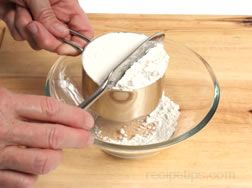
When measuring flour, it is best to fill the measuring device until the flour is heaping above the rim. Using the back edge of a knife or other straight edged object, create a precise measurement by running the straight edge along the rim of the measuring container to push off the excess flour.

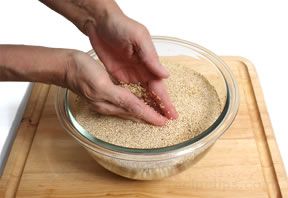
It may be beneficial to stir the flour before measuring to remove any lumps that may have developed. The flour can also be sifted to insure that it is free of lumps, but this usually is not required because most brands of all-purpose flour are presifted.

Weight vs. Volume

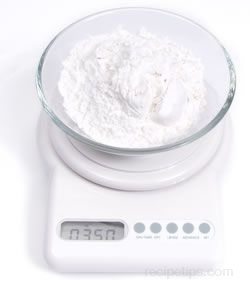
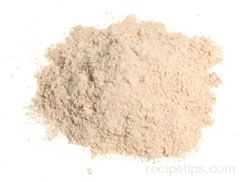
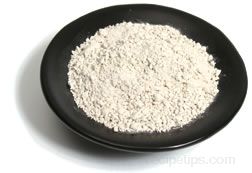
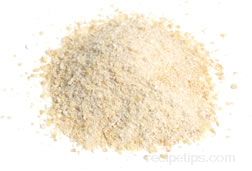
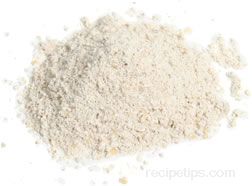
A kitchen scale can be used to measure flour by weight for the most accurate quantity. Occasionally, the quantity of flour that is actually contained in a measuring device may be inaccurate due to several factors, such as the manner in which the flour is added to the measuring device, the degree in which the flour is compacted, and the humidity level. Using a scale to weigh the ingredient eliminates the inaccuracy and provides a more precise measurement. Because flour is generally the major ingredient of many baked goods, it is important to be as accurate as possible with measuring flour to achieve the best results. It is also worth noting that different types of flour do not weigh the same.

Weight of Flour - Per 1 Cup
(approximate weights)

All Purpose Flour

Whole Wheat Flour

Bread Flour

Rye Flour

4 3/8 oz or 125 g

4 1/4 oz or 120 g

4 1/2 oz or 127 g

3 5/8 oz or 102 g

Ratings, Reviews & Comments

There currently aren't any reviews or comments for this article. Be the first!

Measuring Flour Article - Related Content

Recipes
Ingredients included in this recipe are flour minus 2 T..
Ingredients included in this recipe are part coconut flour, part almond flour (meal).
Ingredients included in this recipe are flour, salt.
Ingredients included in this recipe are corn starch.
Ingredients included in this recipe are flour, Salt, oil.
Ingredients included in this recipe are rice flour, barley flour, baking soda, ginger, Salt, quick oatmeal, molasses, sour milk/buttermilk.
Ingredients included in this recipe are flour, milk, Pinch of salt, Sugar, butter.
Cooking Tips & Advice
Measuring Dry Ingredients | Weight Versus VolumeMeasuring Solid Fats | Measuring Liquid Ingredients When making bread, it is critical to use precise measurements. Unlike general cooking in which precise measurements are often not as critical, inaccurate measurements in bread making (and most baked items) affect the chemical processes that occur during the preparation and baking.
Types of Wheat Flour | Types of Non-Wheat FlourImportance of Gluten | Wheat/Non-Wheat Flour Proportions Flour is the main ingredient in all types of breads. Different types of flour milled from wheat are most commonly used for making bread.
Tips - Home Flour Milling | Substitutions Tips - Home Flour Milling Amaranth Flour Amaranth seeds are very small so they are difficult to grind into flour with conventional kitchen equipment.
Nutritional Advantages | All About Gluten   Nutritional Advantages of Various Types of Flour Most types of flour are composed mainly of carbohydrates, but the quantity varies according to the type of substance used to create the flour.
Most types of flour keep well in a sealed container in a cool, dry, and dark location. The original paper packaging used for many types of flour is fine for long term storage as long as the package has not been opened.
Flour Used as a Thickening Agent | Frying | Deep-Frying | Baking   Flour Used as a Thickening Agent Flour is one of the most often used thickening agents when cooking foods such as sauces, gravies, soups, stews, and gumbos.
Grinding or milling various types of flour in the home can be accomplished with only a few basic tools. Some tools make the job easier and some types of flour are easier to create depending on the type of grain or other substance that is used.
Glossary Terms
A type of flour produced by grinding dried yams into a powder. A yam is a hearty tuber that does not have the sweet taste of a sweet potato, but instead may have flavors that range from bland to earthy, slightly smoky in taste, or nutty and only moderately sweet.
A type of flour ground from water chestnuts, which are the edible tubers of an aquatic plant that grows along the muddy edges of lakes, ponds, rivers, and streams or is cultivated commercially in flooded fields.
A type of flour ground from a high protein man-made grain produced by crossbreeding wheat and rye. Pronounced “trit-i-KAY-lee”, the name is a combination of the Latin botanical names of wheat and rye – “triti,” referring to triticum for wheat and “cale”, referring to secale for rye.
The brand name for a type of flour milled from grain that is closely related to durum wheat and is often considered a specialty grain.
A type of flour milled from dried kernels of yellow corn. It is similar to cornmeal except that it is ground to a finer consistency than cornmeal.
A flour similar to refined white pastry flour, however not all of the bran and germ portions of the wheat kernel have been removed during the milling process.
A type of hard-wheat flour that is most often used for quick breads, such as muffins, biscuits, and dumplings, and flatbreads, such as chapatis, and tortillas.
Reproduction in whole or in part without written permission is strictly prohibited.
© Copyright 2012 Tecstra Systems, All Rights Reserved, RecipeTips.com