
RecipeTips.Com Home glossary | L | Leavening
Join Now | Sign In | RSS Feeds RSS Feeds
Leavening: Cooking Terms: RecipeTips.com
Recipes Cooking Tips & Advice Glossary Community Videos
Can I get Swine Flu by eating pork?
hints
e-Newsletter
RecipeTips.com Newsletter Sign Up
back to Glossary Index

Leavening

print Print Leavening term  |  email Email Leavening term  |  rate this term Rate this term  |  share Share
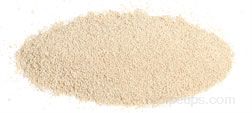
The process of adding a substance to bread dough (and other baked goods) that enables the dough to rise. Risen breads rely on a means of producing carbon dioxide gas that becomes trapped in the batter or dough causing the rising action. The carbon dioxide gas is produced either as a byproduct of fermentation or through the use of chemical agents. The fermentation process is activated by naturally occurring yeast that is airborne, by yeast that exists on the surfaces of wheat grains, or it may be activated by packaged baker's yeast that became widely available at the end of the nineteenth century. The yeast consumes some of the flour in the dough, producing carbon dioxide as a byproduct, which, in turn, raises the dough. Chemical leavens, which act very quickly, produce carbon dioxide gas in the batter or dough without the need for yeast.

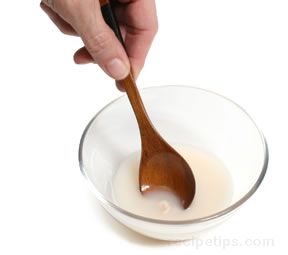
Risen breads can be prepared using the “direct yeast method,” also known as the “straight yeast method,” or with the use of a natural "starter," or with chemical leavening agents. The direct or straight yeast method for leavened breads uses commercially produced packaged yeast that is activated in warm water for a few minutes and then blended with the flour and other ingredients. This is a faster method for producing yeasted breads and is the most familiar method used by the home cook. Before a reliable baker's yeast became available in the nineteenth century, brewer's yeast was often used, but it produced uneven results. The types of packaged yeast available today produce excellent results.

The use of a starter is a traditional method of leavening requiring only a flour, water, and yeast mixture, which is allowed to ferment for varying periods depending on the type of bread being prepared. A starter may contain additional ingredients, such as milk, sugar, or honey, depending on the recipe. Some starters do not contain commercial yeast, but only flour and water and rely on airborne yeast for fermentation. This type of starter is perhaps the oldest method for preparing leavened breads.

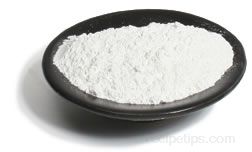
Chemical leavening agents, which became available during the nineteenth century, are also widely used. Breads using chemical agents, such as baking soda and baking powder, for leavening are known as quick breads because of the rapid rate of the rising action and the short preparation time required.

The leavening method used for bread making depends upon the type of bread being prepared. The leavening method also has much to do with the flavor, texture, and shelf life of the bread. For example, two breads with exactly the same ingredients will have very different qualities if one of the breads was prepared with a starter and the other was prepared directly with packaged yeast.

USDA Nutrition Facts

Doughnuts, yeast-leavened, glazed, unenriched (includes honey buns) (USDA#18436)

Serving Size 1 oz
Calories 403
Protein 6g
Total Fat 22g
Total Carbohydrates 44g
Dietary Fiber 1g
Potassium 108mg
Sodium 342mg
Cholesterol 6mg

Leavening agents, yeast, baker's, active dry (USDA#18375)

Serving Size 1 tbsp
Calories 295
Protein 38g
Total Fat 4g
Total Carbohydrates 38g
Dietary Fiber 21g
Sugars 0g
Potassium 2000mg
Sodium 50mg
Cholesterol 0mg

Leavening agents, yeast, baker's, compressed (USDA#18374)

Serving Size 1 cake (0.6 oz)
Calories 105
Protein 8g
Total Fat 1g
Total Carbohydrates 18g
Dietary Fiber 8g
Sugars 0g
Potassium 601mg
Sodium 30mg
Cholesterol 0mg

Leavening term - Related Content

Glossary Terms
Leavened

Leavened

A word describing baked goods that have a leavening agent added to them.
Leaven

Leaven

An agent added to baked goods to cause the dough or batter to rise, lightening the texture and adding volume. Some of the leavening agents used are beaten eggs or egg whites, ...
Direct Leavening Method

Direct Leavening Method

A type of leavening method in which yeast is activated in warm water before it is mixed with the other ingredients to form bread dough. It is the simplest method for preparing ...
Chemical Leavening Agents

Chemical Leavening Agents

Compounds, produced from chemicals, that are used as leavens for a wide range of baked goods. Baking soda and baking powder are among the most often used chemical leavens. Breads ...
Natural Leavening Agents

Natural Leavening Agents

Yeast substances that produce fermentation in dough used for bread and other baked goods, causing the dough to rise without the aid of chemical additives. There are several forms ...
Cooking Tips & Advice
Leavening Using a Starter

Leavening Using a Starter

Sourdough Starter | Sponge Starter | Old Dough Method The primary difference between making bread with a starter and making bread with the direct or straight yeast method ...
Leavening Direct or Straight Yeast Method

Leavening Direct or Straight Yeast Method

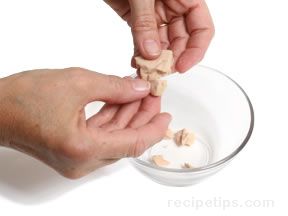
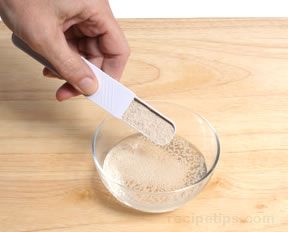
Fresh Cake Yeast | Active Dry Yeast | Quick-Rising Active Dry Yeast Yeast that is activated in warm water before it is mixed with the flour and other ingredients to form ...
Leavening

Leavening

Risen breads rely on a means of producing carbon dioxide gas that becomes trapped in the batter or dough causing the dough to rise. The carbon dioxide gas is produced ...
Leavening Using Chemical Leavens

Leavening Using Chemical Leavens

Chemical leavening agents allow bread dough to be prepared in minutes instead of hours. Chemical leavens, such as baking soda and baking powder, react immediately when ...
Advertise With Us ADVERTISEMENT
Greenback Street - Save Money!
Clip and save Coupons available
Daily Feature
Pumpkin Pie Cake Recipe
view past daily features
Party Planner
RecipeTips.Com Home glossary | L | Leavening
Join Now | Sign In | RSS Feeds RSS Feeds
Reproduction in whole or in part without written permission is strictly prohibited.
© Copyright 2009 Tecstra Systems, All Rights Reserved, RecipeTips.Com