
RecipeTips.Com Home glossary | F | Fiber
Join Now | Sign In | RSS Feeds RSS Feeds | Find Us On Facebook | Share
Fiber: Cooking Terms: RecipeTips.com
Recipes Cooking Tips & Advice Glossary Community Videos
Can I get Swine Flu by eating pork?
hints
e-Newsletter
RecipeTips.com Newsletter Sign Up
Print Fiber term Email Fiber term Rate this term Add to My Files

Fiber

back to Glossary Index
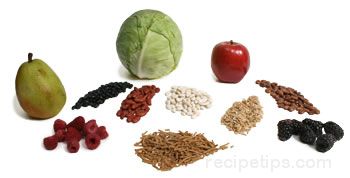
A carbohydrate contained in plant foods such as fruits, legumes, vegetables, and whole grains that cannot be broken down by digested enzymes when they are eaten so they cannot be fully digested. Commonly referred to as dietary fiber or roughage, fiber aids to add bulk to a diet, assisting digestion and daily elimination functions. Fiber makes a person feel full after eating, thus helping those who are on diets to lower their consumption of foods. Since it is unable to be absorbed by the body, it contains no calories. Some of foods that are high in fiber per serving include: apples, pears (skin on), blackberries, blueberries, raspberries, dates, figs, prunes, archichokes, beans (black, lima, pinto), broccoli, chick-peas, lentils, parsnips, peas, pumpkin, rutabaga, and winter squash.

There are two types of roughage or fiber: water soluble (i.e., gum, pectin, resins, and sap of plants) and water insoluble (i.e., cellulose, hemicellulose, and lingnin of plants). Barley, legumes, oat bran, and fruit (apples, citrus fruits, pears) are foods that contain soluble fiber while root vegetables cabbage, peas, beans, and foods with wheat bran or whole grains contain insoluble fiber. Each plays a role in providing a health benefit to our bodies. The soluable fibers assist to lower cholesterol in our bodies as well as maintaining a good balance of insulin and blood sugar levels for the prevention of diabetes. They decrease the rate that sugars (carbs) are digested as they enter our bodies, slowing our digestive process and assisting with the absorption of nutritents. The insoluble fibers, which are typically found in the nonseed or nonfruit parts of the plant, such as the leaves, hulls and stems, helps with the digestion process, absorbing water and passing foods more quickly through the stomach and intestines. The amount recommended for a healthy diet is 25 to 35 grams of fiber daily. When fiber consumption exceeds the recommended daily levels, it may cause a harmful effect that interferes with the minerals and vitamins normally absorbed as nutrients into our body.

A fiber supplement is a readily available alternative to the natural fiber from plant foods as a means to enable those who want to add fiber to their diet to do so when they are unable to consume the recommended daily amounts of natural fiber. However, caution is urged and guidlines must be followed to insure proper levels of nutrients are being adequately absorbed into the body and are not being hindered by the intake of fiber supplements. It is always best to maintain a proper balance of fiber naturally whenever possible.

High Fiber Food Items Glossary Term

Related Topics

Next
Dietary Fiber and a Low Carb Lifestyle Article

Dietary Fiber and a Low Carb Lifestyle

Although dietary fiber is a carbohydrate, it cannot be fully digested a...
Wine Terms & Definitions Article

Wine Terms & Definitions

The Role of Dietary Fiber in a Healthy Lifestyle Article

The Role of Dietary Fiber in a Healthy Lifestyle


USDA Nutrition Facts

Molasses (USDA#19304)

Serving Size 1 cup
Calories 290
Protein 0g
Total Fat 0g
Total Carbohydrates 74g
Dietary Fiber 0g
Sugars 55g
Potassium 1464mg
Sodium 37mg
Cholesterol 0mg

Jellies (USDA#19300)

Serving Size 1 serving 1 tbsp
Calories 266
Protein 0g
Total Fat 0g
Total Carbohydrates 69g
Dietary Fiber 1g
Sugars 51g
Potassium 54mg
Sodium 30mg
Cholesterol 0mg

Honey (USDA#19296)

Serving Size 1 cup
Calories 304
Protein 0g
Total Fat 0g
Total Carbohydrates 82g
Dietary Fiber 0g
Sugars 82g
Potassium 52mg
Sodium 4mg
Cholesterol 0mg

Fiber Glossary Term - Related Content

Cooking Tips & Advice

Dietary Fiber and a Low Carb Lifestyle

Although dietary fiber is a carbohydrate, it cannot be fully digested and does not convert into glucose; therefore, it does not raise the blood sugar level when consumed. ...

Wine Terms & Definitions

The Role of Dietary Fiber in a Healthy Lifestyle

 
Clip and save Coupons available
RecipeTips.Com Home glossary | F | Fiber
Join Now | Sign In | RSS Feeds RSS Feeds | Find Us On Facebook | Share
Reproduction in whole or in part without written permission is strictly prohibited.
© Copyright 2010 Tecstra Systems, All Rights Reserved, RecipeTips.Com