
|
|
| back to Glossary Index |
 |
|
|
 |
|
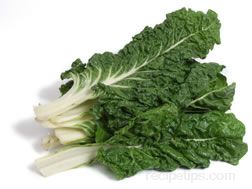
A rippled or smooth-leafed vegetable that has a white, red or yellow stalk with white veins running throughout the stalks. Swiss Chard grows in clumps as either a white or red variety. The common Red Chards include Rhubarb or Ruby Chard while the common White Chard is also known as Green Chard. Typically, this vegetable green is sold in loose bunches of leaves rather than clumps. The leaf and stalk can be eaten raw or the leaves can be prepared in the same manner as spinach and the stalks can be prepared like asparagus, the leaves providing a smooth, light texture while the stalks are crisp and crunchy. Chard is a member of the beet and spinach family, however, it is a plant that grows upward rather than downward like the garden beet that is considered a root vegetable. This vegetable has a somewhat salty flavor with a slightly bitter taste from the greens. It contains an abundant supply of nutrients, providing over twice the amount of Recommended Dietary Allowance of vitamin K in each cup of cooked Chard. In addition, Swiss Chard provides vitamins A, C, E, iron, manganese, and potassium.
Swiss Chard is available throughout the year but its peak season is during the summer. When selecting, choose fresh, tender greens and crisp stalks, avoiding those that are wilted or have blemished leaves. To store, wrap unwashed in a plastic bag and keep in the refrigerator for up to 3 days. When ready to prepare, wash thoroughly to remove all debris and dirt from the leaves and stalks. Do not use aluminum pans when cooking Chard as this vegetable may react with the metal causing discoloration. Swiss Chard is also known simply as Chard or spinach beet, leaf beet, seakale beet, silver beet, and white beet.
|
 |
 White (or Green) Chard |  |  Red (or Ruby) Chard |
|
 |
|
 |
Swiss Chard term - Related Content |
 |
 |
 |
 |
 |
|
 |
 |
 |
|
 |
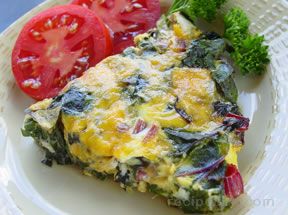
| This crustless, vegetable custard makes a delicious light lunch or brunch dish. Any kind of Swiss chard will work equally well, but the red-stemmed varieties will make a more colorful pie. |
|
 |
 |
 |
|
 |
| Smooth and rich flavored, this cheese ball provides a festive garnish for brunches, holiday gatherings or any party event. |
|
 |
 |
 |
|
 |
| Made with only a few simple ingredients, this exceptionally tasty dip is ideal for spreading on crackers or toasted baguette slices as a great hors d’ oeuvre or appetizer. |
|
 |
 |
 |
|
 |
| Great flavor of a reuben in a crispy crouquettes snack. |
|
 |
 |
 |
|
 |
| Not just the typical green bean casserole, the addition of your choice of vegetables adds a variety of flavors. |
|
 |
|
|
 |
 |
 |
 |
 |
|
 |
|
|
 |
|
 |
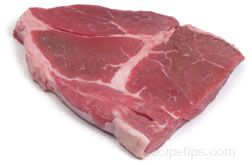
| 1. Another name given to a steak cut from the beef arm roast. Braising is the best cooking method for this tougher cut, which is also known as arm steak. A steak cut from the ... |
|
 |
|
|
 |
|
 |
| A rippled leaf vegetable with a white or red stalk and green leaves that have white veins running throughout the stalk. Chard grows in clumps as either a white or red variety. ... |
|
 |
 |
 |
|
 |
| A method of tenderizing meat, which has been floured and seasoned, by pounding it to break up the muscle fibers. This tenderizing method is generally used on beef. |
|
 |
|
|
 |
|
 |
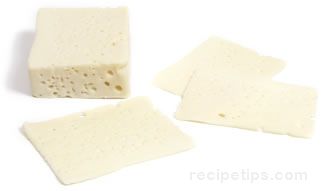
| Originating in Switzerland, this cheese is characterized by the large holes ("eyes") found throughout the cheese, which grow larger and increase in number the longer the cheese ... |
|
 |
|
|
 |
|
 |
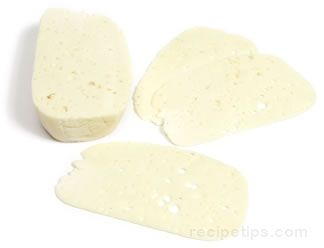
| Typical of many Swiss cheeses characterized by the holes ("eyes") found throughout the cheese, Lacy Swiss cheese also contains holes, but they are much smaller in size than the ... |
|
 |
|
|
 |
 |
 |
 |
|
|
 |
|
|
|
|
|
|
|
|
 |
|
| Reproduction in whole or in part without written permission is strictly prohibited. |
| © Copyright 2008 Tecstra Systems, All Rights Reserved, RecipeTips.Com |
|
|
 |
|