
Deep Fry

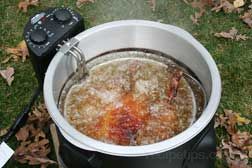
The process of "dry" cooking food totally covered in hot cooking fat or oil. This process produces evenly cooked food with a golden, crisp surface on the outside. While the moisture on the inside of the food which acts to repel the oil is heated and boils, the food steam cooks, making it moist and tender. The temperature of the oil is important in order to achieve the best results. If the oil is not hot enough, the food cooks too long and may absorb some of the oil or it may not be cooked in the proper amount of time. If the oil is too hot the oil may penetrate the food and become absorbed into the food. Also, the food may burn as the water is forced out of the food, making it dry and oily. The best temperature for the oil is 350ºF to 375ºF, depending on the temperature of the food being fried and the amount being cooked. Some of the foods commonly cooked by deep frying include, pastries such as doughnuts, fish, shellfish, vegetables, meat, and poultry.

A few Deep Frying tips that may assist with the process include:

  • Always consider the safety aspects of deep frying: keeping small children well away from the hot oil; wearing protective mitts; using utensils built for deep frying; keeping hot oils away from other heat sources or burners; placing fryers only on flat level surfaces large enough so the fryer cannot tip or fall off spilling the oil; and never leaving the fryer unattended by an adult. If the oil begins to smoke, turn off the appliance immediately.
  • Cold foods should be warmed slightly before frying so the outside of the food does not burn prior to the inside being fully cooked.
  • Choose or prepare foods for frying that are similar in size to keep the cooking time the same for all of the foods.
  • Keep oils clean and light colored since darker oils indicate they have had repetitive use and may impart a poor flavor into the foods being fried. Fresh oils require a minute or two increase for the cooking time.
  • Consider all options for choosing types of fry oils possibly selecting an alternative type of oil that serves to improve health benefits such as replacing oils containing trans fat with oils containing non-trans fats.
  • For breaded foods covered with a dry breading, use some type of food wash such as an egg wash to strengthen the bond between the breading and the food to keep it attached as the food fries.
  • For breaded foods covered with a wet breading, add cornmeal or flour to improve the bond to the food.
  • Keep a fire extinguisher available that is made to extinguish grease fires, in case the flammable oil catches fire.
  • If the deep fryer is not equipped with a temperature guage, use a deep-fry thermometer to watch and also control the temperature of the cooking oil.
  • If the deep fryer does not have a removable fry basket, use a long-handled slotted metal spoon or a utensil made for deep frying to place and remove food in the hot cooking oil.
  • Never use a fork to place food into a fryer or to remove it from the fryer, as the sharp points of the fork puncture the food and will allow oil to enter.
  • After cooking, place the foods removed from the fryer on several layers of paper towels to allow excess oils to be absorbed by the toweling.
  • If the cooking oil is to be stored after use, allow it to cool for 30 minutes, strain it through a fine mesh screen or cheesecloth to remove excess particles, and then refrigerate the oil. The used cooking oil must be refrigerated to keep it from becoming rancid or growing harmful bacteria.

  • Deep Fry Glossary Term
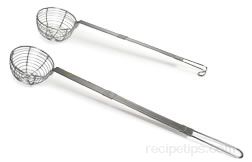
    Bird's Nest Basket For Deep Frying

    Ratings, Reviews & Comments

    There currently aren't any reviews or comments for this term. Be the first!

    Deep Fry Glossary Term - Related Content

    Collections
    Check out all of our egg recipes for morning or anytime.
    View our abundant collection of apple recipes.
    Recipes
    In Ukraine we don't have steaks, no seriously! Ukrainians just don't have this dish; we eat braised meat and meatballs. So I had to learn how to cook steak my own way.
    Ingredients included in this recipe are sesame seeds, boneless, skinless chicken breast halves, cut inch chunks, cornstarch, oil, bok choy, stalks and leaves cut inch half ...
    Ingredients included in this recipe are vegetable oil, firm tofu, cut into 1 inch cubes, carrots, sliced thin, celery, chopped, bean sprouts, soy sauce, cornstarch, roasted ...
    Ingredients included in this recipe are bacon, diced, cabbage, chopped (small head), garlic powder, salt.
    Ingredients included in this recipe are bok choy, carrots, thinly sliced, green bell pepper, cut into thin bite-sized strips (medium), water, any flavor Ramen noodle soup mix, ...
    Ingredients included in this recipe are cauliflower, broccoli, baby carrots (small pkg), green pepper, onion, Soy Sauce, lemon pepper, minced garlic, chicken seasoning, butter, ...
    Ingredients included in this recipe are vegetable oil, onion, thinly sliced (medium), freshly grated ginger root, garlic, Crushed, Salt, sliced fresh broccoli florets, bok choy, ...
    Cooking Tips & Advice
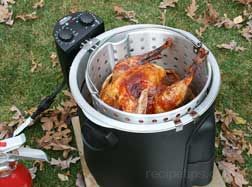
    Deep-frying, also known as deep-fat frying, is a process of immersing food in a deep pot containing heated oil. The turkey cooks quickly, producing a crispy surface over a tender and moist interior. It is becoming a popular alternative to roasting a whole turkey.
    Extreme care is necessary to ensure safety when deep-frying a whole turkey. Because the required equipment can be cumbersome and the large quantity of hot oil necessary for cooking a whole bird can be dangerous, deep-frying a whole turkey is much less safe than deep-frying food on a smaller scale.
    Safety First | Turkey Deep-Fry CookersSelecting the Oil | Measuring the Oil | Preparing the TurkeyPreparing the Cooker | Placing the Turkey into the Cooker | Cooking the Turkey Deep-frying, also known as deep-fat frying, is a process of immersing food in a deep pot containing hot oil, which cooks the food quickly, producing a crispy surface over a tender and moist interior.
    A wok, which has deep tapered sides, is a traditional type pan used for stir-frying. A wok works well but is not a necessity. A nonstick deep skillet also works very well. If rice noodles or mung bean noodles are going to be added to the stir-fry, they are sometimes deep-fried in the wok or deep skillet first and then set aside while other ingredients are stir-fried according to the recipe.
    Stir-frying, like sautéing, is a cooking method that quickly cooks the turkey in a little oil, using high heat. The difference between the two methods is that sautéing cooks serving size pieces of meat and stir-frying involves cooking smaller size pieces that have been cut into strips, cubes or diced pieces all similar in size.
    Deep-frying, also known as deep-fat frying, is a process of immersing food in a deep pot containing heated oil, which cooks the food quickly, producing a crispy surface over a tender and moist interior.
    Glossary Terms
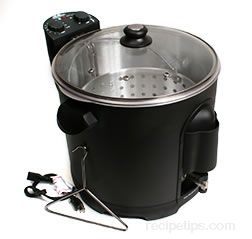
    A piece of cooking equipment made large enough to hold a whole turkey in a pot of oil so it can be deep fried.
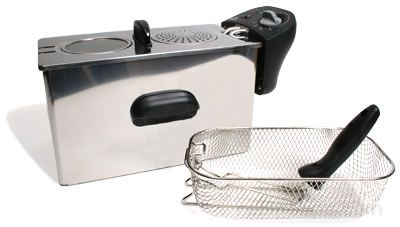
    A type of kitchen utensil that can be used to heat cooking oils (fats) so foods can be completely covered in hot oil to be fry cooked, also referred to as "deep fat fried".
    A popular breakfast originating in Northern Ireland. This meal consists of fried bacon, sausages, black pudding, mushrooms, tomato and eggs served with fried soda bread and potato farls.
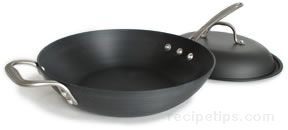
    stir-fry pan, stirfry pan,
    A kitchen utensil used to cut uniform shapes for French fries from raw potatoes. There are a variety of different types of cutters available that manually control the width and depth of the cut, but typically not the length.
    Characteristic of a premium wine that fills the mouth with developing, subtle layers of flavor that gradually unfold with aeration.
    1. A basic Asian cooking method that generally uses a wok for the cooking, but also can be prepared in a frying pan.
    Enter and View Your Recipes
    Advertisement
    Reproduction in whole or in part without written permission is strictly prohibited.
    © Copyright 2012 Tecstra Systems, All Rights Reserved, RecipeTips.com