
Loading
Search
We hope you found what you are searching for. If not, contact us and let us know what your want. We will do the work for you and get back to you when we're done.
food label - Glossary Search
Top 126 glossary terms found
Displaying 1-20 | Next 20 >>
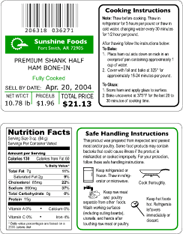
A method used to identify a variety of information regarding the contents of a package, bottle, carton, container or bag of food, such as ingredients, weight or nutritional information.
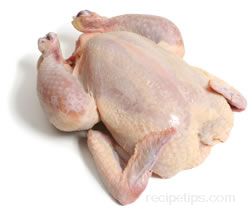
Any of the variety of food products grown or containing ingredients that have been produced without the use of antibiotics, chemicals, fertilizers, and pesticides.
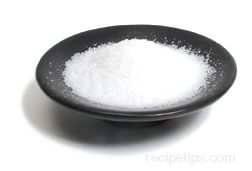
A substance that is combined with food in order to improve food for a variety of needs. Food Additives are commonly introduced into the food in order to enhance the appearance or taste, to preserve or retain the freshness, to keep the product safe for consumption, to improve the nutritional value, to improve the appearance, taste or texture, or to assist with the processing and/or preparation.

An adverse reaction caused by the inability of the body to digest certain substances in foods. This is different than food allergies, which involve the immune system rather than the digestive system.
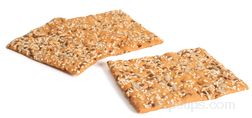
A term used to describe food that complies with the USDA (United States Department of Agriculture) standards for natural processing, handling, and labeling.
A label or identifier for food products that has been supplemented with live active cultures resulting in a product that has not been pasteurized following the fermentation process.
A date used to indicate how long a food item can remain on a shelf before it is no longer considered to be fresh and of a quality that can be sold to consumers.
A date used to indicate how long a food item can remain on a shelf before it is no longer considered fresh or of a quality level sufficient to be sold to consumers.
A date used to indicate how long a food item can remain on a shelf before it is no longer considered fresh or of a quality level sufficient to be sold to consumers.
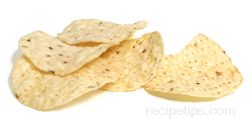
A term referring to foods in which the sodium content has been reduced. Reduced Sodium foods are important for individuals that have been placed on low sodium diets due to medical concerns, as too much sodium in the diet can lead to high blood pressure for some people.

The distilled or evaporated oils of foods or plants (such as nuts, seeds, fruits, vegetables, herbs, spices, bark, buds, roots, leaves, meat, poultry, seafood, fish, dairy foods, or eggs) that are dissolved in an alcohol base or allowed to dry to be used as a flavoring.
Similar to other kosher foods, making a wine kosher involves processes and procedures that follow specific guidelines and laws established by the Jewish community.
Also known as trans fat, this is a type of fat that is created when oils are partially hydrogenated, which occurs by adding hydrogen to the oil so ir remains solid rather than liquid.
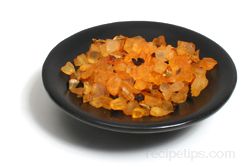
Particles of salt that have been infused with chile flavorings to be used as a food seasoning. Chile Salt is often added to Hispanic and Southwestern U.S.
A designation for European food products that stands for "Denominazione d'Origine Protetta." It is a certification issued and guaranteed by the European Union to identify and guarantee that specific food and agricultural products are authentic or made by skilled artisans engaged in producing the designated items in specific regions.
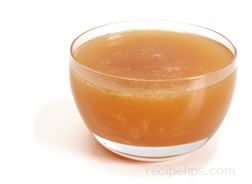
1) Refers to a flavorful coating that forms on food as it is cooked. The glaze may be the result of basting food with a liquid, such as a meat stock, during the cooking process.
A designation that is used by manufacturers to label a variety of kitchen cookware in order to indicate that the cookware can be safely placed in a microwave as food is being heated or cooked.

A small free standing fireplace that may also be used as an oven for baking foods. Originating in South America, this wood burning device was initially developed to provide heat and a means to cook food within homes; however, it is also commonly used outdoors in gardens and other areas to provide an outdoor fireplace as well as a cooking oven.
Chickens labeled "organic" must be certified by a certification entity. To be certified the chickens must be fed organic feed that is made up of grains and soybeans that have been grown in soil that has not been exposed to chemical fertilizers, pesticides, or other harmful chemicals.
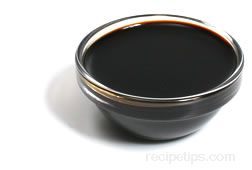
A food flavoring extracted from oils within sugar maple trees that is processed into a combination of maple flavoring with an alcohol base.
Top 126 glossary terms found
Displaying 1-20 | Next 20 >>


Advertisement
Advertisement