
Loading
Search
We hope you found what you are searching for. If not, contact us and let us know what your want. We will do the work for you and get back to you when we're done.
grain - Glossary Search
Top 177 glossary terms found
Displaying 1-20 | Next 20 >>
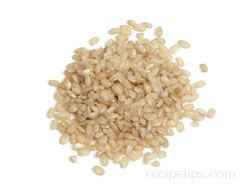
1. A cereal grass that yields grain harvested as an important food crop. Rice is so important that half of the people in the world depend upon it for nearly 50% of their daily intake of calories.
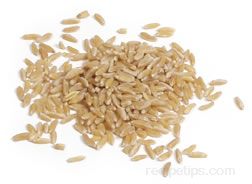
The brand name for a type of grain that is closely related to durum wheat and is often considered a specialty grain.
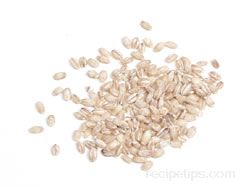
A reference to grain in which the bran layers have been removed. The removal of the bran layers results in grain with much less fiber, which is less healthful than grain that retains the bran.

A cereal plant that is native to Africa, but is cultivated in many parts of the world. Sorghum is sometimes confused with millet.
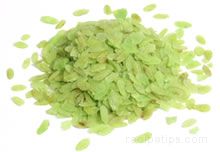
Grain that is pressed using a process that steams and rolls the grain to produce flattened, or flaked, kernels.
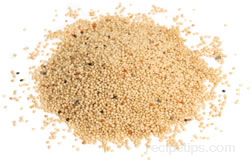
An herb that is technically not a grain, but is often used like a grain because of its abundance of grain like seeds.
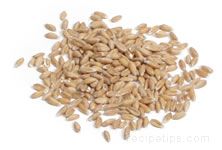
An ancient cereal grain that originated in southern Europe, which is related to modern wheat. Many people think of spelt as a type of wheat and although they are of the same family, spelt is of a different species.
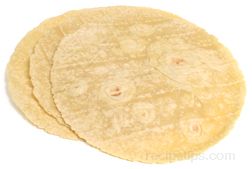
A type of grain cultivated in Ethiopia where it is a staple food crop. Teff is difficult to find in great quantities anywhere else in the world.
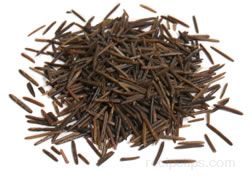
A grain-like plant that is not actually a type of rice, but an aquatic grass bearing edible seeds that grows in wild marshy areas of fresh water lakes and rivers.
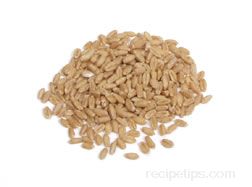
The kernel or seed of food plants that are used as a staple food source throughout the world. Plants such as wheat, barley, corn, oats, rye, and rice, are among the most popular cereal grains.
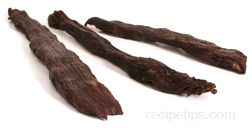
A type of dried meat that is processed in long strips and preserved for consumption in South Africa....
The largest portion of a grain kernel containing most of the protein and carbohydrates, but only small quantities of vitamins and minerals.
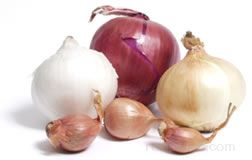
A vegetable, which belongs to the lily family of plants, that is grown for its edible bulb, which most often serves to flavor a variety of foods.
A classification of rice in which the grains must be less than two times longer than they are wide. Some short grain rice varieties are about as long as they are wide (making them almost round).
A type of grain flakes made from triticale grain. The whole-grain triticale is pressed using a process that rolls and flattens the grain into flakes.
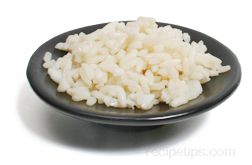
A variety of rice that was produced from cross breeding an Italian rice known as Rb rice, with long grain rice from the U.S.
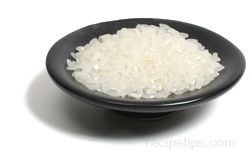
A grain used to produce a porridge that may become a breakfast cereal or a rice pudding, depending on the country.
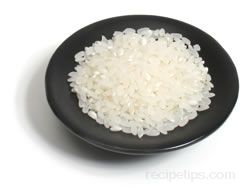
Rice that has a length that is 2 to 3 times its width. When cooked, the rice tends to remain moist and tender, with a moderate stickiness, clinging together more than long grain.
A high protein man-made grain produced by crossbreeding wheat and rye for the intended purpose of duplicating the protein and bread-making merits of wheat and the durability and high lysine content of rye.
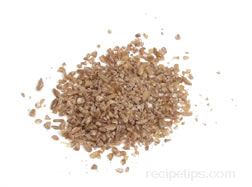
Grain, such as oats, wheat or corn that has been processed by slicing or cracking the whole kernel into very coarse, coarse, medium or fine bits to enable the grain to cook faster....
Top 177 glossary terms found
Displaying 1-20 | Next 20 >>


Advertisement
Advertisement