
Loading
Search
We hope you found what you are searching for. If not, contact us and let us know what your want. We will do the work for you and get back to you when we're done.
meat or cooking thermometer - Glossary Search
Top 15 glossary terms found
Displaying 1-15

A device used for checking the doneness of meat or other foods to ensure that the appropriate and safe internal temperature has been achieved.
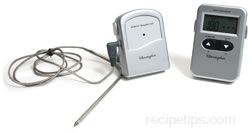
A kitchen utensil made to measure temperatures within an item being cooked while a separate receiver can travel away from the cooking area but still display temperatures as they increase.
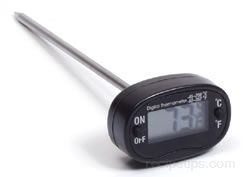
An instrument used to measure the temperature of a food to determine if it has been cooked to its proper doneness, or it may be used to determine if a refrigerator or stove is reaching its proper temperatures.
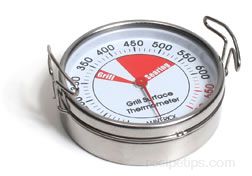
Also referred to as a grill or pan thermometer, this utensil is used to determine the level of heat for accurate temperatures when grilling, searing or pan frying.
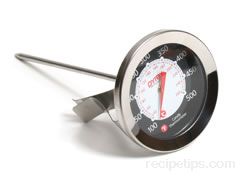
A heat monitor and gauge used to measure temperatures of 100°F to 400°F or higher in hot substances and liquids, when heating sugar for making candy, jam, syrup, and grease for deep frying.

A type of fork that is used for a many different cooking tasks when working with variety of different foods that are boiled, baked, cooked, stir-fried, or grilled.

An instrument used to measure the temperature of a food to determine if it has been cooked to its proper doneness or if it is being stored at a safe temperature.
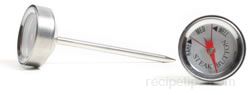
Small in size, this type of heat sensing utensil is used to measure the temperature of individual cuts of meats or smaller cuts that can be checked using smaller sensors.
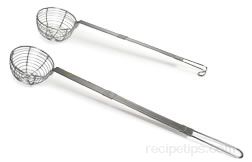
The process of "dry" cooking food totally covered in hot cooking fat or oil. This process produces evenly cooked food with a golden, crisp surface on the outside.
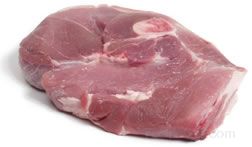
A term customarily applied to the meat of a pig that is under a year old. The pig carcass is generally split into two sides of pork; each consisting of four primal cuts known as the shoulder, loin, leg/ham, and side/belly.
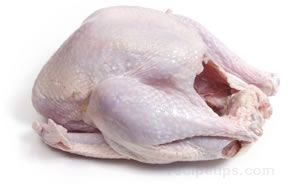
A wild game bird or domesticated bird (poultry) that evolved from the pheasant family of wildfowl. Wild turkey contains somewhat tougher and darker meat than the domesticated variety of turkey, which is raised to produce a greater quantity of white meat.
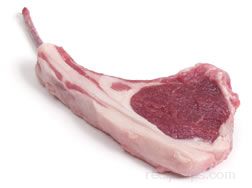
A young sheep, generally between 5 to 12 months of age. Lamb meat is lean with a distinctive flavor....
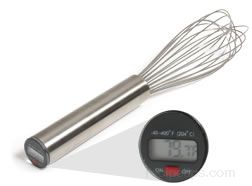
Designed to assist with ingredients requiring controlled temperatures, this kitchen utensil is built with a temperature sensor on one end and the standard whisk on the other.
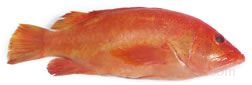
A cold-blooded, backboned, aquatic animal that lives in every region of the world. Fish are harvested for their highly nutritious meat and for the oil that is extracted and used as a food product or as an ingredient for a wide variety of commercially prepared products.

Escherichia coli, or E. coli which is a shorter version of the name, refers to an illness from foodborne pathogens that may be transmitted from: 1) Person to person if hands, utensils and counters were not washed thoroughly; 2) Ingesting contaminated liquid substances such as may occur by swimming in contaminated water, drinking raw milk or unpasteurized ciders and juices; 3) Eating food that is undercooked such as raw ground meat (hamburger or sausage)as well as meat infected during processing that is not cooked sufficiently to kill the bacteria; or: 4) Eating produce that is contaminated with bacteria, such as occurs with plants coming in contact with feces or sewage from contaminated water.
Top 15 glossary terms found
Displaying 1-15


Advertisement
Advertisement