
Loading
Search
We hope you found what you are searching for. If not, contact us and let us know what your want. We will do the work for you and get back to you when we're done.
nonwheat flour - Glossary Search
Top 55 glossary terms found
Displaying 21-40 | << Prev 20 | Next 15 >>
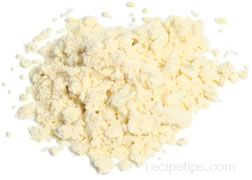
A type of flour milled from dried kernels of yellow corn. It is similar to cornmeal except that it is ground to a finer consistency than cornmeal.

A type of flour that dissolves easily in liquids regardless of the temperature of the liquid. The flour dissolves as easily in cold liquid as it does in hot.
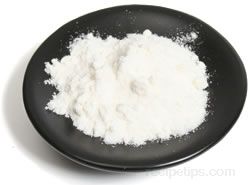
A type of flour produced from grinding polished rice (the bran and germ have been removed) into a powder.
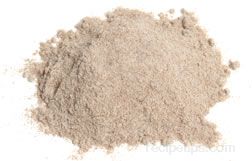
A type of flour milled from teff grain. Teff flour is high in calcium, iron, magnesium, zinc, and thiamin and it is a good source of fiber.
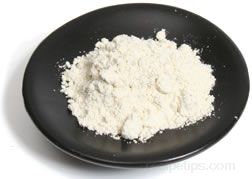
A type of flour produced from grinding quinoa seeds into a powder. Quinoa flour is rich in protein and nutrients, especially amino acids.
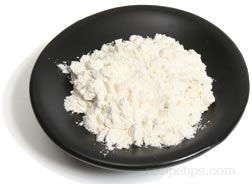
A type of flour, native to India, which is made by grinding black gram pulses or lentils into a fine powder.
A type of flour made from ground cassava or yucca root. Ground into a coarse textured substance, Manioc flour provides a somewhat acidic and nutty flavor as an ingredient for baked goods.
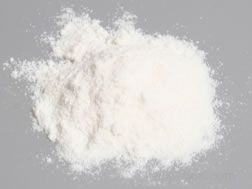
A type of flour milled from mochi rice, which is a short-grained, glutinous rice common in Asia. It is often used to thicken sauces and food mixes, providing a strong bonding that can withstand refrigerator and freezer temperatures without separating.
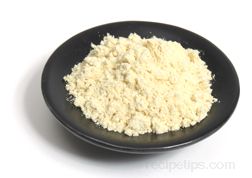
A high protein, gluten-free flour ground from roasted soybeans. Among the varieties available are full-fat, low-fat, and defatted soy flour.
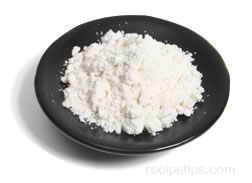
A type of wheat flour in which the leavening agent has already been added. The leavening agent is generally in the form of baking powder.
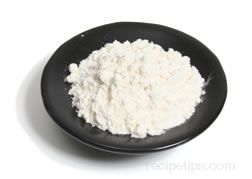
A type of flour, produced from hard wheat that has been treated to remove the starch. It contains a greater percentage of gluten (at least 70% pure) than other types of flour and a lower percentage of starch.
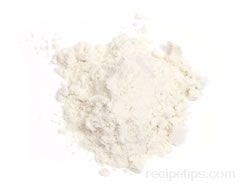
A type of flour ground from millet seeds. Since it is gluten free, millet flour must be combined with high-gluten flour when used in leavened breads.
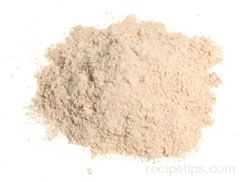
A type of flour produced by grinding dried yams into a powder. A yam is a hearty tuber that does not have the sweet taste of a sweet potato, but instead may have flavors that range from bland to earthy, slightly smoky in taste, or nutty and only moderately sweet.
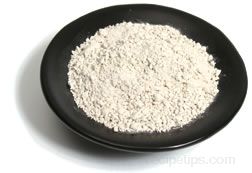
A type of flour ground from water chestnuts, which are the edible tubers of an aquatic plant that grows along the muddy edges of lakes, ponds, rivers, and streams or is cultivated commercially in flooded fields.
A type of flour ground from a high protein man-made grain produced by crossbreeding wheat and rye. Pronounced “trit-i-KAY-lee”, the name is a combination of the Latin botanical names of wheat and rye – “triti,” referring to triticum for wheat and “cale”, referring to secale for rye.
A type of flour milled from wheat that is grown and processed according to specific standards. Some of the standards include farming practices that prohibit the use of synthetic pest control and artificial fertilizers.
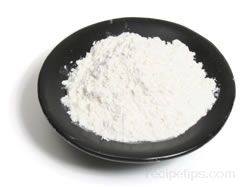
A type of flour produced from the endosperm portion of the wheat kernel. It is high in starch and has a low protein content, which means that it contains very little gluten, making it suitable for cake recipes.
A type of whole-wheat flour in which nearly 80 percent of the bran has been removed. Bolted flour may also be referred to as reduced bran wheat flour.
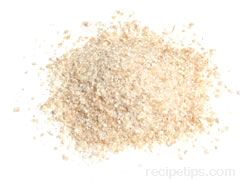
A type of flour milled from an ancient Italian grain that is similar in taste to barley. Most people consider farro to be a type of wheat and although they are related, farro is of a different species.

Flour Wand,
Top 55 glossary terms found
Displaying 21-40 | << Prev 20 | Next 15 >>


Advertisement
Advertisement