
Loading
Search
We hope you found what you are searching for. If not, contact us and let us know what your want. We will do the work for you and get back to you when we're done.
peanut oil - Glossary Search
Top 74 glossary terms found
Displaying 1-20 | Next 20 >>

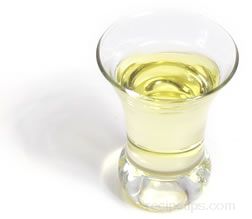
An oil, derived from peanuts, which is pale gold in color and has a distinctive taste but is not overpowering.
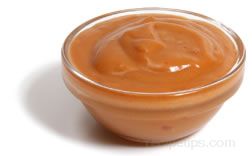
A popular sauce in Southeast Asia which is made from peanut oil, peanut butter or ground peanuts, garlic, onions, chiles, and soy sauce.

Oil that is obtained from walnuts that are pressed to extract the natural oil. The richly flavored oil makes it a good choice for use in salad dressings and sauces, but it is more expensive than several other popular oils such as corn oil or canola oil.

Oils for cooking are used to fry and sauté foods, for making salad dressings, and for use in baking....
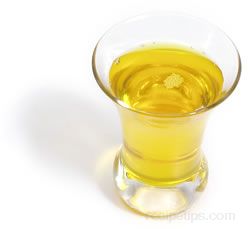
An oil obtained from the seeds of the flax plant. When it is processed, Flaxseed oil is first cold pressed from the seeds, providing an edible oil.

The temperature at which fats in cooking oils begin to break down, creating smoke as the oil is heated.
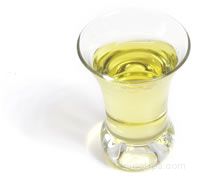
The oil produced from manual or machine pressing of the fruit (olives) from the olive tree. The flavor and color of the olive oil produced from the same variety of olive may vary significantly from one region to the next as well as from grower to grower, since soils and environment will have an effect on creating different flavors within olives grown in the same area.
A term that is used to describe the process of pressing fruit, seeds, and nuts to obtain oil without the use of additional heat to extract the oil.
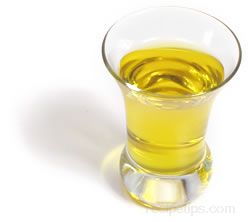
Gourmet oil infused with the flavor from white or black truffles (a rare fungus that grows underground) that have been soaked in olive oil.
An Indonesian dish consisting of raw or slightly cooked vegetables served with a spicy peanut sauce that is prepared with peanut oil or ground peanuts, various hot chiles, and coconut milk.
A type of olive oil that has been highly processed in order to neutralize defects in the oil. Among the defects are a natural acidity higher than 3.3%, poor flavor, and an unpleasant odor.
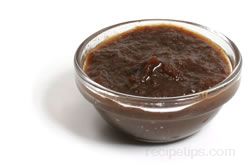
Any of a variety of alternate ingredients that can be used instead of oil or butter in the preparation of foods.

Grapeseed oil is a byproduct of the winemaking industry. The majority of oil extracted from grape seeds is produced in France, Switzerland, and Italy, but there are also a few producers in the United States.
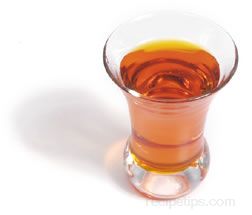
A type of oil derived from hot, red chiles that have been steeped in vegetable oil to extract the flavor and heat contained in the chile.
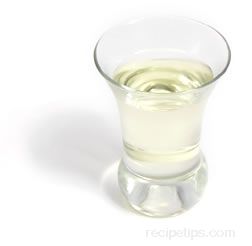
An oil extracted from the germ of the corn kernel. Refined corn oil is one of the best oils for frying because it has a high smoke point.
A type of edible food oil, also known as soy oil or soya oil, which is processed from soybeans. It is one of the most widely used oils for food preparation and processing.
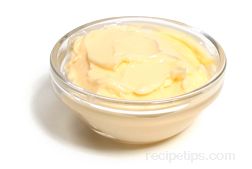
An oil that is extracted from the seeds or nuts of vegetable plants, such as corn, soybeans, peanuts, safflower seeds, sunflower seeds, and rape seeds (used for canola oil), that is turned into a spreadable form of margarine to be used as a replacement for butter.
The oil derived from a process of chemically changing liquid oil from a saturated fat into a stiffer and more stable form, such as occurs by changing a vegetable oil into a stick of margarine.
A golden colored oil with a citrus aroma that is produced from the skin of the lemon. As edible oil, it is commonly used as a dressing for salad oils or as a food ingredient.
The oil obtained from pressing hazelnuts. The brown colored oil has a slightly sweet, nutty taste and is generally used as a flavoring for baked goods and for some sauces.
Top 74 glossary terms found
Displaying 1-20 | Next 20 >>


Advertisement
Advertisement