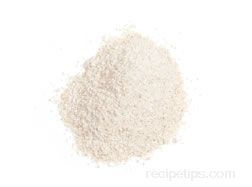
Sift together flour and salt. Cut in shortening with pastry-blender or blending with fork till pieces are size of small peas.
To make pastry extra tender and flaky, divide shortening in half. Cut in first half until mixture looks like corn meal. Then cut in remaining half till like small peas.
Sprinkle 1 tablespoon of the water over part of flour-shortening mixture. Gently toss with fork; push to one side of bowl.
Sprinkle next tablespoon of water over dry part; mix lightly; push to moistened part at side. Repeat till all is moistened. Gather up with fingers; form into a ball. (For two-crust pie, divide dough for upper and lower crust. Form each in ball.)
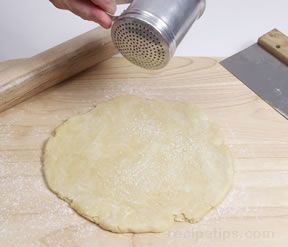
On lightly floured surface, flatten ball slightly and roll 1/8-inch thick. If edges split, pinch together. Always roll spoke-fashion, going from center to edge of dough. Use light strokes.
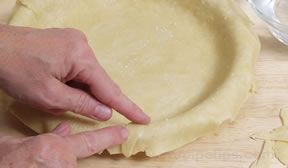
To transfer pastry, roll it over rolling pin; unroll pastry over pie plate, fitting loosely onto bottom and sides.
To bake shell for single-crust pie:
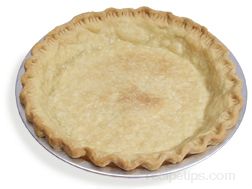
Transfer pastry to pie plate. Fit loosely unto bottom and sides. Trim 1/2 to 1 inch beyond edge; fold under and flute.
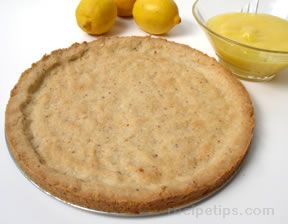
If baked pie shell is needed, prick bottom and sides well with a fork - no pulling as shell bakes. Bake in very hot oven (450°) till pastry is golden, 10 to 12 minutes. (Make cutouts from extra dough to trim filled pie. Bake on cookie sheet.)
If filling and crust are to be baked together, do not prick pastry. Pour in filling; bake as directed in pie recipe.
Wrap any extra dough in aluminum foil or several thicknesses of waxed paper; store in refrigerator until needed.
To make double-crust pie:
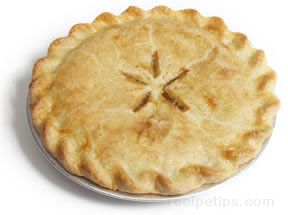
Prepare pastry as directed above. Fit the lower crust in pie plate. Slash upper crust with your own design. Trim lower crust even with rim of pie plate, moisten the edge. Add top crust; trim 1/2 inch beyond edge; tuck it under edge of lower crust - this seals in juice. Crimp edge. Bake as directed in the pie recipe you are using.