
Loading
Search
We hope you found what you are searching for. If not, contact us and let us know what your want. We will do the work for you and get back to you when we're done.
grape juice - Glossary Search
Top 56 glossary terms found
Displaying 1-20 | Next 20 >>
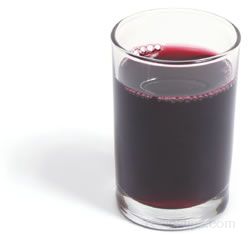
The juice extracted from grapes that is then bottled or sold as frozen concentrate. Different quantities of sugar may be added to the juice, depending on the type of grapes that are used, in order to increase the sweetness.
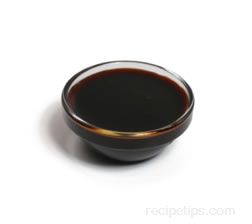
A cooked grape juice that is produced from the unfermented residue referred to as "must" that is produced from red and white grapes (Salamino, Fortana, Trebbiano Bianco, and Lancellotta)as they are processed into wine.
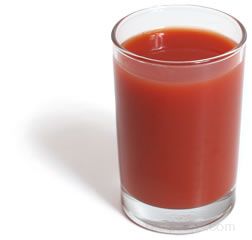
Juice extracted from fresh tomatoes by cooking them and then exposing the heated tomatoes to a process that separates the skins and seeds from the juice.
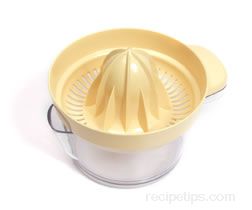
A kitchen tool that extracts juice from citrus fruits and vegetables by shredding the flesh of the food item.
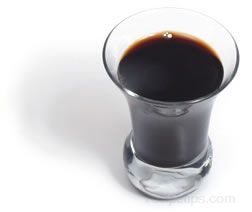
A very strong, but sweet type of grape vinegar originating in the Modena region of Italy. Produced from the juice of white Trebbiano grapes, Balsamic Vinegar is made from fresh pressed grape juice, referred to as "must" and therefore is not classifed as a wine vinegar.

The measure of sugar content in grape juice and/or wine. The term “oechsle” is used in Germany.
A beverage containing alcohol, which is produced from fermented grape juice. White wine is a nonsparkling wine, which may vary in color intensity and can be dry, which is nonsweet, semisweet, or sweet.
A beverage containing alcohol, which is produced from fermented grape juice. Red wine is a nonsparkling wine that may vary in color intensity and can be dry, which is nonsweet, semisweet or sweet.
A measuring system for unfermented sugar in grape juice/wine. 1º Baumé = 1% alcohol when whine has fully fermented.
A measuring system for unfermented sugar in grape juice/wine. 1º Baumé = 1% alcohol when whine has fully fermented.
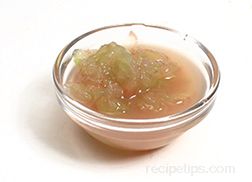
In reference to wine making, "pulp" refers to the flesh of the grape. The pulp contains a majority of the water, sugar, and acid that forms the grape juice extracted from the grapes.
In reference to wine, a measure of the intensity of acid in grape juice.
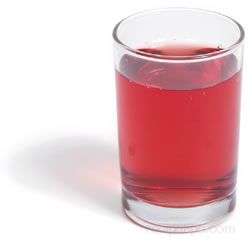
A sweet and tart tasting beverage that is made from whole cranberries, flavored with sugar and processed into either a red or white colored juice.
In reference to wine making, "raking" refers to the process that occurs before fermentation whereby grape juice is separated from solid components.
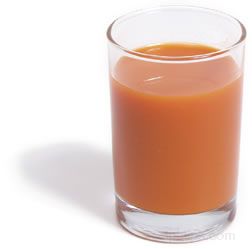
The juice made from carrots blended into a liquid form. Carrot juice is often promoted for its nutritional benefits, since carrots are rich in beta-carotene and contain anti-oxidants, vitamins A, B, C, D, E, K, minerals iron, calcium, phosphorous, potassium, magnesium and other absorbable nutrients.
A derivative of sulfur, it is a compound that forms naturally during the same fermentation process that turns grape juice into alcohol.
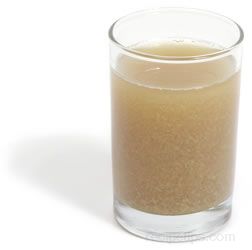
The juice from a fresh lime, which is the best form of lime flavor. Bottled lime juice can be substituted if fresh limes are not available.
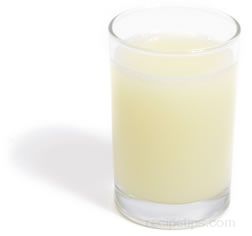
The juice from a fresh lemon, which is the best form of lemon flavor. Bottled lemon juice can be substituted if fresh lemons are not available.
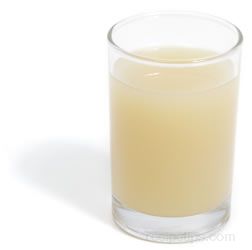
The juice from a grapefruit which is made into a beverage that is generally served at breakfast, as a snack or for use in cocktails.
Microscopic organisms that manufacture the enzymes that convert sugar to alcohol, a process necessary for the fermentation of grape juice into wine.
Top 56 glossary terms found
Displaying 1-20 | Next 20 >>


Advertisement
Advertisement