
Loading
Search
We hope you found what you are searching for. If not, contact us and let us know what your want. We will do the work for you and get back to you when we're done.
shank cut - Glossary Search
Top 30 glossary terms found
Displaying 21-30 | << Prev 20
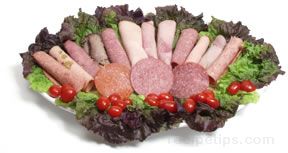
Fresh or canned meat that consists of precooked, ready to serve meat loaves or sausages made from pork, ham, or beef.

In preparing pastry, this refers to mixing a fat such as butter or lard with a dry ingredient such as flour until it forms particles of fat that are covered with the dry ingredient.
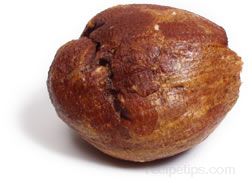
A cut of pork that is taken from the meat on the middle part of the shank bone extending to the hip bone on the hind leg of the hog.
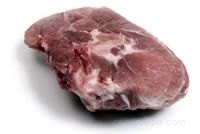
A cut of pork that is taken from the meat on the middle part of the shank bone extending to the hip bone on the hind leg of the hog.
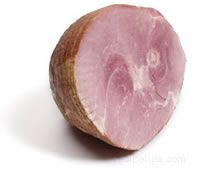
A processed cut taken from the top half of the leg. The butt end is meatier but contains more fat than the shank end of the whole ham and is harder to carve because it contains the hip and pelvic bone.
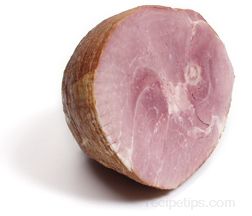
A whole or half ham from the leg primal cut that has only the leg bone remaining. The hip or shank bone has been removed, making it easier to carve.
This type of ham can be a butt or shank portion or it could be a whole or half leg that has the hip, thigh and/or shank bone remaining as part of the ham.
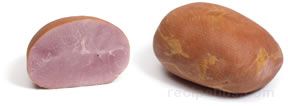
Also known as boned ham, this whole cured ham is a cut of pork that has had the hip, thigh, and shank bones removed, as well as most of the fat before it is rolled, molded, and packaged.
A ham from the leg primal cut that has only the leg bone remaining. The hip or shank bone has been removed, making it easier to carve.
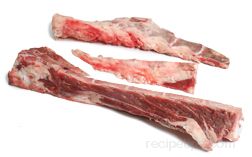
On a pork roast, this is the bone that lies just below the shank bone. On a beef roast, the Chine Bone is referred to as the backbone which is attached to the rib roast.
Top 30 glossary terms found
Displaying 21-30 | << Prev 20


Advertisement
Advertisement