


Stir-Fry Meat | Stir-Fry Pasta | Stir-Fry Tips
Stir-Fry Meat
Stir-frying, like sautéing, is a cooking method that quickly cooks your choice of meat in a little oil, using high heat. The difference between the two methods is that sautéing cooks serving size pieces of meat and stir-frying involves cooking smaller size pieces that have been cut into strips, cubes or diced pieces all similar in size. Stir-frying generally includes meat and other food ingredients cooked at different intervals, which are added together at the end of the cooking process to make one dish. They are cooked according to how quickly each food cooks, with the quickest added last. Generally the process starts by cooking the meat and the slowest cooking vegetables first, such as carrots, cauliflower and onions. Then vegetables such as broccoli, green beans, peppers, sugar snap peas, and snow peas are added after the first ingredients have been stir-fried for several minutes. A few minutes later vegetables, such as mushrooms, celery, peas, and scallions, are added. Any fresh herbs should be added at the very end of the cooking time. Fruits are also used in many stir-fry recipes and should be added as directed.
Stir-frying is a fast paced cooking method so it is important that everything is ready before beginning to cook. Oil, meat, vegetables, seasonings, and sauce ingredients are pre-measured and placed within easy reaching distance. The pan used for stir-frying should be a heavy skillet with deep sides to allow the ingredients to be stirred and tossed without being spilled over the edges of the pan while cooking. A wok, which has deep tapered sides that make it easy to stir and toss the ingredients as they are cooking, is a traditional pan used for stir-frying. Although a wok works well, it is not a necessity. Using a nonstick deep skillet also works very well.
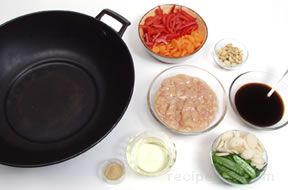 |
Before starting the cooking process, be sure the meat and all other ingredients are cut, measured and within easy reach. Chicken is used in the following images. |
| Start the cooking process by heating the oil in the pan, trying to coat the entire surface, bottom and sides, with the oil, using approximately 1 ½ to 2 tablespoons of oil per pound of ingredients being cooked. Vegetable, corn and peanut oil all work well for stir-frying. | 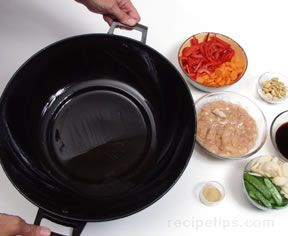 |
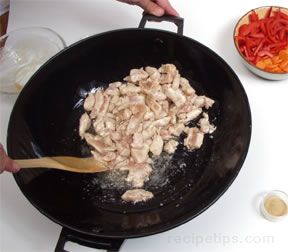 |
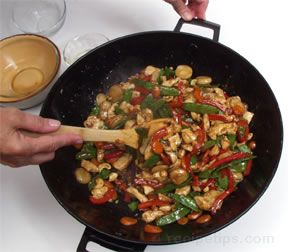
When the pan is hot, add the meat and the ingredients that require the longest cooking time, making sure all are exposed to the oil and the hottest area of the pan. Cook on high heat for several minutes, constantly stirring and tossing until the meat is almost done. |
| Remove the meat from the wok, set it aside and cover lightly to keep it warm. Add the next ingredients according to the recipe and cook until just tender, stirring constantly. Add the stir-fry sauce according to the recipe and heat until hot and bubbling. | 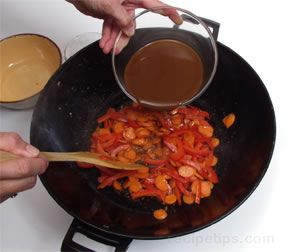 |
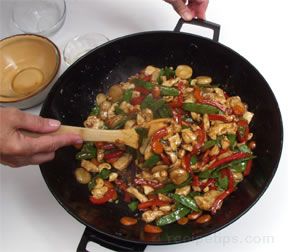 |
At the end of the process, the meat and all other ingredients are added and cooked on high heat until the meat is completely cooked. The other ingredients should be tender but still have a crunchy texture. The mixture should be heated thoroughly, but not overcooked. Once it is done, it should be served immediately. |
|
The Best Beef for Stir-Fry
The beef for stir-fry recipes should be cut into small strips and should have very little fat. The small strips will ensure that the meat will cook thoroughly, even when it is only cooked for a short time. Use sirloin strips, top loin, tri-tip, and rib-eye for stir-fry recipes. Tougher cuts can also be used and are especially good if they are marinated first in order to tenderize them. Cutting the meat into small strips also makes a tougher cut seem a bit more tender. It is important to slice the beef across the grain so that the meat fibers are short, which will make the meat less chewy. |
Stir-Fry Pasta
A wok, which has deep tapered sides, is a traditional type pan used for stir-frying. A wok works well but is not a necessity. A nonstick deep skillet also works very well. If rice noodles or mung bean noodles are going to be added to the stir-fry, they are sometimes deep-fried in the wok or deep skillet first and then set aside while other ingredients are stir-fried according to the recipe.
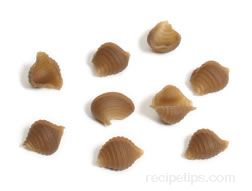
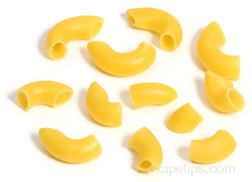
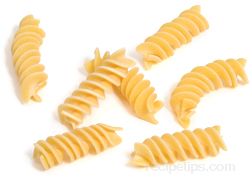
Many of the Asian noodles are used in stir-fry dishes. Some Italian noodles, such as spaghetti, vermicelli, and linguine, can be used as substitutions for Asian wheat or egg noodles. Generally the noodles used for stir-frying have to be presoaked or boiled before they can be used.| If you are using egg noodles, wheat noodles, or buckwheat noodles, boil the noodles to the proper doneness. If you are using rice noodles or mung bean noodles (cellophane noodles), soak the noodles in hot water until they are soft. After soaking or boiling, drain, rinse and drain again. | 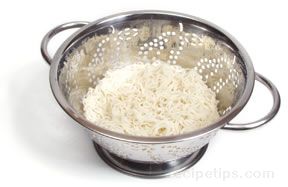 |
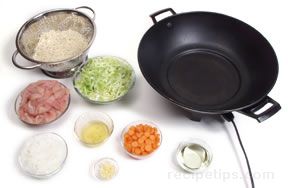 |
Have all ingredients measured out, cut up or chopped and within reaching distance before beginning the stir-fry process. |
| Approximately two or three tablespoons of oil are added to the wok and heated to a very high temperature. Then the ingredients are added according to how fast they cook. Generally the meat is cooked first over medium-high heat, uncovered, for several minutes, until it is almost done. Make sure all ingredients are exposed to the oil and the hottest area of the pan. |
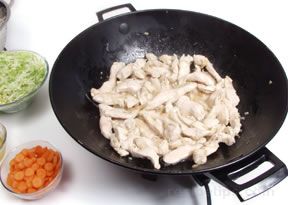 |
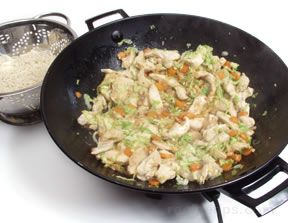 |
Add the ingredients that require the longest cooking time, constantly stirring and tossing as they cook. Add the remaining ingredients and continue to cook on medium-high heat until the ingredients are tender but still have a crunchy texture. The food will cook quickly so it is important to add the ingredients at the proper times, being careful not to overcook. |
| Add the noodles into the stir-fry as called for in the recipe. Generally the noodles are added towards the end of the stir-frying process. |
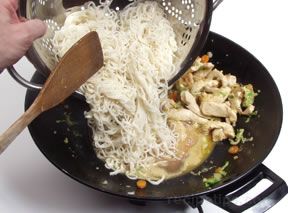 |
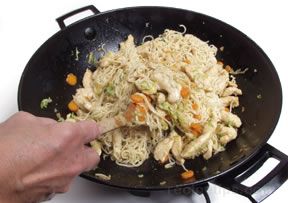 |
Toss the noodles with the other ingredients only long enough to heat thoroughly. Serve the stir-fry as soon as it is finished. |
- Cut ingredients into small even sized pieces. Using the same size pieces will assist in a more evenly quick cooking of all ingredients. For your convenience, you can purchase the vegetables precut for stir-frying but be prepared to pay more for them.
- To make the cutting of meat into thin strips easier, place meat in the freezer for about ¾ to 1 hour to firm it up or if the meat was frozen, cut it into the thin strips before it is completely thawed.
- Use metal or wood utensils for stirring and tossing ingredients while cooking and avoid using plastic because it might melt when exposed to the high temperatures used for stir-frying.
- After cutting the meat into thin strips, be sure to properly clean the work area. Wash the cutting boards in hot soapy water after each use and use a mild bleach solution periodically.