


|
Description of Parts | Read the Label | Look and Feel | Quantity to Buy When shopping for chicken there are several details that you should pay close attention to so you are assured of purchasing fresh chicken in the correct quantity, quality and type to satisfy your needs. It is important to be familiar with the terms used to describe the chicken, how much to buy, know what to look for on the labels, and know what to look for when visually checking the meat. The following information will help you make a purchase suited to your needs.
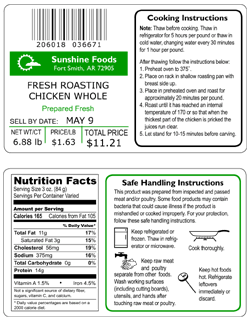
Reading the label will inform you as to the type of chicken, the parts contained in the package, the total weight, a description, how fresh it is, and nutritional information. The type of chicken indicates whether it is a young or old chicken, which signifies its tenderness and suggests what cooking methods are most suitable. Boiler/fryers, roasters, capons, and Cornish hens are considered young birds, indicating that they are more tender and suitable for most any cooking method. They are a good choice for grilling, broiling, frying, and roasting. The more mature chickens, such as stewing chickens and hens, have meat that is tougher, which benefits from a moist-heat cooking method, such as stewing, braising, poaching, and steaming. Many times the meat from more mature chickens is used for soups, salads, sandwiches, or is added as an ingredient in other dishes.
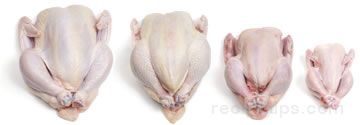
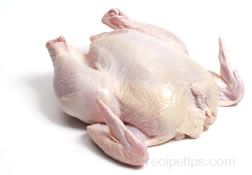
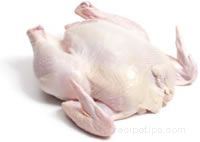
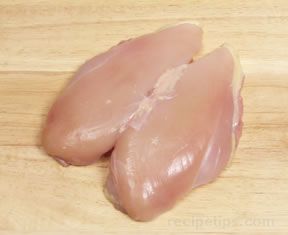
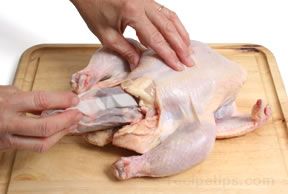
Looking at and feeling the chicken can give you information that the label will not provide. When shopping for a whole fresh chicken that you are planning on roasting whole, select one that has a rounded, plump breast, because it would contain more breast meat, which provides a nicely shaped bird when roasted. When selecting chicken parts, choose those that are plump and moist. Compare the proportion of meat to bone. If lacking in meat, you are paying for more bone than meat. When feeling the breastbone, it should easily yield to your touch, indicating that it is a young bird that will provide tender meat. The color of the skin does not have any bearing on the tenderness or taste of the chicken. Breed and what the chickens eat affect the color of the skin. Producers will raise white or yellow skinned chickens according to preferences in different regions. It is important to look at the skin, avoiding chicken with skin that it is patchy colored or skin that has a transparent look to it. Another sign of freshness is the color of the bones. Look at the ends of the bone and if they are turning gray, the chicken is getting old. If they are a pinkish color, they are still fairly fresh and the pinker the color the fresher the chicken. Look at the chicken to be sure it has been cleaned thoroughly, checking for signs of hair or feathers that were not completely removed. Fresh chicken, whether whole or pieces, should have a fresh smell. Check the package to see that it is sealed tight and does not have any tears. Look for signs that indicate the chicken has been stored at improper temperatures. Check fresh chicken by squeezing or apply pressure to the package to feel for signs of freezing or look for ice crystals forming on the tray or along the wings or edges. These are signs indicating that the chicken has been store in too cold of temperatures, causing partial freezing. Partial freezing is not harmful, but the quality of the chicken will decrease due to the loss of natural juices and a decrease in tenderness. Also, be aware that packages stacked too high in the cooler may result in the top packages not being stored in cool enough temperatures, which would result in a decreased shelf life. A similar problem occurs with frozen chicken that is stacked too high in the freezer. The chickens on top sit above the freezer line, which results in them not being stored properly to maintain an adequate freezing temperature. A frozen chicken should be rock hard and show no sign of freezer damage. There should be no crystals forming or frozen liquid inside the package, which would indicate partial thawing at some point. As with partial freezing of fresh chicken, partial thawing of frozen chicken is not harmful, but it may decrease the quality of the chicken when cooked. It is sometimes difficult to know just how much chicken to buy to have the proper amount for a particular recipe or to serve to a specific number of people. Some of the information that will determine the quantity needed are the number of people being served, whether or not it will be served in controlled portions, or if the meat will be served on a "help yourself" basis. The following information may be helpful in determining your needs.
| ||||||||||||||||||||||||||||||||||||||||||||||||||||||||||

Loading
Chicken Shopping Guide


Provided By
RecipeTips
RecipeTips


Loading
There currently aren't any reviews or comments for this article. Be the first!






Advertisement

Advertisement