RecipeTips.Com Home cooking tips & advice | Knowledge | How to Make Homemade Ice Cream
Join Now | Sign In | RSS Feeds RSS Feeds
How to Make Homemade Ice Cream: Easy How-To Cooking Tips & Advice: RecipeTips.com
Recipes Cooking Tips & Advice Glossary Community
hints
Site Map Recipe Index Cooking Tips & Advice Index
RecipeTips.com Newsletter Sign Up

How to Make Homemade Ice Cream


print Print How to Make Homemade Ice Cream article  |  email Email How to Make Homemade Ice Cream article  |  rate this article Rate this article  | Bookmarks
Kitchen Advice > Kitchen Techniques > How to Make Homemade Ice Cream

How to Make Homemade Ice Cream

Basic Equipment | Basic Ingredients | Custard Style | Non-Custard Style

Non-Custard Style Without Ice Cream Maker

How to Prevent Too Hard Ice Cream | Safety & Storage | Tips

Homemade ice cream is a special summer treat that can be enjoyed by the entire family. It is a great treat to eat and can provide a lot of family fun in creating your own special family flavors. There are two basic types of ice cream, one being a custard style that is made with eggs and a type that is made without the use of any eggs. Both will provide you with a delicious treat and either one can be flavored with your favorite ingredients. There are several methods that can be used to make homemade ice cream. Shown below will be three different methods that will give you some choices in how you can create this delicious treat. Some equipment and ingredient choices are also provided.

Basic Equipment


Ice Cream Maker
Uses Ice in Freezing Process
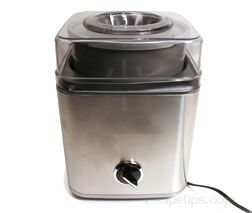

Ice Cream Maker
Uses Cooling Liquid in Freezing Process

Ice Cream Maker

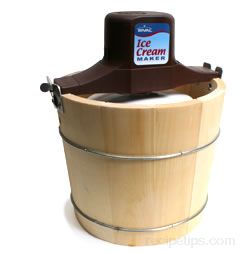
Today there are basically two types of Makers available: Ice cream makers with manually operated churns and makers with motorized churns. The churn converts the cream and ingredients into ice cream while it is held within an insulated container. When the unit is manually operated or an electric units turned on, the ice cream can rotates, the dasher inside does not move. Newer models of ice cream makers contain built-in freezer units that keep the churned ice-cream cold without pre-freezing the insulated container as is required on some models. Some models require the use of ice and salt, and some use a freezer bowl that has a double insulated wall containing cooling liquid that is frozen before using in the unit.

Additional features available on some models:

  • Removable containers that are 1-1/2 quarts or larger in size
  • Electronic timers
  • Lids with openings to allow extra ingredients to be added while churning
  • Removable pieces for ease of cleaning
  • Stainless steel housing

Ice cream makers are used to not only produce ice cream but also frozen yogurt, frozen beverages and ice milk.


Hand Held Electric Mixer

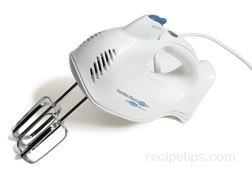
A hand held electric mixer can be used when ice cream is made using the "still freezing" method. Using the "still freezing" method requires beating the ice cream several times during the freezing process. I fork can also be use but the mixer is much faster and produces better results. The beating replaces the churning action of the ice cream makers.


Glass Bowl


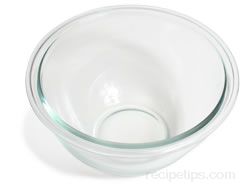
A glass bowl is used for mixing ingredients and chilling the ice cream mixture before freezing.


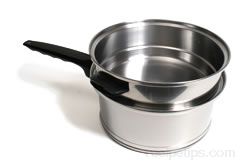
Heavy Sauce Pan or Double Boiler

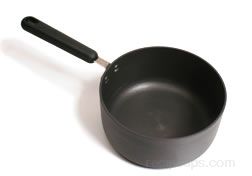
A heavy sauce pan will be required when making custard based ice cream and also for scalding milk or half and half used in non-custard type ice cream.


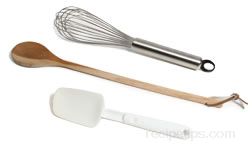
Stirring Utensil

A spatula, wooden spoon, or non-scratch type of spoon will be needed for stirring when making the ice cream mixture and for removing the ice cream from the ice cream can. A non-scratch type utensil is best so that the ice cream can does not become scratched.


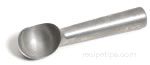
Ice Cream Scoop

Lever Type
Ice Cream Scoop
Spade Type
Ice Cream Scoop
Ice Cream Scoop with
Defrosting Liquid in Handle

An ice cream scoop will be needed when it comes time to serve the ice cream. There are many different models of ice cream scoops available. They can be made of molded plastic or stainless steel and some have a quick-release handle to aid in removing the ice cream from the scoop. Some models are made of metal with a hollow area running through the inside that contains anti-freeze, which warms with the touch of your hand, thus warming the metal and assisting in scooping ice cream that is hard to scoop.


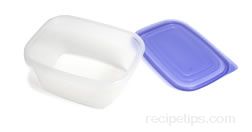
Storage Container

When the ice cream making process is completed, the ice cream will need to be stored in the freezer to be frozen into a more solid state before serving. Be sure the container has an airtight lid and that it will fit into the freezer space. A shallower container will allow the ice cream to freezer more quickly.


Miscellaneous Equipment

There are many other pieces of equipment that you may need when preparing some of the flavoring ingredients that will be added to the ice cream, such as knives, pans, bowls, measuring utensils, mashers, colanders, blenders and food processors. This will vary depending on required preparation of the ingredients.


Basic Ingredients

Ingredients
Cream Whipping cream will give your ice cream a smooth texture and creamy taste. Heavy cream works well to give vanilla ice cream a rich flavor but may take away from the flavor of other ingredients when adding flavorings. If using heavy cream be sure the ice cream does not get over churned because the heavy cream can start to create a buttery texture and taste in the ice cream.
Milk There are many varieties of milk available in the supermarkets today. There is whole, 2%, 1%, and skim milk readily available. Avoid using skim milk when making ice cream because its low fat content will produce a light watery flavor that lacks any richness to it. Other milks that can be used that are becoming more readily available are soy milk, rice milk and goat's milk.
Eggs Eggs are used when making custard style ice cream. The eggs allow the fats and water to mix together better, which adds richness to the ice cream. They also allow the ice cream to hold up better against melting.
Sweetener Most generally sugar is used for sweetening because it dissolves quickly. It adds texture and gives ice cream its sweet taste. Other sweeteners that can be used are brown sugar, maple syrup, honey,
Cornstarch Some custard style recipes may call for cornstarch to be added. The cornstarch helps reduce the chance of the custard curdling and it will thicken it faster, reducing the cooking time.
Flavorings Vanilla is the flavoring added to most all ice cream recipes. After that the choices are endless. Some ideas for flavorings are fruits, chocolate, flavored syrups, cookies, brownies, peppermint candies, candy bars, spices, and nuts. Just enjoy creating your own unique flavor with some of your favorite sweets.
Note: There are many varieties of ice cream recipes. The ingredients listed above are the more common ingredients. Don't be afraid to try new and interesting recipes calling for different ingredients. You may find a new favorite recipe!


Custard Style Homemade Ice Cream

Preparing Custard Style Ice Cream Mix

Ingredients:

  • 2 cup milk
  • 1 cup sugar
  • 1/4 teaspoon salt
  • 6 beaten egg yolks
  • 2 tablespoon vanilla extract
  • 4 cups chilled whipping cream


Scalding Milk


Pour the milk into the top pan of a double boiler or into a heavy saucepan. Over medium heat bring the milk to a gentle simmer (approximately 175°F) and then remove from the heat.


Combine Sugar, Salt and Egg Yolks


In a separate bowl combine the sugar, salt and yolks. Whisk or beat with a hand mixer until mixture has thickened enough to hold a trailing pattern on the surface for 2 or 3 seconds, beat approximately 3 minutes.


Tempering Egg Mixture


Gradually add the scalded milk to the thickened egg mixture. Beat on low or whisk while slowly pouring in 3/4 to 1 cup of milk at a time. Do not over beat the mixture. Beat just until the milk is evenly mixed into the egg mixture.


Once all the milk has been added into the egg mixture, pour the combined ingredients back into the double boiler or saucepan.


Finishing Custard

Over medium-low heat, cook the custard until it almost reaches the boiling point and has thickened enough to coat the back of a spoon. Stir constantly, scraping the sides and bottom of the pan. Cook to approximately 180°F. Do not allow the custard to come to a boil or it may curdle.

If custard does curdle, salvage by pouring thru a sieve and strain curdled pieces from the custard.


Cooling Custard Mixture


When the custard has thickened properly, remove it from the heat and allow it to cool before placing it in the refrigerator to chill. Pour the custard in a glass bowl and cover the surface with plastic wrap to prevent a film from forming on the surface.


To speed the cooling process, place the bowl in an ice-water bath.


Chill and Age Mixture

After the custard has cooled place it in the refrigerator for at least 4 hour but ideally for 24 hours. This aging process will give the mixture better whipping qualities and produce ice cream with more body and a smoother texture.


Adding Cream and Vanilla


After the mixture has aged (chilled) in the refrigerator, stir in the cream and vanilla. Stir or whisk just until mixture is well combined. The ice cream is now ready for the freezing process.


Freezing with an Electric Ice Cream Maker Using Ice

The instructions below are for using an electric ice cream maker that uses ice in the freezing process. This is just one type of model. Realize that there are many different types of ice cream makers and unless you have this same model, it is best to read the user's manual for your model before beginning the freezing process. This type of freezing process is known as a "stir freezing" method because the ice cream is being stirred throughout the freezing process.

Preparing Ice Cream Can

The ice cream can that will hold the ice cream during the freezing process should be stored in the freezer for at least several hours before starting the freezing process.


Pour the ice cream mixture into the chilled ice cream can, making sure to not fill the can more than 3/4 full. Some ice cream makers have a can that will have a fill line indicated on it. This will leave room for expansion when the mixture freezes. Also, keep in mind that if flavoring ingredients are going to be added at the end of the process, you will have to allow space for these ingredients.


Place the dasher in the ice cream can, making sure the end is placed in the slot on the bottom properly and that the metal stem is at the top pointing up.
Place the cover on the can. The stem of the dasher fits into the hole in the center of the cover.


Assembling Ice Cream Maker


Place the covered ice cream can in the bucket, making sure it is center and the can is properly aligned in the slot at the bottom of the bucket.


Fit the end of the motor drive with the two tabs into the plate with the two tab openings.

Engage the motor drive by placing the stem of the dasher in the hole on the bottom of the drive unit and rotate the can slightly until it engages with the cover.


At the opposite end of the drive unit, allow the tab to drop into the slot on the latch plate. Rotate the latch over the tab to lock into place.


Adding Ice and Churning


Plug in the freezer unit so it begins to churn and begin adding ice to the bottom of the bucket around the ice cream can. Place approximately an inch layer in the bucket.


Sprinkle about 1/2 cup of rock salt (regular salt will also work) evenly over the ice.

Note: When the unit is turned on, the ice cream can rotates, the dasher inside does not move.


Continue to add layers of ice and salt as stated above until the ice level is to the top of the can.

The unit should run for 20 to 40 minutes before it stops, depending on the amount of ice cream in the unit. Start checking the ice cream after 25 minutes because it may not stop on its own when the ice cream is done, especially if the unit is not full.


Note:
Salt is necessary to force the ice to melt. As the ice melts and forms a brine solution, it absorbs the heat from the ice cream mixture causing its temperature to lower. The ice cream mixture's temperture will gradually lower until it reaches its freezing point of 27°F if the proper proportions of ice and salt are used. A ratio of 5 cups of ice to 1 cup of salt should keep the melting solution at 8° to 12°F. If salt was not used the ice would melt at 32°F and would not be able to lower the ice cream mixture's temperature to its 27°F freezing point. Because of the coarseness of rock salt, it will work to melt the ice faster that regular salt, thus freezing the mixture quicker.


When Ice Cream is Done


When the unit stops or when checking the ice cream to see if it is done, unplug the unit to turn it off and remove the motor drive.


Before removing the cover, be sure to remove all the salt and ice from the top of the can and cover so it doesn't get in the ice cream when removing the cover.
Remove the cover and pull out the dasher. Check ice cream for proper consistency. The ice cream should be thick but too soft to scoop. This consistency is good for stirring in flavorings.

Use a spatula to remove the ice cream on the dasher. Stir in flavorings that are desired.

Flavorings can also be added before removing dasher and then by placing cover back on the unit and replacing motor unit to churn the ice cream to mix in flavorings. It may be easier to just stir them in by hand rather than going through the extra set up again.


Hardening Ice Cream in the Freezer

If hardening in the can, leave the ice cream in the can and pack the ice cream down firmly. Plug the hole in the center of the cover with the cork. Place the cover back on the ice cream can. See illustration below.

It is best to wipe the cover and can clean before the hardening process. Once the can has been properly cleaned, place can in the freezer for 3 to 4 hours until hardened.


If hardening in a different container, scrape the ice cream into a container with an airtight cover.

Pack ice cream down firmly and be sure to leave at least 1/2 inch head space for expansion during hardening process. Place the cover on the container tightly.

Place the ice cream in the freezer for 3 to 4 hours to harden.


Once the ice cream has hardened, remove from freezer and serve. Return any remaining ice cream to the freezer for storage.


Hardening Ice Cream in the Bucket


The ice cream can also be hardened in the ice cream maker bucket. Place the ice cream can in the bucket and pack the ice cream down in the can.


Place the cork in the center of the cover and then place the cover on the can.
Add layers of ice and salt the same as when going through the freezing process. Add enough ice to cover the entire can and cover.

Cove the can with towels or a blanket and allow to sit for approximately 3 hours. The time that it takes to harden will vary depending on the amount and type of ice cream. Unwrap the bucket and check the ice during this time and if needed add more to keep can covered with ice. Rewrap with covering.

After the ice cream has hardened sufficiently, take the can out of the bucket and clean the ice and salt off from it. Remove the cover and scoop ice cream into bowls or cones. Serve and enjoy!


Non-Custard Style Ice Cream

Preparing the Non-custard Style Ice Cream Mixture - Strawberry

Ingredients:

  • 3 cups quartered strawberries
  • 1/3 cup sugar
  • 1 cup milk
  • 1 cup sugar
  • 1/4 teaspoon salt
  • 1 cup half and half
  • 1/2 tablespoon vanilla extract
  • 2 cups chilled whipping cream


Prepare Strawberries


Clean strawberries and cut into quarters. Place in a bowl and mash slightly. Sprinkle with sugar and stir until mixed in thoroughly. Set strawberries aside.


Scalding Milk


Pour the milk into a heavy saucepan. Over medium heat bring the milk to a gentle simmer (approximately 175°F) or until it begins to bubble around the edges. Remove from the heat.


Add Sugar and Salt


After removing from the heat, add the sugar and salt to the scalded milk.


Stir the scalded milk until sugar and salt are completely dissolved.


Add Remaining Ingredients


Add half and half, vanilla, and whipping cream. Stir until well blended.


Cooling Ice Cream Mixture


Pour into a bowl and allow mixture to cool to room temperature.


Chill and Age Ice Cream Mixture

Once the mixture has cooled, cover with plastic wrap and allow the mixture to age in the refrigerator for at least 4 hours or up to 24 hours. This aging process will give the mixture better whipping qualities and produce ice cream with more body and a smoother texture.


Finish Strawberries


Finish mashing strawberries to desired consistency. Should produce approximately 2 1/2 cups of sauce.


Cover the strawberries and place them in the refrigerator until just before adding them to the ice cream.


Prepare for Freezing Process


After aging (chilling) the mixture, remove from the refrigerator and stir the mixture. The ice cream is now ready for the freezing process.


Freezing with an Electric Ice Cream Maker with a Freezing Unit

The instructions below are for using an electric ice cream maker that uses a built-in freezing unit that has a cooling liquid between a double insulated walled. The unit is placed in the freezer for the cooling liquid to freeze and that does the work that the ice and salt does in the unit above. This is just one type of model. Realize that there are many different types of ice cream makers and unless you have this same model, it is best to read the user's manual for your model before beginning the freezing process. This type of freezing process is also a "stir freezing" method because the ice cream is being stirred throughout the freezing process.


Churning


Once the cover and mixing arm are secured, turn the unit on to start the ice cream maker churning. The freezing unit turns and the mixing arm is stationery.


Pour the ice cream mixture into the chilled unit through the opening on the top of the cover. Fill it no more than 1/2 inch from the top. If you are going to be adding flavoring ingredients at the end of the process be sure to leave room in the freezing unit.


When Ice Cream is Done

The unit should run for 25 to 40 minutes before the ice cream has thickened enough. Start checking the ice cream after 25 minutes. Depending on the amount of ice cream in the unit it may take additional time. The ice cream should be thick but too soft to scoop. This consistency is good for adding in flavorings.


When the ice cream is ready, add the strawberry sauce and churn until evenly mixed into the ice cream.

Remove the cover and pull out the mixing arm. Use a spatula to remove the ice cream.


If flavorings do not seem to be completely mixed, quickly stir by hand to distribute evenly.


Hardening the Ice Cream


Pack the ice cream down in the can and replace the cover (plug hole in cover with the cork) or scrape the ice cream into another container with an airtight cover. Be sure to leave at least 1/2 inch head space for expansion.

Place the ice cream in the freezer for several hours to harden.


After the ice cream has hardened sufficiently, take the ice cream container out of the freezer, remove the cover and scoop ice cream into bowls or cones. Serve and enjoy!


Non-Custard Style Ice Cream without Ice Cream Maker

Preparing the Non-custard Style Ice Cream Mixture - Cookies 'N' Cream

Ingredients:

  • 1 cup milk
  • 1 cup sugar
  • 1/4 teaspoon salt
  • 1 cup half and half
  • 1/2 tablespoon vanilla extract
  • 2 cups chilled whipping cream
  • 2 cups chocolate cream filled cookie pieces


Prepare Cookies


Break cookies into small bite size pieces. Place the pieces in a bowl or measuring cup and set aside until needed.


Scalding Milk


Pour the milk into a heavy saucepan. Over medium heat bring the milk to a gentle simmer (approximately 175°F) or until it begins to bubble around the edges. Remove from the heat.


Add Sugar and Salt


After removing from the heat, add the sugar and salt to the scalded milk.


Stir the scalded milk until sugar and salt are completely dissolved.


Add Remaining Ingredients


Add half and half, vanilla, and whipping cream. Stir until well blended.


Cooling Ice Cream Mixture


Pour into a bowl and allow mixture to cool to room temperature.


Speed cooling process by placing the bowl in an ice water bath.

Chill and Age Ice Cream Mixture

Once the mixture has cooled, cover with plastic wrap and allow the mixture to age in the refrigerator for at least 4 hours or up to 24 hours. This aging process will give the mixture better whipping qualities and produce ice cream with more body and a smoother texture.


Freezing without an Ice Cream Maker

The instructions below are for using an electric hand mixer to break up the ice crystals during the freezing process. The mixture can also be hand beaten using a fork or a food processor can also be used. This simple freezing process is referred to as a "still freezing" method because the ice cream is not stirred continually throughout the freezing of the ice cream mixture.


Prepare for Freezing Process


After aging (chilling) the mixture, remove from the refrigerator and stir the mixture. The ice cream is now ready for the freezing process.


Freezing


Transfer the ice cream mixture to a freezer safe bowl or container if not already in an appropriate one. Cover tightly with plastic wrap, foil or an airtight cover.


Place the container in the freezer and allow the mixture to freeze for 2 hours.

Remove from the freezer and beat with a hand mixer to break up ice crystals that are beginning to form.

Cover and place back in the freezer.


Freeze for 2 more hours and then remove from the freezer and beat again with the hand mixer. The ice cream should be thick but to soft to scoop. If it is not thick enough, return it to the freezer for additional freezing time. Beat again before adding cookie chunks.


If ice cream has thickened properly, stir in the cookie chunks until well distributed throughout the ice cream. Do not beat with the hand mixer after the cookie chunks have been added. Beating would break the cookies into crumbs and tiny pieces.


Hardening the Ice Cream


Pour into a plastic airtight freezer container. Pack the ice cream in the container. Be sure to leave at least 1/2 inch head space for expansion.


Cover and place the container in the freezer and allow the ice cream to freeze until firm.
After the ice cream has hardened sufficiently, take the ice cream container out of the freezer, remove the cover and scoop ice cream into bowls or cones. Serve and enjoy!

How to Prevent Too Hard Ice Cream

When ice cream is eaten freshly made, there is not a problem with it becoming too hard. Homemade ice cream is best eaten after its initially hardening time because the consistency will be best for scooping and the flavor is always best when it is fresh. If it cannot be eaten after a couple of hours of hardening, it can remain in the freezer and eaten later but it may have a tendency to harden more than desired. Shown below are some tips and advice that may help prevent the ice cream from getting too hard.

  • Be sure that the ice cream mixture has been cooled and chilled properly as shown above before beginning the freezing process. If the mixture it not cool enough it can cause larger ice crystals to form during the freezing process.
  • Using too much sugar can cause the ice cream to become too hard also, but be sure to follow the recipe carefully because too little sugar can cause it to be too soft.
  • If the ice cream is not churned fast enough, larger ice crystals can develop, causing the ice cream to become too hard when frozen. The faster it is churned the more air that is whipped into it, which will help it from freezing as hard.
  • If you are trying to make a little lighter version of ice cream and use milk in the recipe instead of cream or half & half, there may not be enough fat in the ice cream mixture. Fat does not freeze so it helps give the ice cream a smoother texture. Try increasing the amount of fat by using cream or half & half instead of just milk.
  • To help prevent the ice cream from freezing too solid, a little alcohol can be added to the mixture because alcohol does not freeze. This will help keep it from freezing so solid. Add 1 or 2 tablespoons of vodka to the mixture just before starting the churning and freezing process. Vodka is a good choice of alcohol because it is clear and has no taste so it will not affect the appearance or take away from the taste of the ice cream.

If you will be storing the homemade ice in the freezer for a while before serving, keep the information above in mind when making your next batch of homemade ice cream. If the ice cream does freeze too hard for scooping, allow it to sit out on the counter for 10 minutes before trying to serve it.


Safety and Storage

Safety

When making homemade ice cream, be aware that there is the risk of being infected with Salmonella Enteritidis, a strain of Salmonella. The risk comes when the ice cream has eggs as one of its ingredients. Salmonella is found in raw eggs and can cause Salmonella Enteritidis, which causes fever, diarrhea and abdominal pains. Most recipes that include eggs are the custard style ice cream and the eggs are cooked in the custard making process. If brought to a temperature of at least 160°F, the threat of being infected by the Salmonella would be eliminated. The Salmonella is killed at a temperature of 160°F.

Another way of eliminating the risk of being infected by Salmonella is to use an egg substitute, a pasteurized egg product or pasteurized shell eggs rather than regular eggs. Also, be sure that the milk and cream are pasteurized.

Be sure that all the equipment and the ice cream makers are clean before starting and that they have been maintained properly according to the manufacturer's instructions.

Storage

When storing homemade ice cream, make sure it is placed in a container with a tightly sealed cover. Be sure there is at least 1/2 inch headspace in the container to allow for expansion. It is best to store the ice cream in a freezer unit rather than in the freezer section of a refrigerator because the freezer section in a refrigerator does not get as cold and does not maintain a consistent temperature. The colder the temperature is the faster the ice cream will freeze. If a freezer unit is not available, be sure to place the ice cream in the main freezer section of the refrigerator. Do not store it in the door of the freezer section. If stored in an airtight container at proper temperatures, the ice cream can be stored for a fairly long period of time.

Do not allow the ice cream to sit out in room temperature for very long to prevent it from melting. Partially thawed ice cream should not be placed back in the freezer. Any ice cream that contains raw eggs should be eaten within a week.

To keep ice crystals from forming on leftover ice cream, place a piece of plastic wrap over the surface of the ice cream and press it down with your hands so the entire surface is covered.


Homemade Ice Cream Tips

  • To lower the fat content of the ice cream, substitute low-fat milk for whole milk, whole milk for half & half, and evaporated skim milk for whipping cream. Using lower fat content ingredients will affect the texture of the ice cream. Higher fat content ingredients produce a richer, creamier and smoother ice cream.
  • Be sure to place the ice cream cans in the freezer for at least 2 to 3 hours. It is best if the cans that contain the cooling liquid are left overnight to assure that all the liquid is frozen.
  • Be sure the ice cream mixture has been chilled in the refrigerator before beginning the freezing process.
  • Help reduce the formation of ice crystals by scalding the milk before mixing with other ingredients and by aging the ice cream mixture for a sufficient amount of time.
  • If the ice cream is taking a long time to thicken during the freezing process, add more salt to the ice. This will help reduce the temperature of the brine. If the ice cream thickens to fast, too much salt has been used. This will cause the ice cream to have a coarse texture.
  • Flavorings: Add solid ingredients, such as cookie pieces, nuts, candy or fruit, after the freezing process, before placing in the freezer to harden. Add any liquid flavorings before the freezing process is started.
More Kitchen Techniques >>

how to make homemade ice cream article
Ratings & Reviews

read reviews
This has been rated by 1 member.
Submitted by: Love Food
Date: 2008/03/07
"The best "how to make ice cream" demonstrations on the net. Thank you!"
Was this review helpful or offensive?
 print this review with article

Additional search results for:   

How to Make Homemade Ice Cream

recipes
Cooking Tips & Advice
Summer Of Grilling Giveaway
Advertise With Us ADVERTISEMENT
Daily Feature
Nacho Macaroni and Cheese
view past daily features
Party Planner
RecipeTips.Com Home cooking tips & advice | Knowledge | How to Make Homemade Ice Cream
Join Now | Sign In | RSS Feeds RSS Feeds
Reproduction in whole or in part without written permission is strictly prohibited.
© Copyright 2008 Tecstra Systems, All Rights Reserved, RecipeTips.Com