
Loading
Search
We hope you found what you are searching for. If not, contact us and let us know what your want. We will do the work for you and get back to you when we're done.
millet - Knowledge Search
Top 19 articles found
Displaying 1-19
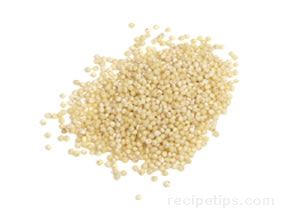
Hot Liquid Cooking Techniques for Grain | Cooking Millet
The three basic techniques for cooking millet with hot liquid are boiling, absorption, and steaming, which are perhaps the most popular methods for cooking most whole grains.
Baking Millet | Baking Oats | Baking Rice | Baking Wild Rice
Many grains can be cooked using the baking method, which is a dry heat cooking process that surrounds food with heat in an enclosed oven.
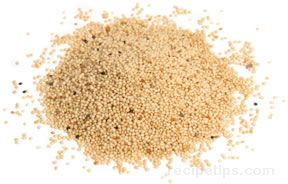
Amaranth | Corn | Millet
Frying is a dry heat cooking method that generally requires the use of a heavy-bottomed skillet and a small quantity of oil or fat to cook the food and prevent it from sticking to the pan.
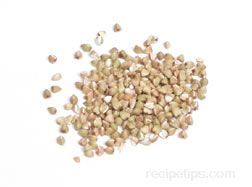
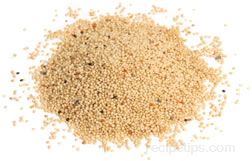
General Nutritional Facts of Grains | Specific Nutritional Facts of Individual Grains
General Nutritional Facts of Grains
Grains are composed primarily of carbohydrates, but the quantity varies according to the type of grain.
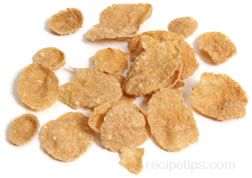
Described below are some of the products (including flour) created directly from various grains. Other than a few exceptions, products that are created after the grain has been ground into flour are not described, because they are so numerous.
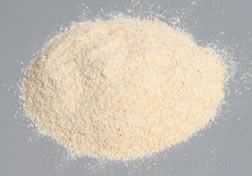
Types of Non-Wheat Flour Ground from Seeds
There are many types of flour milled from a wide variety of seeds. Most of the seeds used for flour are also prepared and cooked similar to actual cereal grains, so many people make no distinction between grain-like seeds and actual grains because of the similar ways in which they are used.
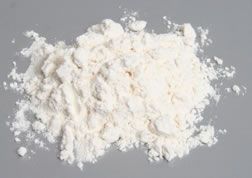
Most types of flour keep well in a sealed container in a cool, dry, and dark location. The original paper packaging used for many types of flour is fine for long term storage as long as the package has not been opened.
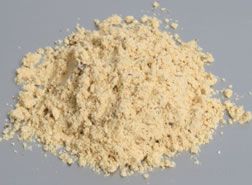
Types of Non-Wheat Flour Ground from Legumes
Garbanzo Bean Flour
Garbanzo bean flour is a variety of flour that is most often used in East Indian and Middle Eastern cooking.
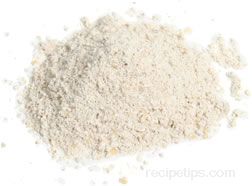
Types of Wheat Flour | Types of Non-Wheat FlourImportance of Gluten | Wheat/Non-Wheat Flour Proportions
Flour is the main ingredient in all types of breads. Different types of flour milled from wheat are most commonly used for making bread.
Type of Flour
Where the Flour can be Purchased
Amaranth Flour
Commonly found in natural and health food stores
Specialty shops
Large food stores
Mail order suppliers
Arrowroot Flour
Some large food stores
Specialty shops
Natural and health food stores
Barley Flour
Natural and health food stores
Specialty shops
Large food stores
Buckwheat Flour
Natural and health food stores
Specialty shops
Kosher markets
Kosher sections of large food stores
Mail order suppliers
Corn Flour
Cornmeal, Corn Flour, and Cornstarch:
Most food stores
Hispanic markets
Atole Flour, Blue Cornmeal, Harinilla, and Masa Harina:
Hispanic markets
Specialty shops
Hispanic sections of some large food stores
Mail order suppliers
Farro Flour
Natural and health food stores
Specialty shops
Mail order suppliers
Flax Seed Meal/Flour
Natural and health food stores
Specialty shops
Well-stocked food stores
Garbanzo Bean Flour
Middle Eastern markets
Specialty shops
Natural and health food stores
Job's Tears Flour
Natural and health food stores
Some Asian markets
Mail order suppliers
Kamut® Flour
Natural and health food stores
Specialty shops
Millet Flour
Natural and health food stores
Mail order suppliers
Indian, African, and Korean markets
Some large food stores
Oat Flour
Large food stores
Natural and health food stores
Specialty shops
Quinoa Flour
Natural and health food stores
Some large food stores
Rice Flour
White Rice Flour:
Most large food stores
Natural and health food stores
Brown Rice Flour:
Natural and health food stores
Specialty shops
Sometimes found in large food store
Chinese, Japanese, Thai, Italian, Spanish, Middle Eastern, or any other market specializing in rice varieties native to a particular nation or region.
General Guidelines | Recommended Storage Methods for Whole Grains
General Guidelines
Like many other foods, grains are perishable; however, the shelf life of grains is usually much longer than that of most foods.
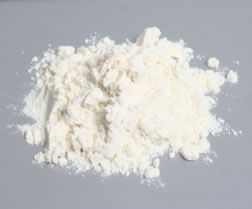
Tips - Home Flour Milling | Substitutions
Tips - Home Flour Milling
Amaranth Flour
Amaranth seeds are very small so they are difficult to grind into flour with conventional kitchen equipment.
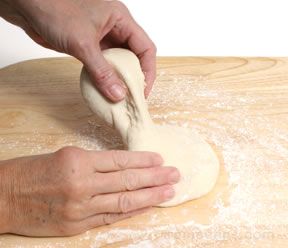
Nutritional Advantages | All About Gluten
Nutritional Advantages of Various Types of Flour
Most types of flour are composed mainly of carbohydrates, but the quantity varies according to the type of substance used to create the flour.
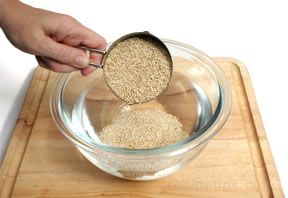
Cleaning/Rinsing Grain | Soaking Grain | Toasting Grain
Preparation of whole grains before cooking is fairly simple: most require only washing or soaking before they can be cooked.
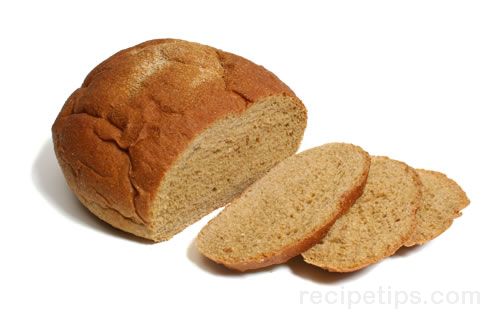
Enriched and/or Flavored Breads
Some basic yeast bread recipes are enhanced with other ingredients that change the characteristics of the bread including the texture, flavor, and color.
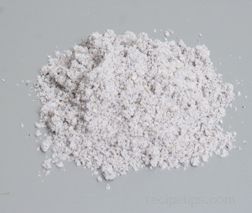
Corn | Rice | Rye | Other Grains
Types of Flour Ground from Corn
Several varieties of corn are used to produce different types of corn flour. The degree in which the corn is milled and processed also determines the type of flour that is produced.
Amaranth
Locations where consumers can purchase the whole grain and various products made from the grain:
Natural and health food stores
Specialty shops
Food co-o...
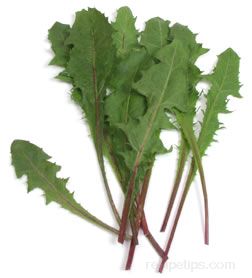
Use this ingredient equivalent chart to find out how much of an ingredient you need when your recipe suggests an unfamiliar quantity.
A - B - C - D - E - F - G - H - I - J - K - L - M - N - O - PQ - R - S - T - U - V - W - X - Y - Z
D - Ingredients
Ingredient
Amount
Equivalents
Dandelion Greens
1 lb.
Top 19 articles found
Displaying 1-19


Advertisement
Advertisement