
Loading
Search
We hope you found what you are searching for. If not, contact us and let us know what your want. We will do the work for you and get back to you when we're done.
leavening using a starter - Knowledge Search
Top 12 articles found
Displaying 1-12
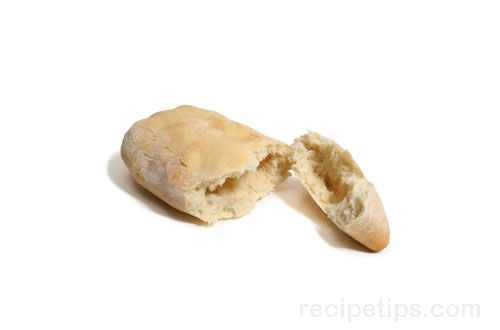
Using a starter is, perhaps, the oldest method for preparing leavened breads. Many basic bread varieties use a starter as the leavening agent. Although it can be a lengthy process, using a starter greatly contributes to the flavor and texture of the bread.
Sourdough Starter | Sponge Starter | Old Dough Method
The primary difference between making bread with a starter and making bread with the direct or straight yeast method is that starter breads require much more time to prepare, but the flavor and texture of the bread is almost impossible to achieve with other leavening methods.
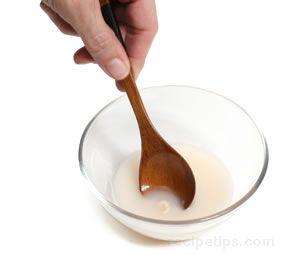
Bread Making Demonstration:Bread Using a Starter
Ciabatta
Ciabatta is typically identified by its shape, which is that of a worn or flattened slipper, and thus the meaning of the word "ciabatta" in Italian.
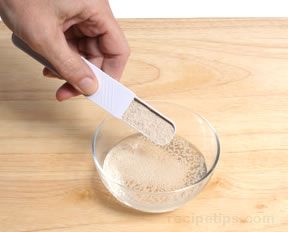
Risen breads rely on a means of producing carbon dioxide gas that becomes trapped in the batter or dough causing the dough to rise. The carbon dioxide gas is produced either as a byproduct of fermentation or through the use of chemical agents.
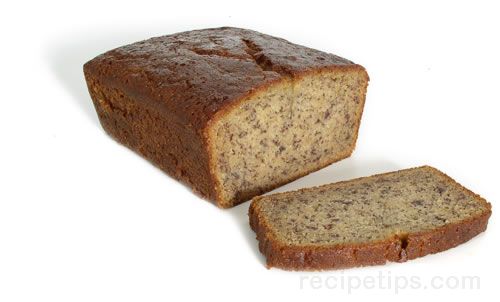
Quick Breads
Quick bread refers to breads that require minimal preparation time, are made from batter more often than from dough, and are leavened with chemical agents, such as baking soda or baking powder, instead of yeast or natural starters.
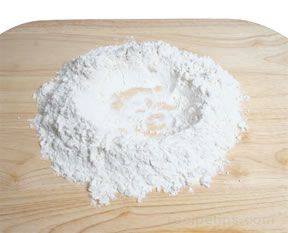
Hand Mixing on a Flat Surface | Hand Mixing in a Bowl
Hand Mixing on a Flat Surface (Well Method)
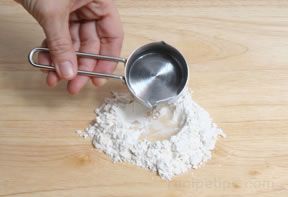
A traditional method for dough preparation is to combine the dry and liquid ingredients directly on a clean, smooth work surface.
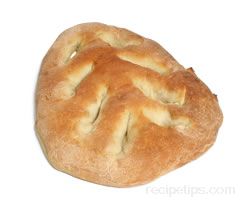
The most common method for bread baking is with the use of an indoor oven. The proper bread baking temperature is more readily achieved with a modern oven than with any other method.
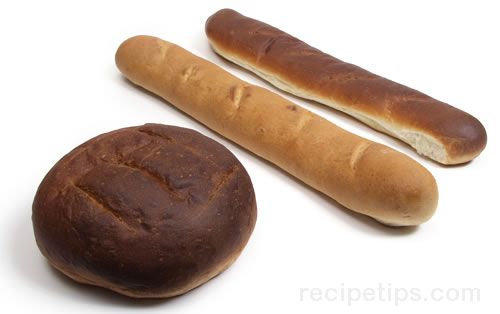
Basic breads are those that are made with a simple recipe of a few ingredients, are yeast leavened, and are usually easy for the home cook to prepare, requiring only basic bread making skills and simple pieces of kitchen equipment.
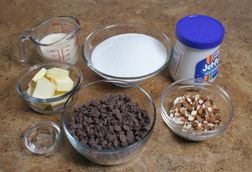
Dry Ingredients | Solid Ingredients | Liquid Ingredients | Fat Ingredients
There are many ingredients that have special functions in the baking and cooking process. Some functions are critical to the success of the finished product.
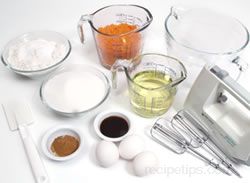
Reading the Recipe | Ingredient Preparation | Scaling Your Recipe
Knowing how to follow and read your recipe will help make your cooking or baking experience a success. Properly preparing your ingredients, using proper cooking times and temperatures, and proper bakeware or cookware all assist in the success of your end product.
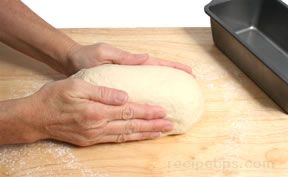
Standard Loaf Pan | Bloomer | Cob or Boule | Coburg | CottageMolded Tin or Split Pan | Baguette | Épi | Fougasse | Braided | Ring | Flat Breads
After the dough has been punched down, kneaded, and then has rested briefly, it is ready to be shaped.
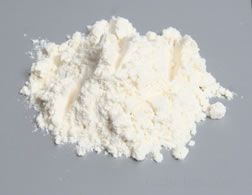
A Guide for Selecting the Proper Wheat Flour
It is wise to use flours specifically formulated for various baked goods, such as bread flour or cake flour, although all-purpose flour is suitable for a majority of items.
Top 12 articles found
Displaying 1-12


Advertisement
Advertisement