
Loading
Search
We hope you found what you are searching for. If not, contact us and let us know what your want. We will do the work for you and get back to you when we're done.
freshwater and saltwater fish - Knowledge Search
Top 7 articles found
Displaying 1-7
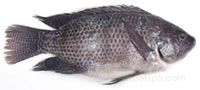
When preparing fish you want to be sure that the fish is handled properly to ensure it is safe to eat. There are several cooking methods that include baking, frying, and grilling, which all result in a little different taste for the fish when it is done cooking.

Cooking Times | Baking Fish | Pan-frying Fish | Deep-Frying FishGrilling & Broiling Fish | Doneness | Cooking Tips
Fish can be prepared using almost any type of cooking method including baking, steaming, frying, grilling, broiling, or slow cooking.
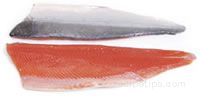
Thawing Fish | Salmon Preparation | Tips
Thawing Fish
Frozen fish can be cooked without thawing but the cooking time would need to be increased to cook it thoroughly. If the fish is going to be breaded, stuffed, broiled, fried or cooked in the microwave, it should be thawed completely first.
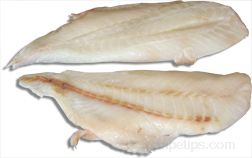
Contamination Prevention | Cooking Safety | Proper StorageConsumption Safety
When working with fish it is essential that proper handling and storage are used to reduce the risk of food-borne illness and ensure a quality product.
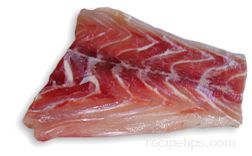
Fish Cuts
When shopping for fish, it is beneficial to know what the different types of cuts of fish are so that you know exactly what you are purchasing. The basic cuts are described below.
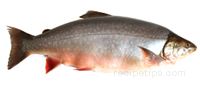
Most fish are low in fat and cholesterol and a good source of protein, which makes them a good choice for a healthy diet. Our bodies require a certain amount of protein daily and the body does not store protein so we need to replenish it in our daily diet.
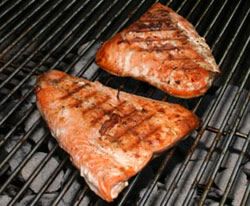
Grilling Salmon Steaks and Fillets | Grilling a Whole SalmonGrilling Tips | Food and Grill Safety
Salmon is an anadromous fish, which means that it is born in freshwater, then migrates to saltwater to mature and then returns to freshwater to spawn.
Top 7 articles found
Displaying 1-7


Advertisement
Advertisement