
Loading
Search
We hope you found what you are searching for. If not, contact us and let us know what your want. We will do the work for you and get back to you when we're done.
beef read the label - Knowledge Search
Top 8 articles found
Displaying 1-8
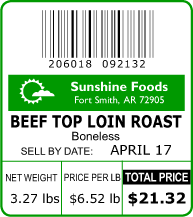
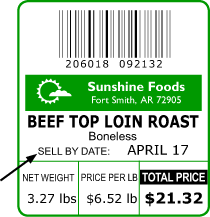
The food label on packaged beef provides a variety of information designed to make shopping as easy as possible. The label provides the following information depending on the type of beef product that is purchased:
Description of Beef Cut
The label on raw beef cuts contains the name of the primal cut the beef was taken from, the name of the retail or market ready cut, a short description (bone-in or boneless), the total weight, and cost per pound.
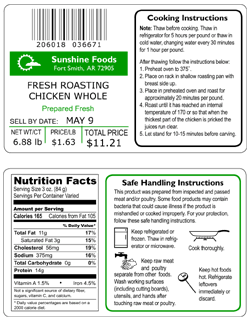
Reading the label will inform you as to the type of chicken, the parts contained in the package, the total weight, a description, how fresh it is, and nutritional information.
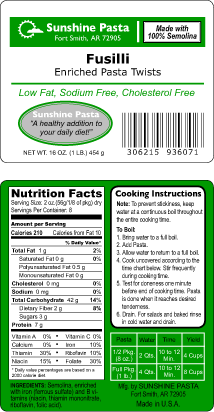
Reading the food label or package will supply you with information to help you make a selection on which pasta to purchase. It also includes nutritional information. Whether the pasta you are purchasing is fresh or dried, the food label will indicate the type of flour used to produce the pasta and what flavoring agents have been used, if any.

Labeling requirements vary significantly from country to country. Specific information that is required to be on the label is governed by the local laws at the point of sale where the wine is marketed, rather than where it is produced.
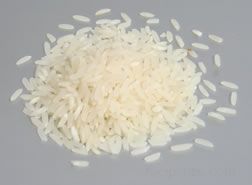
When purchasing grains, it is important to read and understand the label to ensure that the products you purchase are what were intended and are of the best possible quality....
Food Dating Guidelines | Nutritional Data | Ingredients ListInspection and Grading | Cooking Instructions | Safe Handling Instructions
The labeling on food packaging provides information designed to make shopping an easy experience and to provide the consumer with valuable information in order to make appropriate choices for their dietary requirements.

Food Related Allergies | Food Related Intolerances | Food Labeling
Food Related Allergies
Allergic reactions in humans are initiated by the immune system through an endless number of stimuli including bee stings, vinyl, metals, dust, cosmetics, medicines, and so on.

Storage of Liquid Fats | Storage of Solid FatsDeep-Frying Safety Tips | Olive Oil Handling/Safety/Storage
Guidelines for Storage of Liquid Fats
General Guidelines
Air, heat, light, and age affect the quality and the shelf life of many types of edible oils, which deteriorate through oxidation (rancidity).
Top 8 articles found
Displaying 1-8


Advertisement
Advertisement