
Loading
Search
We hope you found what you are searching for. If not, contact us and let us know what your want. We will do the work for you and get back to you when we're done.
creaming - Knowledge Search
Top 177 articles found
Displaying 61-80 | << Prev 20 | Next 20 >>
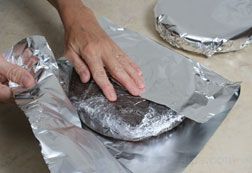
It is important to know how to store a cake properly whether it is decorated or not. A decorated cake will require care in how it is stored so that the frosting design is not disturbed; whereas, an undecorated cake must be stored properly to maintain freshness. If the cake is frozen for storing, it is important to thaw it properly.
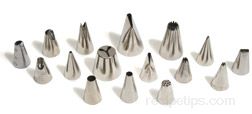
There are cake decorating supplies that you can use when cake decorating at home to make the task much easier. You will be surprised at how much easier it is to frost a cake when you are using the right spatula or how a turntable makes frosting all sides much simpler.
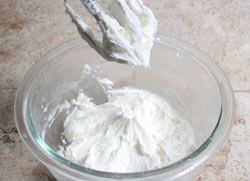
Buttercream Frosting is an excellent frosting for decorating a cake with details. The consistency of this frosting recipe can be easily changed according to what type of decorations you are trying to create. Being able to adjust the consistency of the frosting is critical when you are doing detailed decorating.
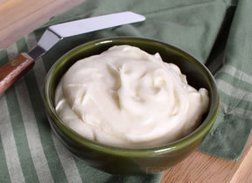
This versatile Powdered Sugar Frosting recipe can be made thick enough to use for detailed decorating and it can be easily thinned down to be used as a glaze. It works well for cake decorating, frosting cupcakes and brownies, and for decorating cookies.
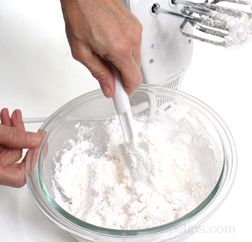
This soft textured White Creamy Frosting recipe is thick enough for piping and creating shapes. It will remain soft and when made with butter, it has a rich flavor. Because of its ability to hold its shape, it works well for cake, cupcake, and cookie decorating.
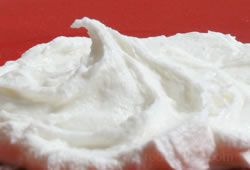
There are many factors to consider when cake decorating and one of the most important is the frosting you use. There are many cake frosting recipes that can be used. Different frosting recipes used on the same type of cake will result in a completely different look and taste.
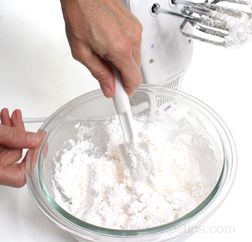
There are several factors to consider when determining how much frosting you will need. One factor in determining the quantity of your frosting recipe will depend on whether you need frosting for cake decorating, frosting for cupcakes, or for frosting cookies or bars.
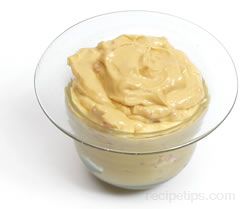
Cheeses of Mexico and the Caribbean: Queso to Requeson
Queso
Queso is the Spanish word for cheese. In the United States, the word is commonly used as a name for a type of Mexican cheese dip, as well as for numerous varieties of Mexican cheese.
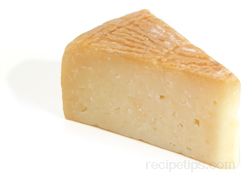
Cheeses of Greece
Brine-cured
Brine cured is a reference to numerous types of cheese that are washed with, or submerged into, a brine bath as part of the cheese making process.
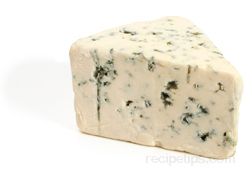
Cheeses of Sweden
Adelost Blue
Adelost Blue is a variety of blue cheese that is produced much like the well known Bleu d'Augverne cheese. It is a Swedish cheese that is made from cow's milk and is characterized by streaks of dull blue mold that run throughout the cheese.
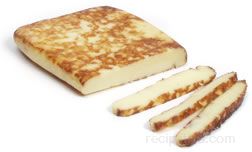
Cheeses of Norway
Baked Cheese
Baked cheese is a type of specialty cow's milk cheese that is common in Norway and other Scandinavian countries. The cheese is baked during the production process, developing a golden brown surface that has an appearance similar to a baked crepe.
Cheeses of Denmark
Baked Cheese
Baked cheese is a type of specialty cow's milk cheese that is common in Denmark and other Scandinavian countries. The cheese is baked during the production process, developing a golden brown surface that has an appearance similar to a baked crepe.
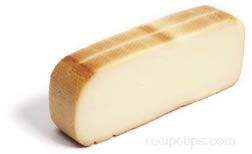
Cheeses of Germany and Austria
Allgauer Emmentaler
Allgauer Emmentaler is a German cow's milk cheese that is much like Swiss Emmental. It is characterized by large holes throughout the cheese and a texture that is somewhat hard.
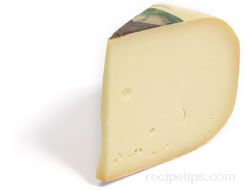
Cheeses of Holland
Boerenkaas
Boerenkaas is a farmhouse-style cheese that originated in Holland. The name comes from the Dutch words boer, which means farmer, and kaas, which means cheese.
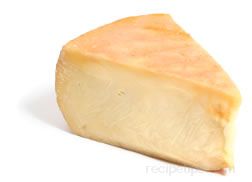
Cheeses of Belgium
Chimay
This cheese gets its name from the town in Belgium where it originated. It is produced under the historic guidance of the monks who originally produced cheeses within their Trappist monastery and community.
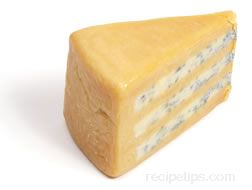
Cheeses of the British Isles: Huntsman English to Wensleydale
Huntsman English
Huntsman English cheese is a combination of Double Gloucester cheese and alternating inner layers of Stilton blue cheese.
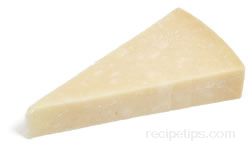
Cheeses of Italy: Parmesan to Trugole
Parmesan
Parmesan is a well-known semi-hard to hard Italian cheese made from partially skimmed cow's milk. Parmesan cheese can be purchased as a young cheese or as an aged cheese.
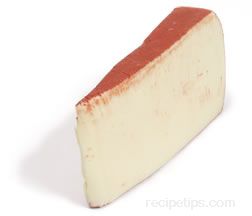
Cheeses of Italy: Farmhouse to Mozzarella
Farmhouse
A term commonly applied to any of the different types of European cheeses that are made by traditional cheese making methods and are produced from the raw milk of animals, such as cows, goats, and sheep that are raised on small regional farms, mountain chalet farms, or mountain huts.
Cheeses of Italy: Asiago to Crucolo
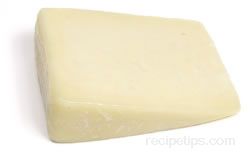
Asiago
A type of Italian cheese made from cow's milk. It has a hard texture and a nutty flavor. Like Parmigiano cheese, it is produced in the shape of a wheel.
Cheeses of France: Ossau-Iraty to Vacherin Mont d'Or
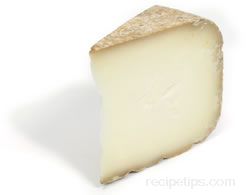
Ossau-Iraty
A French cheese made from raw (unpasteurized) sheep's milk. The sheep's milk used for the cheese is obtained from Manech or Basco-Béarnaise ewes that are raised along the Pyrenees mountain range in the Basque region of France.
Top 177 articles found
Displaying 61-80 | << Prev 20 | Next 20 >>


Advertisement
Advertisement