
Loading
Search
We hope you found what you are searching for. If not, contact us and let us know what your want. We will do the work for you and get back to you when we're done.
poaching beef - Knowledge Search
Top 59 articles found
Displaying 41-59 | << Prev 20

Pan-frying is similar to sautéing except that a little more oil is used, the cuts of beef do not have to be thin, and the cooking process may require more time. Like sautéing, high heat is used to sear the meat, creating a flavorful browned crust.
Learning about various cuts can make shopping for beef a much easier experience. A general knowledge of beef cuts and how they are best used will help you select the proper cut for a particular recipe.
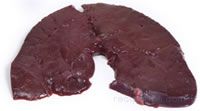
Variety MeatsVariety meats include some of the organs and extremities. Some variety meats are readily available in food stores and most are available from a butcher or specialty meat market, but may require special ordering.
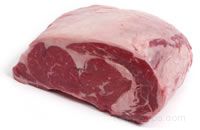
Oven Roasts
An oven roast is usually a minimum of 2 inches thick. The dry heat of oven roasting enhances the flavor and tenderness of the beef if it is not overcooked. The best oven roasts are from the tender cuts of the loin and rib primals.
The stir-frying process requires high heat and the tossing and stirring of ingredients in a large pan to ensure quick and even cooking. A wok is the traditional type of pan to use for stir-frying because it has deep tapered sides which allows food to be stirred and tossed easily.
People often use the terms barbecuing and grilling interchangeably, but they are two completely different cooking processes. While grilling refers to food that is cooked directly over high heat, barbecuing refers to foods that are cooked with a long, slow process using indirect, low-heat generated by smoldering logs or wood chips that smoke-cook the food.
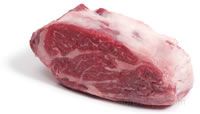
Pot Roasts
Cuts from the chuck are among the most popular cuts for pot-roasting (braising). They have plenty of connective tissues that melt when the meat is pot-roasted making it tender and flavorful.

General Guidelines | Charcoal Grill | Gas Grill | Doneness
Rotisserie cooking requires three key components: The spit assembly, a means to turn the spit, and a heat source for cooking.

We have some great beef recipes, including appetizers and casseroles. Check out these easy recipes that your family will enjoy.
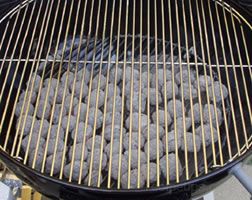
Direct
Indirect
Understanding the two most popular grilling styles, Direct and Indirect, is essential for creating a perfect grilled entrée. There are instances when both Direct and Indirect methods are appropriate.
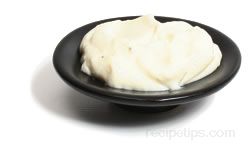
White Sauces | Brown Sauces | Tomato Sauces (or Red Sauces) | Egg Yolk and Butter SaucesEgg Yolk and Oil Sauces | Oil and Vinegar Sauces | Flavored Butter Sauces
White Sauces
In French cooking, traditional white sauces are one of two types: those made with hot milk added to a white roux (such as Béchamel sauce or Mornay sauce) or sauces made with hot broth or stock added to a white roux (such as Velouté sauce).

crock pot, slow cooking

Cooking Times | Baking Fish | Pan-frying Fish | Deep-Frying FishGrilling & Broiling Fish | Doneness | Cooking Tips
Fish can be prepared using almost any type of cooking method including baking, steaming, frying, grilling, broiling, or slow cooking.
The USDA recommends 2 or 3 servings of meat, fish, or poultry per day. A serving of any type of cooked meat is equal to 3 ounces and is about the size of a deck of cards. Concerns over saturated fat and cholesterol have caused many people to reduce or eliminate their consumption of many types of red meat and to choose a healthier alternative such as turkey.
To see information on some of the many chicken products that are available, select one of the items above.
Miscellaneous Products
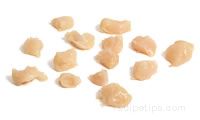
Diced Chicken
Skinless and boneless chicken diced up into pieces.

Use this food substitution and conversion chart to select ingredient substitutes when you are cooking and your recipe suggests ingredients you do not have available.
Herbs, Spices and Seasonings | Baking Ingredients | Cheese and Dairy Products | Eggs | Fats, Oils and Vinegars | Fruits and Vegetables | Miscellaneous | Healthy
Herbs, Spices and Seasonings Substitutions
Food
Amount
Substitute
Allspice
1 tsp
1/2 tsp cinnamon, 1/2 tsp ground cloves OR1/2 tsp ground cinnamon, 1/4 tsp.

Turkey Meat Nutritional Value | Turkey Products Nutritional ValueTurkey Cooking Nutritional Tips
The USDA recommends 2 or 3 servings of meat, fish, or poultry per day. A serving of any type of cooked meat is equal to 3 ounces and is about the size of a deck of cards.
Pork producers today have significantly changed production methods to produce much leaner meat than 25 years ago. Better breeding and feeding of the hogs and a grading system that stimulates the meat packers to trim more of the external fat than they did in the past has resulted in leaner meat.
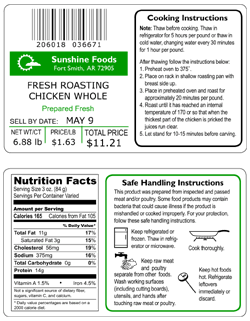
Chicken is high in protein, low in fat and low in cholesterol, making it a good selection for a healthy diet. Our bodies require a certain amount of protein daily and the body does not store protein so we need to replenish it each day.
Top 59 articles found
Displaying 41-59 | << Prev 20


Advertisement
Advertisement