
Loading
Search
We hope you found what you are searching for. If not, contact us and let us know what your want. We will do the work for you and get back to you when we're done.
carrot - Knowledge Search
Top 59 articles found
Displaying 41-59 | << Prev 20

Ingredient Tips | Preparation TipsCooking & Baking Tips | Miscellaneous Tips
There are an endless number of kitchen tips available for you to try. Shown below are some popular tips that will help you in your everyday use of some common baking and cooking ingredients.
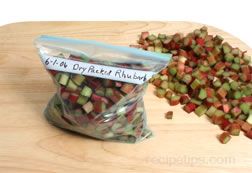
Organize Your Storage Area | Storage Charts
Storing your food properly and under the best condition possible will extend its life to its maximum potential. Some foods can be stored at room temperature and some must be refrigerated.
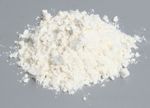
When making homemade pasta you will need to decide what type of flour you want to use. If making a flavored pasta that requires something other than a different variety of flour, you will need to purchase the necessary flavoring agent.

Generally the color of the pasta is a result from the flavoring agent used in the pasta. The taste from the flavoring agents is most often fairly mild. Shown below are some of the most common flavoring agents and how to add them to your homemade pasta.
Stir-frying, like sautéing, is a dry heat cooking method that quickly cooks the pork in a small amount of oil, using high heat. The difference between the two methods is that sautéing cooks pieces of meat that are about the size of a serving portion and stir-frying involves cooking smaller pieces of food that have been cut into small strips or cubes all similar in size.
Steaming is a moist heat method of cooking. It results in tender and moist meat through the use of steam. When steaming meat, minimum shrinkage occurs, and it is one of the most healthy methods of cooking because no additional fat is used.
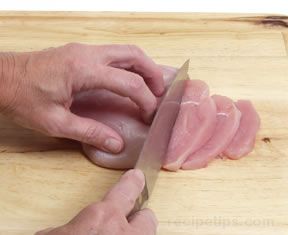
Stewing is a moist heat cooking process much like braising except that the turkey is submerged in liquid rather than being only surrounded by liquid as it is with braising. Another difference is that the turkey used for stewing is usually cut into smaller pieces rather than being left in large pieces.
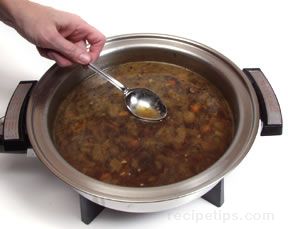
Braising is a cooking process in which tougher cuts of meat are cooked in liquid in order to add flavor and to moisten and tenderize the meat. It is a useful cooking method for breaking down the tough fibers in the meat.
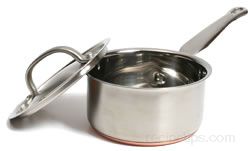
The poaching process cooks turkey with the use of simmering liquid in a covered pan. The liquid is brought to a boil, the turkey is placed in the boiling liquid, the heat is reduced so that the liquid is at a gentle simmer, and the pan is covered.
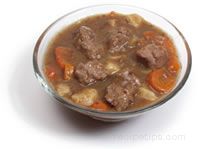
Stewing is a moist heat cooking process much like braising except that the meat is totally immersed in liquid rather than being only partially immersed as it is with braising.
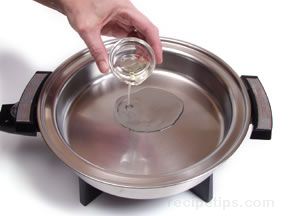
Braising is a process of slow cooking tougher cuts of meat in liquid in order to add flavor and to moisten and tenderize the meat. This technique is also known as pot-roasting.
The poaching process cooks beef with the use of simmering liquid in a covered pan. The liquid is brought to a boil, the beef is placed in the boiling liquid, the heat is reduced so that the liquid is at a gentle simmer, and the pan is covered.
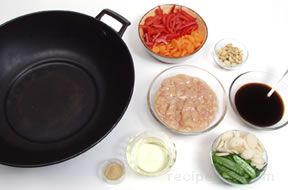
Stir-frying, like sautéing, is a cooking method that quickly cooks the chicken in a little oil, using high heat. The difference between the two methods is that sautéing cooks serving size pieces of meat and stir-frying involves cooking smaller size pieces that have been cut into strips, cubes or diced pieces all similar in size.
Steaming is an ideal method for cooking boneless chicken breasts and small whole birds such as Cornish hens. It retains the flavor, tenderness and moisture through the use of steam.

The role your appetizers play in your party plan determines the amount you will need to prepare. The following is a general guideline for a wine and cheese party, cocktail party or impromptu gathering.
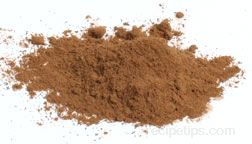
Use this food substitution and conversion chart to select ingredient substitutes when you are cooking and your recipe suggests ingredients you do not have available.
Herbs, Spices and Seasonings | Baking Ingredients | Cheese and Dairy Products | Eggs | Fats, Oils and Vinegars | Fruits and Vegetables | Miscellaneous | Healthy
Herbs, Spices and Seasonings Substitutions
Food
Amount
Substitute
Allspice
1 tsp
1/2 tsp cinnamon, 1/2 tsp ground cloves OR1/2 tsp ground cinnamon, 1/4 tsp.
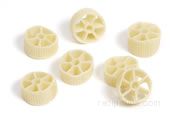
Basic Types | Flavors and Colors | Pasta Shapes | Pasta Sauces
Pasta is a basic staple ingredient used in cooking. It is available in hundreds of shapes worldwide and in many different flavors.
Shopping Tips | Thawing Tips | Refrigerating Tips | Freezing TipsHandling and Safety Tips | Marinating Tips | Stuffing Tips | Trimming & Slicing TipsChecking Doneness | Roasting Tips | Frying Tips | Grilling & Broiling TipsSteaming Tips | Stir-fry Tips | Tenderness Tips | Light Tips | Cooking Tips
Shopping Tips:
Decide how much time and effort you want to use in preparing and cooking the cut you select.
Top 59 articles found
Displaying 41-59 | << Prev 20


Advertisement
Advertisement