
Loading
Search
We hope you found what you are searching for. If not, contact us and let us know what your want. We will do the work for you and get back to you when we're done.
turkey doneness - Knowledge Search
Top 55 articles found
Displaying 21-40 | << Prev 20 | Next 15 >>
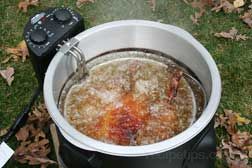
Extreme care is necessary to ensure safety when deep-frying a whole turkey. Because the required equipment can be cumbersome and the large quantity of hot oil necessary for cooking a whole bird can be dangerous, deep-frying a whole turkey is much less safe than deep-frying food on a smaller scale.
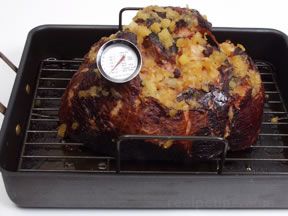
Checking Doneness
When checking doneness it can be accomplished in basically the same manner for whatever cooking method you are using. There are several methods that can be used, but some are more accurate than others.
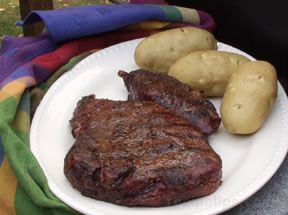
Guidelines for Proper Doneness
The proper doneness of foods cooked with rotisserie grilling is determined by a number of criteria depending on the type of food that will be cooked and the size and density of the food.
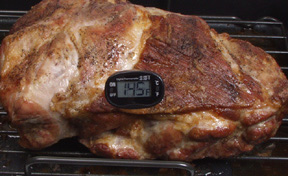
Checking doneness is accomplished in basically the same manner regardless of the cooking method you are using. While some methods are more accurate than others, there are certain cuts for which some methods will not be suitable.
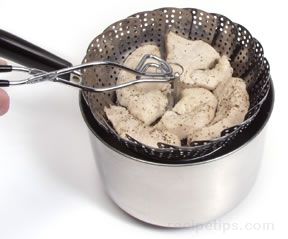
Like braising and stewing, steaming is a moist heat cooking method that results in tender and flavorful turkey through the use of steam. Unlike braising and stewing, the meat is not actually placed in heated liquid, but is suspended above it.
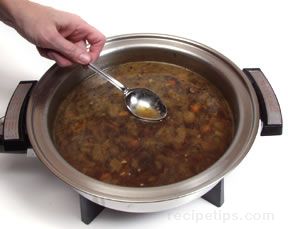
Braising is a cooking process in which tougher cuts of meat are cooked in liquid in order to add flavor and to moisten and tenderize the meat. It is a useful cooking method for breaking down the tough fibers in the meat.
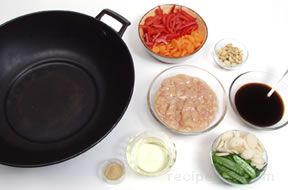
Stir-frying, like sautéing, is a cooking method that quickly cooks the turkey in a little oil, using high heat. The difference between the two methods is that sautéing cooks serving size pieces of meat and stir-frying involves cooking smaller size pieces that have been cut into strips, cubes or diced pieces all similar in size.
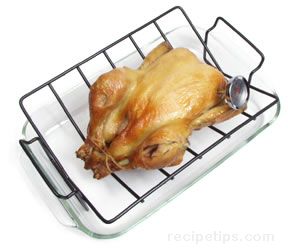
Checking doneness is accomplished in basically the same manner regardless of the cooking method you are using. Some methods are more accurate than others and some are more suitable in regard to the cooking method and to the cut of chicken.
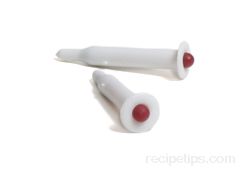
Some whole turkeys are sold with a pop-up timer that indicates when the turkey is fully cooked. The pop-up timer, also known as a turkey timer, is inserted into the flesh of the turkey during processing.
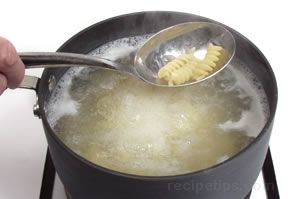
The amount of time required to cook pasta to its proper doneness varies depending on its size, shape and thickness. Also, whether the pasta is fresh or dried greatly affects the amount of cooking time required.
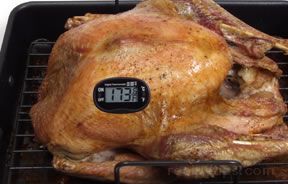
According to manufacturers of electric roasters, a roaster oven cooks at approximately the same temperature and in the same time as a conventional oven. For best results, follow the manufacturer's instructions.
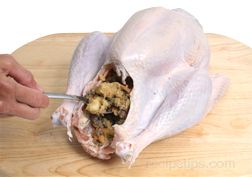
Today's trend is to cook stuffing separately from turkey, the reason being safety and speed. Stuffing must reach a temperature of 165º F to kill harmful bacteria. By the time enough heat has reached the stuffing to render it safe, the turkey can be overcooked.
General Guidelines | Degree of Doneness | Meat Thermometers
General Guidelines
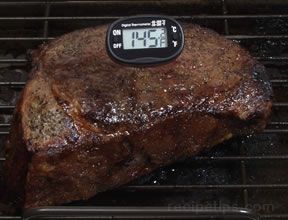
Even though harmful bacteria are usually only on the surface of whole beef cuts, there is growing concern that bacteria may be present in the internal portions of the meat as well, which is why it is now recommended that whole beef cuts be cooked to an internal temperature of not less than 145°F.

The proper cooking time and the correct cooking temperature are extremely important when preparing any type of poultry. The optimum flavor and tenderness of turkey, chicken, duck, or any other type of poultry can be consistently achieved when care is taken to follow the recommended cooking time and temperature guidelines.
For the best results, the stuffing should be prepared immediately before the turkey will be stuffed, and the turkey should be stuffed immediately before it is ready to go into the oven.
General Guidelines | Degree of Doneness | Meat Thermometers
General Guidelines
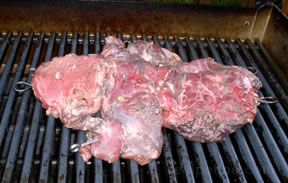
Because of growing concern that harmful bacteria may be present in the internal portions of meat, it is now recommended that whole lamb cuts be cooked to an internal temperature (after the resting period, if applicable) of not less than 145°F.
How to Make Stuffing
Ingredients | Prepare | Cooking | Other Meats | Safety | Tips
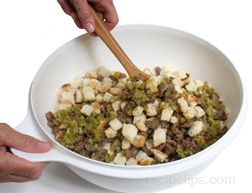
Stuffing is a side dish commonly associated with turkey and Thanksgiving but it can also be enjoyed throughout the year and with many types of meat.
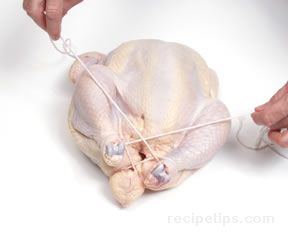
Trussing poultry is important if you want the bird to hold its shape while serving, however, remember that it does prevent uneven cooking. Always check the temperature of the inner thigh on a trussed bird to make sure that the proper internal temperature of 175°F has been met.
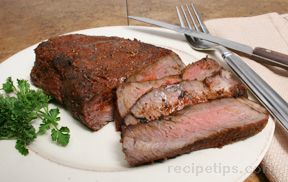
The Thicker Cut
Thicker cuts of meat can be a challenge to grill so that they have a nice flavorful, crisp outer surface with a juicy tender middle. They are cuts that are too thick to be grilled with just direct heat but are not as thick as a cut that requires a long period of indirect heat, such as a roast.
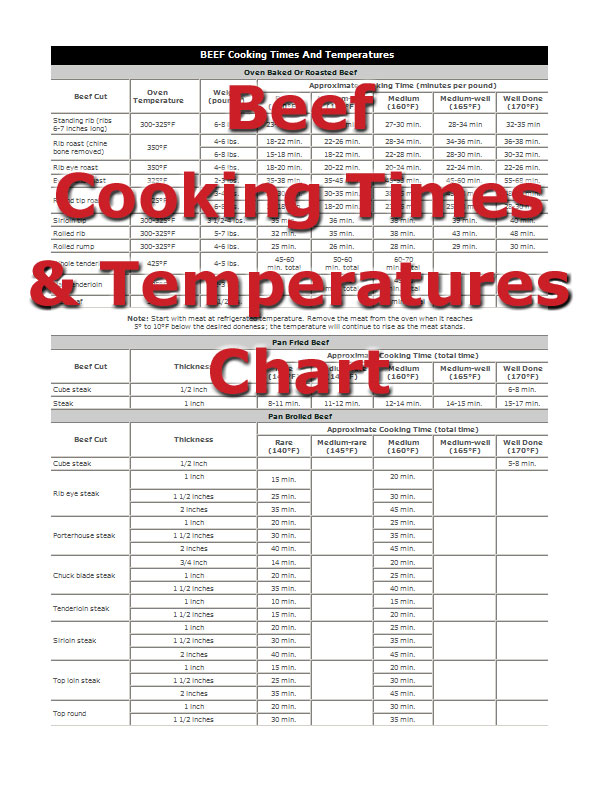
The proper beef cooking times and the correct beef cooking temperatures are extremely important. The optimum flavor and tenderness of various cuts of beef can be consistently achieved when care is taken to follow the recommended time and temperature guidelines for cooking beef.
Top 55 articles found
Displaying 21-40 | << Prev 20 | Next 15 >>


Advertisement
Advertisement